No standing charge tariffs replace your daily connection fee with a higher unit rate: saves money if you use under 5–8 kWh/day.
Compare No Standing Charge DealsBusiness Energy No Standing Charge UK
No standing charge tariffs replace your daily connection fee with a higher unit rate: saves money if you use under 5–8 kWh/day.
Compare No Standing Charge Deals
Business Energy Standing Charges Explained
What Is a Business Energy Standing Charge?
The standing charge is the fixed daily cost of being connected to the UK energy grid: charged 365 days a year regardless of whether you use any energy. For most SMEs in 2026: electricity 50–100p/day, gas 25–45p/day. That is over £525/year before a single unit is consumed.
TNUoS: National Grid (~40%)
High-voltage transmission network maintenance. TNUoS charges jumped significantly in Q2 2026 to fund National Grid expansion.
DUoS — Distribution (~22%)
Regional distribution network, local lines and substations. Varies by DNO zone — one reason rates differ by postcode.
Meter Operator & Data (~15%)
Meter rental, smart metering infrastructure, and data collection. Covers the cost of metering hardware and readings.
Supplier Operating Costs (~13%)
Customer service, billing administration, and overheads. The portion of your standing charge that competition can actually reduce.
Policy Costs (~10%)
Supplier failure recovery (SOLR) and Green Gas Levy. Ofgem shifted these away from unit rates into standing charges after the 2021–22 energy crisis.
Real-World Cost Comparison by Daily Usage
Based on illustrative rates: Standard tariff — 28p/kWh + 65p/day standing charge. No-SC tariff — 33p/kWh + 0p/day. Break-even = 65p / 5p = 13 kWh/day. Below 13 kWh, no-SC wins. Above, standard wins.
← Swipe to see all columns →
Pros and Cons of Business Energy No Standing Charge Tariffs
Whether a no-SC tariff saves money depends entirely on your daily consumption. Below the break-even point it wins: above it, a standard tariff costs less.
Who Benefits from a No Standing Charge Tariff?
A no-SC deal only makes sense for very low or intermittent consumption. The key question: does your daily usage fall below the break-even point? If your business uses over 5,000 kWh/year (~14 kWh/day), a no-SC tariff will almost certainly cost more.
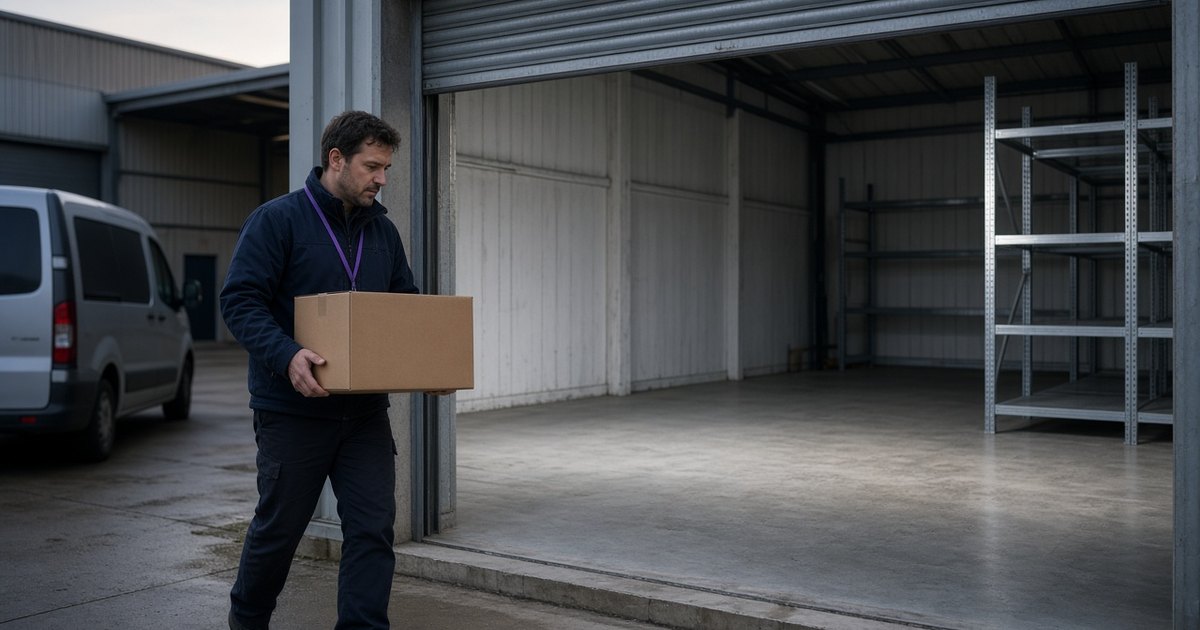
Lock-up garages & storage units
Minimal electricity, often just lighting and security. No-SC saves £200–400/year for these sites.
Seasonal businesses
Caravan parks, garden centres, ice cream parlours, seasonal cafes closed 4–6 months a year. No-SC eliminates idle period charges.
Holiday cottages & short-term lets
Part-year occupancy means standing charges accumulate during empty periods. No-SC means you only pay when guests use energy.
Backup-only meters
Sites with solar or on-site generation where mains import is occasional. No point paying a daily fee for a meter you barely use.
Parish halls & community spaces
Used weekly or monthly with near-zero baseline consumption. Standing charges can exceed actual usage costs for these sites.
Unoccupied commercial properties
Empty offices or retail units maintaining a connection but not consuming. No-SC prevents paying for nothing during vacancy.
Businesses That Should Avoid No Standing Charge Tariffs
For most UK businesses, a no-SC tariff will cost more: not less. If any of these apply to you, a standard tariff with a competitive standing charge is the better option.
Standard offices and retail (5+ days/week)
Regular daily operation means consumption easily exceeds the break-even threshold. A standard tariff with a competitive standing charge will almost always be cheaper for any premises open five or more days a week.
Businesses consuming over 5,000 kWh/year
At 5,000+ kWh/year (~14 kWh/day), the higher unit rate on a no-SC tariff outweighs the standing charge saving. Above this level, standard tariffs cost less.
Growing businesses
If energy consumption may rise during the contract period — from hiring staff, adding equipment, or expanding operations — a no-SC tariff will become progressively more expensive. Lock in a standard rate instead.
Half-hourly (HH) metered sites
Businesses with HH meters have access to specialised tariff structures that are entirely different from standard or no-SC products. HH sites require bespoke quotes, call Switch on 01926 942125.
High gas consumption
Operations requiring substantial gas for heating, cooking, or manufacturing will exceed the no-SC break-even point rapidly. Gas no-SC tariffs are also scarce, a competitive standard gas tariff is the practical choice.
How to Switch to a No Standing Charge Business Energy Deal
Switching through Switch takes around 5 minutes. No interruption to your supply.
Gather Your Details
Current supplier, business postcode, MPAN/MPRN from a recent bill, and annual kWh usage.
Run a Comparison on Switch
Request no-standing-charge variants included. Switch quotes both standard and no-SC tariffs side by side.
Compare Total Annual Cost
Not just standing charge or unit rate alone. Switch calculates total annual cost automatically from your usage data.
Check Contract End Date
Mid-contract? Exit fees may apply. Factor any exit fee into your total cost calculation before switching.
Confirm and Switch
Switch handles the entire transfer. Supply never interrupted. New supplier notifies your old supplier.
Other Strategies to Reduce Business Energy Standing Charges
If a no-standing-charge tariff is not the right fit, there are other effective ways to lower your fixed daily costs.
Switch to a lower-SC standard tariff
Not all standard tariffs carry the same standing charge. A 20–40p/day difference between suppliers exists. Compare through Switch to find the lowest.
Claim the 5% reduced VAT rate
If your business uses under 33 kWh/day or holds charity status, you may qualify for 5% VAT instead of 20%. This applies to the full bill.
Invest in on-site generation
Commercial solar and battery storage reduce grid import, making the standing charge proportionally smaller. Payback typically 4–7 years.
Formally disconnect redundant meters
If a meter is genuinely unused, contact your supplier or DNO about formally disconnecting it. Removes the standing charge permanently.
Which Suppliers Offer No Standing Charge Business Tariffs?
Mainstream suppliers rarely advertise no-SC options. Specialist independents and comparison services are your best route. Switch compares all options side by side.
← Swipe to see all columns →

Switch to a No Standing Charge Deal Today
Frequently Asked Questions
What is a business energy no standing charge tariff?
A commercial energy deal that removes the fixed daily connection fee. Instead, you pay a higher unit rate per kWh. Cheaper only for very low consumption, typically under 5–8 kWh/day.
Is a no standing charge tariff always cheaper?
Does Ofgem cap business energy standing charges?
Can I negotiate my business energy standing charge?
Are no standing charge tariffs available for business gas?
What happens to my standing charge when moving premises?
How does Switch help find a no standing charge deal?
Compare No Standing Charge Business Energy Deals Now
Switch compares every UK business energy supplier — including no-standing-charge variants — and presents results ranked by total annual cost. Free, independent, under 5 minutes.
Latest from our experts
Business gas standing charge UK October 2026: what you pay a day and how to compare quotes
Business gas standing charge, October 2026: 48.68p to 105.89p a day on WeSave’s averages, what it costs a year and how to compare quotes by total cost.
Green business energy UK: renewable tariffs, REGOs and what SMEs should check (October 2026)
Green business energy, October 2026: how REGO-backed renewable tariffs work, why the Climate Change Levy still applies, and what SMEs should ask before signing.
Business electricity standing charge UK: why it is high and when zero standing charge helps
Business electricity standing charge UK: what the daily fee covers, September 2026 micro averages around 80–90p/day, and when zero-standing-charge tariffs help.
Change of tenancy business energy UK: what to do when you move premises (October 2026)
Change of tenancy business energy, October 2026: who to tell, what evidence suppliers need, Ofgem’s 10 working day review and how to avoid deemed rates.
Business energy price cap UK: does Ofgem’s domestic cap cover SMEs?
As of 6 Oct 2026 the Ofgem household cap (~£1,723) does not cover most UK business energy. See microbusiness rights, OoC risks, and get a commercial quote.

Business energy security deposits UK: how much suppliers can ask and how to get it back
Business energy security deposit rules for October 2026: Ofgem’s three-to-six-month guidance, what suppliers must tell you, how to cut a deposit and get it back.

Microbusiness energy rights UK October 2026: back bills, renewals, brokers and complaints
Microbusiness energy rights in October 2026: who qualifies, 12-month back-billing limit, renewal letters, broker disclosure and the Energy Ombudsman.

Business energy broker fees October 2026: commission transparency for SME quotes
Business energy broker fees October 2026: how SME commission disclosure works, what to ask in writing, then get a SwitchSquid business quote.