Last updated: Friday 11 September 2026 (Europe/London).
11 September 2026 refresh: 5G home broadband is a router that uses the mobile network instead of a phone line or fibre — useful where FTTP is late, but subject to mast load and data fair-use. Always compare a fixed full-fibre quote at the same postcode first. Compare live packages on our broadband hub — do not treat old pound figures in this guide as live checkout prices.
5G home broadband uses a 5G mobile signal, picked up by a router, to deliver home internet without a phone line or fibre cable. The router sits near a window, connects to the closest mast, and turns that signal into normal WiFi for every device in the house. Three UK networks, EE, Three, and Vodafone, sell dedicated 5G broadband plans in 2026, and typical speeds now beat standard copper broadband in most towns and cities. This guide covers real 2026 speeds, router costs, and the exact situations where 5G broadband makes more sense than fibre or copper.
What Is 5G Home Broadband?
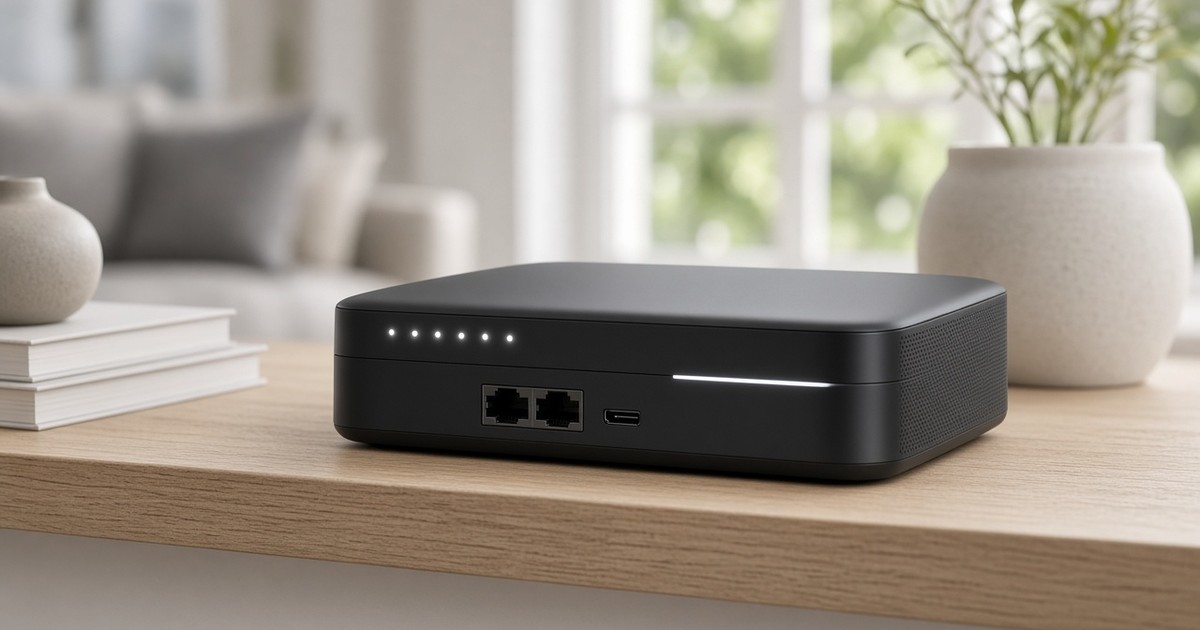
It is a wireless alternative to a fixed-line internet connection. It works through a 5G router, also called a 5G hub or 5G wifi box, instead of Openreach cables or a satellite dish. You plug the router into a power socket, insert a SIM card, and it searches for the nearest 5G mast automatically. There is no engineer visit, no landline, and no waiting weeks for installation. Most 5G routers connect within minutes, and some networks offer a 30-day rolling contract instead of the usual 24-month term for 5G broadband deals. A 5G wifi router works well for renters who move address every year, since you take the router with you and reconnect it at the new property the same day.
How Does 5G Broadband Work?
5G broadband works by converting a mobile 5G signal into a fixed WiFi connection through a dedicated router. UK networks use frequency bands between 700MHz and 3.6GHz for most 5G broadband coverage, with a small number of trials using millimetre wave (mmWave) above 24GHz in dense city centres. Higher frequencies carry more data, but they travel shorter distances and struggle with obstacles such as thick walls, trees, and distance from the mast. Network operators recommend placing your 5G router near a window that faces the nearest mast, and signal strength can vary between two houses on the same street, if one sits closer to the mast than the other. Some 5G routers include an external antenna port, which lets you mount a signal booster outside the property for a stronger, more stable connection. Beamforming technology directs the signal toward your router specifically, instead of broadcasting evenly in every direction, which improves speed and reduces interference from neighbouring devices on the same mast.
5G Broadband Speeds in the UK (2026)
5G home broadband delivers average download speeds of 100 to 300 Mbps in the UK in 2026, depending on network, mast distance, and router placement. Three's 5G network leads on speed, with median speeds between 208 and 276 Mbps and peaks above 680 Mbps in strong signal areas. Vodafone's 5G broadband averages 138 to 162 Mbps. EE covers the most towns and cities, over 1,000 in total, though typical speeds near a mast sit closer to 150 to 200 Mbps. Full fibre (FTTP) broadband averages 218 Mbps and standard copper (FTTC) broadband averages 47 to 80 Mbps, based on Ofcom's Connected Nations data. 5G broadband speed now sits ahead of copper and close to full fibre for most households. Upload speed stays the weak point across every network, typically 10 to 20 Mbps, so large video uploads and cloud backups take longer on 5G than on fibre.
5G Broadband Coverage in the UK
Outdoor 5G coverage now reaches 76% to 94% of UK premises from at least one network, according to Ofcom's Spring 2026 update. EE offers the widest footprint, with 5G broadband live in more than 1,000 towns and cities. Vodafone and Three each cover roughly 580 towns and cities, with Three's network delivering the fastest typical speeds where it is available. Coverage still thins out fast in rural areas, small villages, and anywhere more than 3 km from the nearest mast, so two postcodes a short drive apart can get very different 5G broadband speeds. Indoor coverage runs lower than the outdoor figures above, since walls, roofing materials, and distance from a window all cut signal strength before it reaches your router. A quick way to estimate your own signal strength before ordering is to check your mobile phone's 5G bars in the room where the router will sit, since a router usually performs close to, or slightly better than, a handset in the same spot.
5G Broadband vs Fibre Broadband
Fibre broadband beats 5G broadband on reliability, but 5G wins on setup speed and contract flexibility. Full fibre keeps a steady connection all day because it runs through underground cables, while 5G broadband speed can drop during peak hours, between 6pm and 10pm, when more people share the same mast. 5G home broadband trades some reliability for faster setup and shorter contracts compared with fibre broadband. Fibre suits four or five devices streaming 4K at once, or a full day of video calls, better than 5G does.
Five factors separate the two technologies:
Speed: 5G broadband reaches 100 to 300 Mbps. Fibre reaches 100 to 900 Mbps on most tiers.
Reliability: Fibre holds a steady signal all day. 5G broadband dips at peak times and behind thick walls.
Installation: 5G broadband activates the same day. Fibre needs an engineer visit within 1 to 3 weeks.
Contract length: 5G broadband deals run from 30 days to 24 months. Fibre contracts usually run 18 to 24 months.
Availability: 5G broadband reaches 76% to 94% of UK premises outdoors, by network. Full fibre reaches 82% of UK premises.
5G Router and 5G Hub Costs
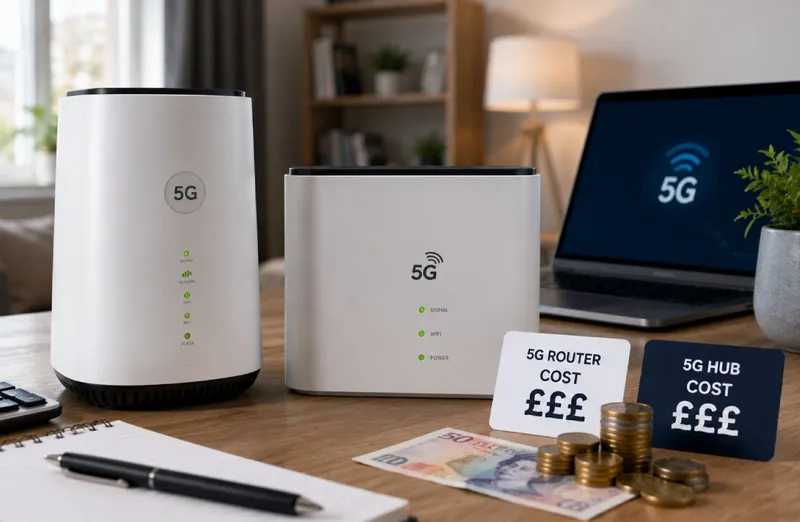
A 5G router, also called a 5G hub or 5G wifi box, costs between £0 and £250 upfront in 2026. Monthly 5G broadband deals start around £20 and run past £35 for unlimited 5G broadband plans with faster speed tiers. Most 5G broadband deals include unlimited data, though a few budget deals cap usage at 100GB to 500GB a month. Contract lengths range from 30-day rolling deals to standard 24-month terms, and the router usually ships free on longer contracts. Prices rise each April by £2 to £3 a month on most contracts, a detail many buyers miss when they compare the first-year price. Data-only SIMs, used inside a separate 5G router you buy outright, often work out cheaper over 24 months than a bundled hub, provided the SIM and router come from a network with strong coverage at your address.
Best 5G Broadband Deals in 2026
The best 5G broadband deal balances price, data allowance, and confirmed coverage at your address. Compare three factors before you sign a contract. Check the network's coverage map for your specific postcode, not just the general area, since 5G signal drops fast over distance. Compare the monthly price against the fixed 24-month cost, since some 5G broadband deals include a free router that adds hidden value. Check whether the deal includes unlimited data or a monthly cap, since streaming and video calls use gigabytes fast. Switch lists current 5G broadband deals from every major UK network side by side, updated daily, so you compare real prices instead of headline offers. Reading recent customer reviews for your specific network and area also flags any local coverage issues that a national coverage map might miss.
5G Broadband for Business
5G business broadband suits shops, small offices, and pop-up sites that need internet fast, without a lengthy lease-line installation. A 5G router gives a new retail unit working WiFi on day one, while a fixed-line connection can take weeks to activate. Businesses that move location often, such as market stalls or construction site offices, benefit most from 5G's plug-and-play setup. Fixed-line broadband still suits businesses that run point-of-sale systems, security cameras, and video conferencing around the clock, since uptime matters more than setup speed in that setting. A dual setup, with 5G broadband as backup and fibre as the main line, protects against downtime during an outage or an engineer delay, and costs far less than a second fibre circuit.
Benefits of 5G Broadband
5G broadband offers five clear benefits over a standard landline setup:
Skips the phone line. A 5G router connects straight to the mobile network, so a property with no phone socket can still get fast home internet.
Installs the same day. There is no Openreach engineer visit and no multi-week wait for an activation date.
Charges no line rental. Monthly 5G broadband deals bundle the router and data into one flat fee.
Offers flexible contracts. Several networks sell 5G broadband on a 30-day rolling basis, useful for renters and short lets.
Works as a fibre backup. Homes waiting for full fibre rollout get a fast home internet option in the meantime.
Drawbacks of 5G Broadband
5G broadband carries four practical drawbacks worth checking before you switch:
Drops signal behind thick walls, concrete floors, and in rural black spots far from a mast.
Slows down at peak times, typically 6pm to 10pm, when local mast traffic rises.
Lags on upload speed, often 10 to 20 Mbps against 20 to 50 Mbps on full fibre.
Varies sharply by postcode, so two neighbours on the same street can get different 5G broadband speeds.
Is 5G Home Broadband Right for You in 2026?
5G home broadband suits renters, frequent movers, and anyone without fibre access in 2026. It suits less well if you stream 4K video on several devices at once or rely on video calls all day, where full fibre stays more stable. Check your postcode with Switch's broadband checker to compare 5G broadband deals against fibre and copper options before you decide. A short trial period, where available, tells you more about real-world speed at your address than any coverage map, since walls, distance, and local mast traffic all shift results from one street to the next.
How to Check 5G Broadband Availability in Your Area
To check 5G broadband availability, enter your postcode into a coverage checker, compare 5G broadband deals from EE, Three, and Vodafone side by side, and read real speed test data for your street before signing a contract. Enter your address on Switch's postcode checker to see 5G broadband deals, fibre deals, and copper broadband options available at your home. You can also confirm outdoor coverage on Ofcom's mobile and broadband checker.
Frequently Asked Questions
Is 5G broadband any good?
Yes. 5G broadband gives download speeds of 100 to 300 Mbps in most UK towns and cities in 2026, fast enough for HD streaming, video calls, and browsing on several devices at once.
Is 5G broadband better than fibre?
No, not for most households. Full fibre broadband averages 218 Mbps with steady speeds all day, while 5G broadband speed can dip at peak times and behind thick walls. 5G wins on setup time and contract flexibility instead.
How fast is 5G internet?
5G internet speed ranges from 100 to 300 Mbps for home broadband use, with peaks above 680 Mbps on the fastest UK network in strong signal areas. Mobile 5G speeds on a phone typically run lower, around 60 to 150 Mbps, since routers use larger antennas than handsets.
Can I get 5G broadband in my area?
Yes, if your postcode sits within a mast's coverage radius, usually 1 to 3 km in urban areas. Enter your address into a 5G broadband checker to confirm coverage before you order a router.
Does 5G broadband need a phone line?
No. A 5G router connects straight to the mobile network through a SIM card, so you do not need a landline, phone socket, or Openreach line.
How much does 5G broadband cost?
5G broadband costs between £20 and £35 a month in 2026, with routers priced from £0 to £250 upfront depending on the contract length and network.
Is 5G broadband unlimited?
Yes, most 5G broadband plans include unlimited data, though a few budget deals cap usage at 100GB to 500GB a month. Check the terms before you commit to a 5G broadband deal, and confirm the cap applies to a full month rather than a shorter billing cycle.