Last updated: 26 October 2026
How can I cut my energy bills this winter? Start with the habits that cost nothing: the Energy Saving Trust says ten simple changes, such as line-drying clothes, four-minute showers and switching off standby, could save a typical home in Great Britain up to £313 a year. Then check your tariff. From 1 October to 31 December 2026 the Ofgem price cap is £1,723 a year for a typical dual fuel home on Direct Debit, with electricity at 26.32p per kWh and gas at 7.97p per kWh, and Ofgem announces the January to March 2027 cap by 25 November. This SwitchSquid guide turns those rates into real costs, lists the tips worth the most, and explains when a fixed deal makes sense this winter. We may earn a commission if you buy through links on this page; it doesn’t change the price you pay.
Sources: Ofgem: changes to the price cap, 1 October to 31 December 2026, Ofgem: price cap unit rates and standing charges, Energy Saving Trust: quick tips to save energy and GOV.UK: Warm Home Discount, all checked on 26 October 2026.
Compare gas and electricity deals for your home
- MoneySuperMarket’s energy comparison searches tariffs from a range of suppliers in one go
- No code needed: enter your postcode and current usage to see deals priced for your home
- Main limitation: savings depend on your usage, region and current tariff, and exit fees apply on some fixed deals
What you are paying this winter
If you are on a standard variable tariff, your unit rates and standing charges are capped by Ofgem. These are the averages across England, Scotland and Wales for Direct Debit customers from 1 October to 31 December 2026. Your own rates depend on your region.
Fuel | Unit rate | Daily standing charge | Standing charge over a year | VAT |
|---|---|---|---|---|
Electricity | 26.32p per kWh | 54.83p | £200.13 | 0% from 1 October 2026 to 31 March 2027 |
Gas | 7.97p per kWh | 29.68p | £108.33 | 5%, included in the rate |
Two things stand out. First, you pay about £308 a year in standing charges before you use a single unit, which is why cutting usage alone can never get a bill to zero. Second, a unit of electricity costs more than three times as much as a unit of gas, so anything that heats with electricity, such as a plug-in heater or a tumble dryer, deserves the most attention. Ofgem says the cap rose by 4% from 1 October because of higher wholesale gas prices.
What that means in practice: a 2kW electric heater running for an hour uses 2kWh, which costs about 53p at the capped rate. Run it for three hours every evening for a month and that is about £47. A gas boiler producing the same heat costs much less per hour, even after allowing for boiler efficiency.
12 tips that cut winter bills, and what each is worth
These figures come from the Energy Saving Trust and are yearly savings for a typical home in Great Britain. Your saving will depend on your home and your habits, but the order is a good guide to where to start.
Tip | Yearly saving (GB) | Cost to do it |
|---|---|---|
Get professional draught proofing for windows and doors | About £55 | Around £55 professionally; DIY is cheaper |
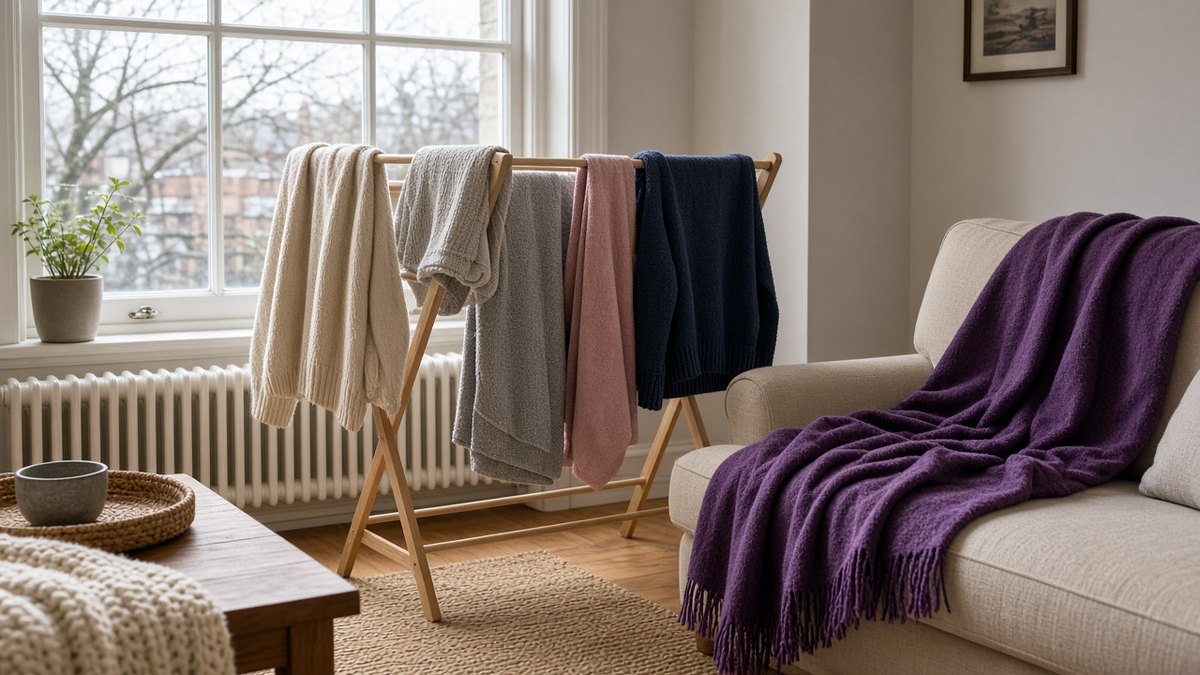
Dry clothes on a rack instead of a tumble dryer | £50 | Free if you have an airer |
Keep showers to four minutes | £45 | Free |
Turn appliances off standby | About £45 | Free |
Top up a thin hot water tank jacket to 80mm | £45 | Low |
Fit a chimney draught excluder | About £45 | Low |
Wash clothes at 30°C and cut one wash a week | £26 | Free |
Fit a tap aerator in the kitchen | £20 | Low |
Only fill the kettle with what you need | £10 | Free |
Run the dishwasher one fewer time a week | £10 | Free |
Swap one bath a week for a four-minute shower | £10 | Free |
Turn lights off when you leave a room | About £7 | Free |
The Energy Saving Trust puts its ten headline tips together at up to £313 a year in Great Britain. Some of the extras above, such as draught proofing and a chimney excluder, are one-off jobs that keep paying back every winter.
Heating: the biggest part of your winter bill
For most homes with gas central heating, heating and hot water make up the largest share of the bill in winter. Three changes make the biggest difference:
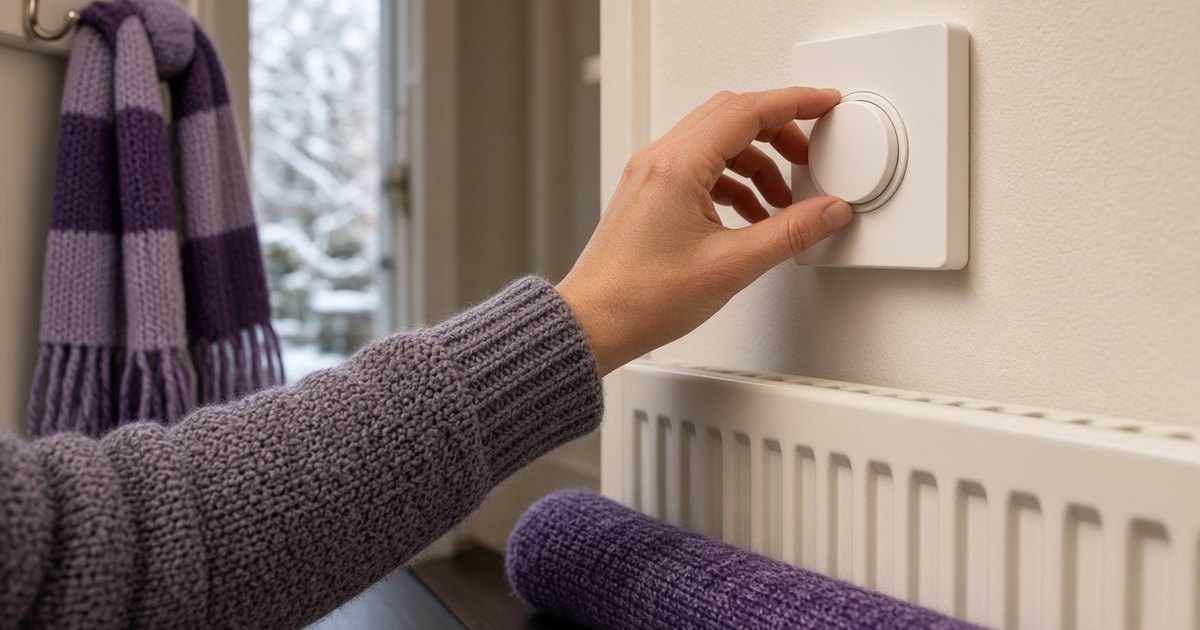
Use your controls properly. Set the heating to come on only when you are home and awake, and use thermostatic radiator valves to keep spare rooms cooler. Heating empty rooms all day is one of the easiest wastes to cut.
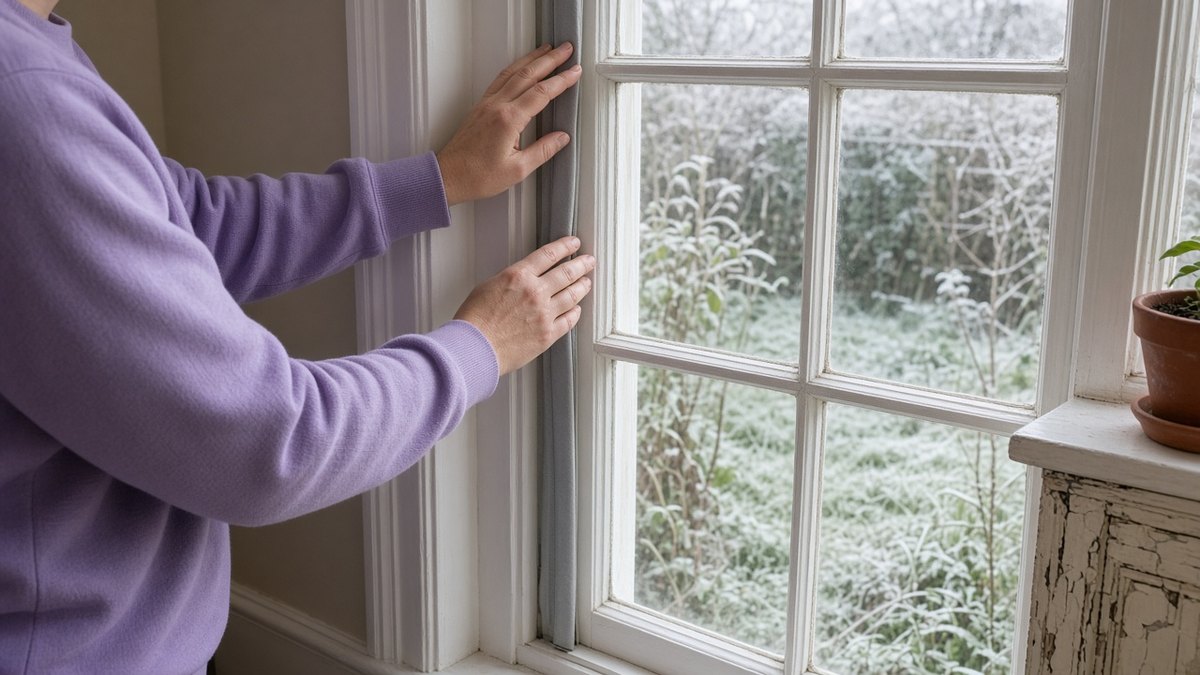
Stop heat escaping. Draught proofing, curtains closed at dusk and a draught excluder under the front door are cheap and effective. If you can, check loft insulation too.
Keep your home warm enough. Cutting heat too far can harm health, especially for older people and young children. The aim is to stop waste, not to be cold.
Compare fixed-price energy deals before the January 2027 cap
- Fixed-price tariffs lock your unit rates and standing charges for 12 to 24 months; Ofgem announces the January to March 2027 cap by 25 November 2026
- No code needed: enter your postcode to see fixed deals priced for your home; a fix below the current cap rates protects you if the cap rises
- Main limitation: if the cap falls, a fixed deal can end up dearer than the standard variable tariff
Should you fix your energy tariff this winter?
A fixed tariff locks your unit rates and standing charges for a set time, usually 12 to 24 months. Whether it helps depends on where the cap goes next:
If the January 2027 cap rises, a fix priced at or below the current cap rates will save you money from January.
If the cap falls, a fix could end up costing more than the standard variable tariff, and leaving early may mean exit fees.
Ofgem will announce the January to March 2027 cap by 25 November 2026, and the following periods by 23 February and 26 May 2027. You can switch supplier without an exit fee in the last 49 days of a fixed deal, which our 49-day rule guide explains. For the full picture on timing, see when is the next energy price cap announcement, and our meter reading guide shows why to take a reading before 1 January.
Help if you are struggling to pay
Warm Home Discount. A one-off £150 discount off your electricity bill for eligible households, according to GOV.UK. Most eligible people get it automatically.
Talk to your supplier. Suppliers must offer help if you are in debt, such as affordable repayment plans. Ofgem’s guidance sets out what they have to do.
Priority Services Register. If you are older, disabled or have a young child, ask to join your supplier’s register for extra support during outages. Our Priority Services Register guide covers who qualifies.
Check your Direct Debit. If it looks too high for your usage, ask your supplier to review it. Our guide on energy Direct Debit too high explains your rights.
A winter energy checklist
Take a meter reading and send it to your supplier, so bills aren’t estimated.
Check your tariff name and end date on your latest bill.
Do the free tips first: standby, showers, kettle, laundry.
Draught-proof doors and windows before the cold sets in.
Set heating times and radiator valves room by room.
Compare fixed deals against the cap rates above, and again after 25 November.
If money is tight, contact your supplier early and check the Warm Home Discount.
Compare dual fuel deals for your postcode
- Gas and electricity from one supplier on one bill, which is often, but not always, cheaper than two separate tariffs
- No code needed: standing charges and unit rates vary by region, so prices are worked out for your postcode
- Main limitation: you need a recent bill or your annual kWh to get accurate prices
Our view
The cheapest kilowatt hour is the one you don’t use, so start with the free habits and draught proofing, which together can be worth a few hundred pounds a year. Then look at your tariff: with the cap at £1,723 until 31 December and the next figure due by 25 November, now is a good time to see whether a fixed deal priced below current rates is on offer for your postcode. Electricity is the expensive fuel this winter, so heaters and dryers are where small changes add up fastest.
FAQ
What is the energy price cap this winter?
From 1 October to 31 December 2026, the cap is £1,723 a year for a typical dual fuel home paying by Direct Debit, according to Ofgem. That is up 4% on the previous period. Electricity averages 26.32p per kWh and gas 7.97p per kWh.
When will the January 2027 price cap be announced?
Ofgem says it will announce the cap for 1 January to 31 March 2027 by 25 November 2026. The next announcements are due by 23 February 2027 and 26 May 2027. Until then, the October to December 2026 rates above apply.
What saves the most energy in winter?
Heating controls and stopping draughts usually make the biggest difference, because heating is the largest part of most winter bills. The Energy Saving Trust says professional draught proofing can save around £55 a year and line-drying clothes £50. Turning appliances off standby is worth about £45.
Is it cheaper to use an electric heater or gas central heating?
Gas is usually cheaper per unit of heat. At the current cap, electricity costs 26.32p per kWh and gas 7.97p per kWh. A 2kW electric heater costs about 53p an hour, so use it only to heat one small room for a short time.
Is there VAT on electricity this winter?
No. Ofgem says the government has removed VAT from electricity bills from 1 October 2026 to 31 March 2027. Gas still carries 5% VAT, which is included in the 7.97p per kWh average.
Should I fix my energy deal now?
It can make sense if you find a fix priced at or below the current cap rates and you value certainty. If the January cap falls, a fix could cost more. Compare deals for your postcode now and again after Ofgem’s 25 November announcement.
Questions about switching? Ask Squid AI
Squid AI explains the price cap, tariffs and switching in plain English, then points you to the comparison.
- Save energy and moneyLearn when a fixed deal beats the price cap.
- Save timeAnswers in seconds, no forms or sign-up.
- Plain answersNo jargon, no sales calls, free to use.