Last updated: Monday 19 October 2026 (Europe/London).
Next update: before the temporary zero rate of VAT on qualifying electricity finishes on 31 March 2027, or sooner if HMRC or Ofgem change their guidance.
By: Switch Editorial Team, Switch Squid Ltd
As of 19 October 2026, the landlord pays for the communal electricity supply in an HMO or converted block, covering hallway and stair lights, fire alarms and door entry, and recovers it through rent or a service charge. Because HMRC treats corridors, hallways, stairways and lifts in a residential unit as part of that unit, a communal supply in Great Britain can qualify for 0% VAT on electricity from 1 October 2026 to 31 March 2027 instead of 20% (on a supply billed £800 a year before VAT, 20% would add £160), but only if your supplier has the right declaration. Many landlord supplies sit on business contracts, which have no cooling-off period and fall back to costly deemed rates if nobody agrees a contract. This SwitchSquid guide explains who pays, how VAT and the Climate Change Levy apply, what you can recharge to tenants and how to get the contract right. If you get quotes through our form, we may be paid by the supplier you choose; we’ll tell you how before you sign.
Sources: HMRC — VAT on fuel and power (Notice 701/19), GOV.UK — exemptions from Climate Change Levy,
Who pays for electricity in communal areas?
The landlord does. The supply is in the landlord’s name, or in the name of the freeholder or management company for a block, and the supplier bills them. The landlord then recovers the cost through the rent, or through a service charge if the leases or tenancy agreements allow it.
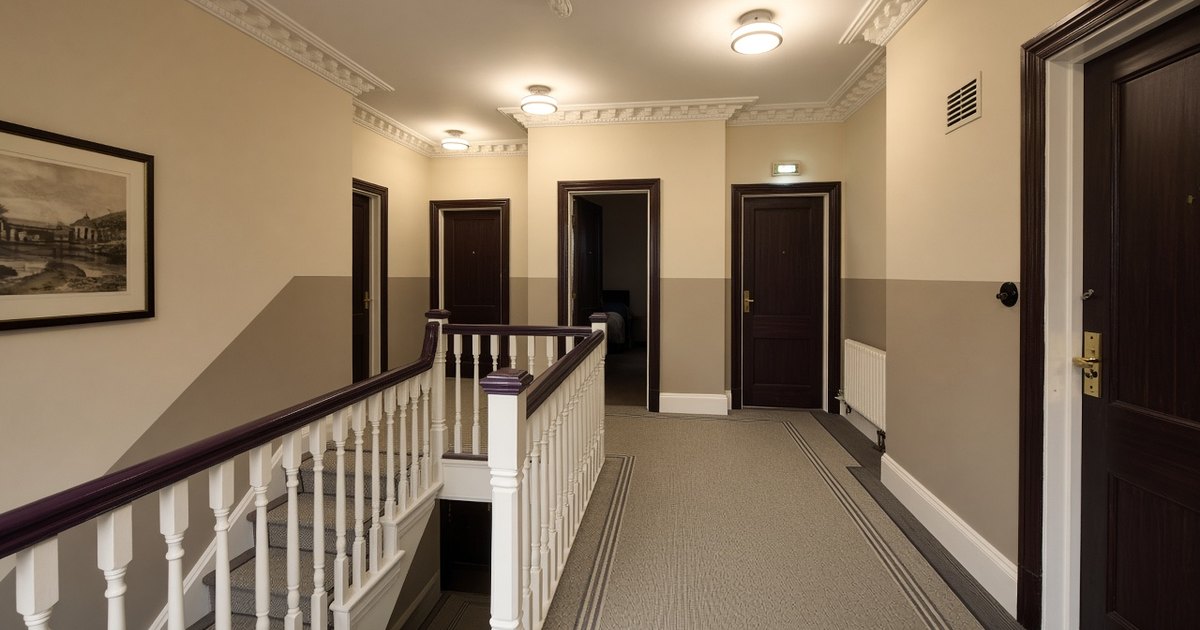
In England, HMO managers also have a legal duty to keep the lights on. Regulation 7 of the Management of Houses in Multiple Occupation (England) Regulations 2006 says the common parts must be fitted with adequate light fittings that are available for use at all times by every occupier. Common parts include the entrance doors, staircases, passageways, corridors, halls, lobbies and landings tenants use to reach their rooms. Wales and Scotland have their own HMO rules, so check the regulations where your property is.
That duty is why the communal supply matters so much. If the account isn’t set up, or the supplier switches off a supply after unpaid bills, the landlord can be in breach as well as out of pocket.
Is a landlord supply business or domestic?
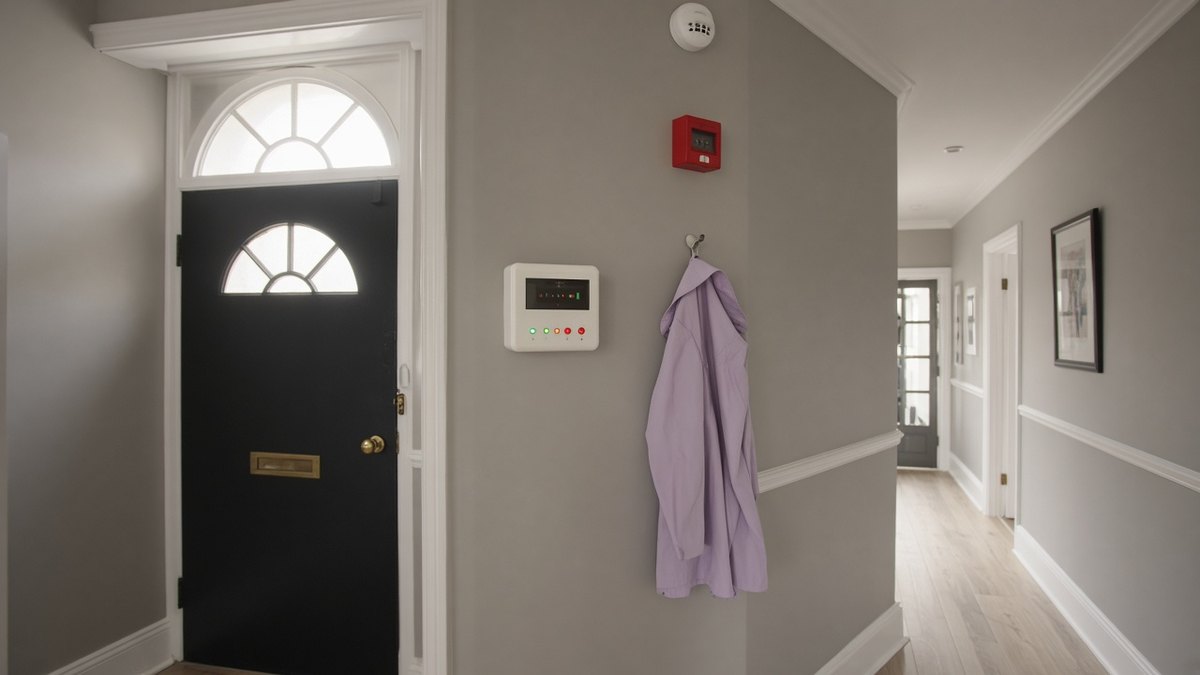
There is no single answer, because suppliers decide what kind of contract to offer based on who the customer is and how the supply is used. A small shared-hallway meter in a house a landlord owns personally may be offered a domestic contract by some suppliers. Supplies held by a company, a portfolio landlord or a block management company are usually placed on business contracts.
The type of contract changes how you are protected. Ofgem notes that business contracts have different terms, pricing and regulation from home energy contracts, and that there is no cooling-off period once you agree one. If a landlord takes over a supply without arranging a contract, the supplier will put it on a deemed contract, and Ofgem says deemed rates are usually higher than negotiated rates. Business contracts also sit outside the household price cap, as our guide to the business energy price cap explains.
Many landlords qualify as microbusinesses for energy. Ofgem’s definition includes any business using up to 100,000 kWh of electricity a year, so many smaller landlords may qualify. Microbusinesses get extra protections, such as clear contract information and renewal prices before a contract finishes; our guide to microbusiness energy rights sets them out.
VAT and the Climate Change Levy on communal supplies
This is where many landlords overpay. Electricity used for non-qualifying, commercial purposes carries 20% VAT and the Climate Change Levy. Electricity for domestic use is treated very differently.
HMRC’s VAT Notice 701/19 lists houses, flats and other dwellings as residential accommodation, and says corridors, lifts, hallways and stairways in a residential unit are treated as part of the same residential unit. Electricity for genuine domestic use is a qualifying use. From 1 October 2026 to 31 March 2027, qualifying supplies of electricity in Great Britain are zero-rated; in Northern Ireland they stay at the reduced rate of 5%. Gas for qualifying use stays at 5%.
Two more rules help mixed buildings. If 60% or more of a supply is for qualifying use, the whole supply can be treated as qualifying. If less than 60% is qualifying, the supply is split and only the qualifying part gets the lower rate. HMRC also applies the reduced rate to small (de minimis) supplies of up to an average of 33 kWh of electricity a day, or 1,000 kWh a month; ask your supplier how it is treating these during the temporary zero-rate period.
The Climate Change Levy works in a similar way. GOV.UK says supplies for domestic use are excluded from the levy, and lists houses, flats and other places of residence among domestic users. For non-domestic supplies, the levy is £0.00801 per kWh of electricity from 1 April 2026, rising to £0.00827 from 1 April 2027.
None of this is automatic. Suppliers need a VAT declaration, and often a levy exemption certificate, before they bill you at the lower rates. Our guides to VAT on business energy and the Climate Change Levy go into the forms. — Climate Change Levy rates, Management of HMOs (England) Regulations 2006, regulation 7, Ofgem — get a business energy contract and Citizens Advice — what your landlord can charge for energy (all checked on 19 October 2026).
Get quotes for your landlord supply with the right VAT treatment
Enter your postcode, current supplier and yearly usage to compare tariffs for each communal meter
Tell us how the supply is used so quotes reflect domestic common parts correctly
Main limitation: final prices depend on your meters, usage and credit check, and lower VAT still needs a declaration for your supplier
What is a landlord communal electricity supply?
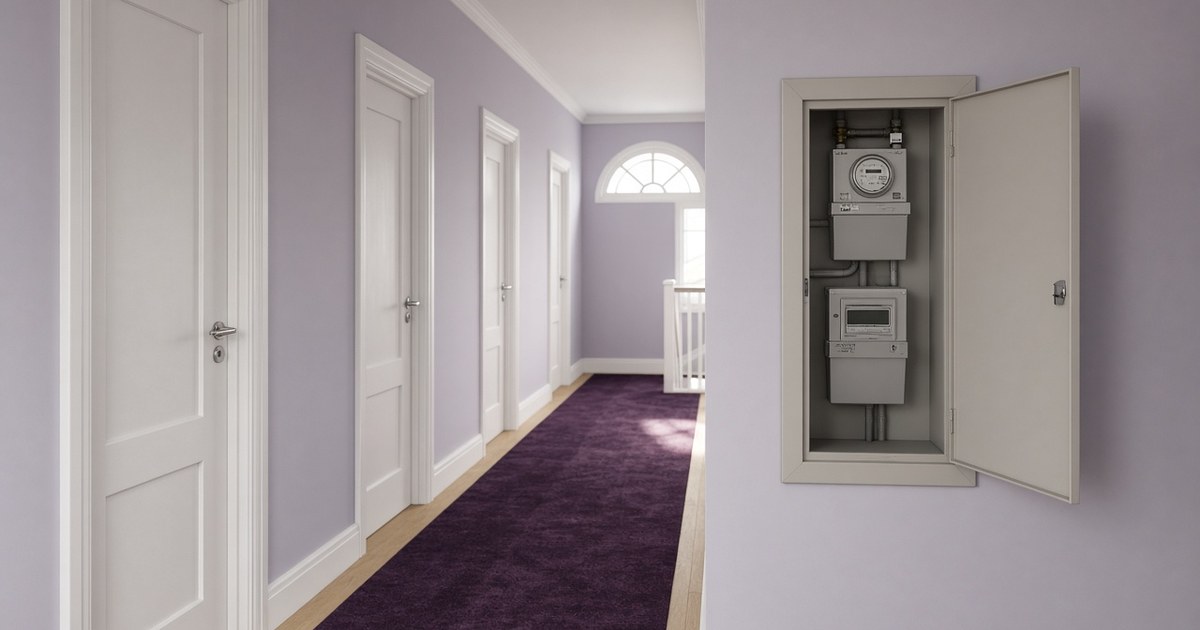
A communal or landlord supply is a separate electricity meter that powers the shared parts of a building rather than any one tenant’s home. In a house in multiple occupation (HMO) or a converted block of flats, it typically runs:
hallway, landing and stairwell lights, often on timers or motion sensors
the fire alarm panel, smoke and heat detectors, and emergency lighting
door entry systems, intercoms and electric locks
shared kitchens, laundry rooms or lounges in some HMOs
lifts, external lighting, bin store lights and CCTV in larger blocks
Where each tenant has their own meter, the communal supply is usually small. Where an HMO is let with bills included, the landlord may hold every supply in the building, and the shared-area meter is just one of them. Our guide to sub-metering and recharging energy in an HMO covers the set-up where rooms are metered separately.
What applies to a communal supply: at a glance
Situation | VAT on electricity | Climate Change Levy | What to do |
|---|---|---|---|
Hallways, stairs and landings in an HMO or block of flats (Great Britain) | 0% from 1 October 2026 to 31 March 2027 if qualifying domestic use | Excluded for domestic use | Send your supplier its VAT declaration form and ask about levy exemption |
Mixed building where 60% or more of the supply is residential | Whole supply can be treated as qualifying | Check with your supplier | Keep a written apportionment, such as floor areas or sub-meter readings |
Mixed building where less than 60% is residential | Split: qualifying part at the lower rate, the rest at 20% | Levy on the non-domestic part | Agree the split with your supplier in writing |
Commercial parts, such as a ground-floor shop | 20% | £0.00801 per kWh from 1 April 2026 | Meter separately where you can |
Northern Ireland, qualifying use | 5% | Excluded for domestic use | Check your supplier applies the reduced rate |
Based on HMRC VAT Notice 701/19 and GOV.UK Climate Change Levy guidance, checked on 19 October 2026. This is general information, not tax advice; ask your accountant if your building is complicated.
To see what the wrong rate costs, take an illustration: a communal supply billed £800 a year before VAT. At 20% VAT, you would pay £160 in VAT. At the usual 5% reduced rate, it would be £40. During the temporary zero rate, qualifying electricity carries no VAT at all. If you can’t reclaim VAT, that difference comes straight off your margin, or out of your tenants’ service charges.
Choose a fixed contract for your HMO or block
Compare one-, two- and three-year fixed contracts side by side
Avoid deemed and out-of-contract rates when you take over a supply
Business contracts have no cooling-off period, so read the terms first
Recharging tenants: the maximum resale price
If you pass on the cost of energy to tenants separately from the rent, you can’t make a profit on it. Citizens Advice explains that landlords can’t charge more than they’ve paid for gas and electricity, known as the maximum resale price. That covers the units used, a fair share of the standing charge and the VAT. It also notes there is no VAT on household electricity bills from 1 October 2026 to 31 March 2027, so recharges should reflect that.
Service charges for common parts work differently. HMRC says the landlord can recover the cost of energy used to meet their obligations under a lease, such as lighting foyers, corridors and stairways, through a service charge, which is treated as part of an exempt supply of residential accommodation. Any VAT the landlord pays on that energy can’t then be recovered, which is another reason to make sure the supply is billed at the right rate in the first place.
Citizens Advice also warns that tenants on bills-included lets might not see the electricity VAT cut. Being open with tenants about how shared costs are worked out avoids disputes. Our HMO landlords energy page covers bills-included set-ups in more detail.
Setting up or taking over a landlord supply
Find the meter and its number. The MPAN is on the bill or the meter. If there is no bill, the distribution network operator for your area can help you trace it.
Take a dated meter reading and photo on the day you take responsibility, so you aren’t billed for someone else’s use.
Contact the current supplier to put the account in the right name. Until you agree a contract, expect deemed rates; our guide to deemed business electricity rates shows how much more they can cost.
Tell the supplier how the supply is used, and send its VAT declaration and any levy exemption paperwork before the first bill.
Compare contracts. Fixed contracts lock the unit rate and standing charge for the term. Read the renewal terms, because some contracts roll over automatically at a higher rate.
Put a reminder in your diary for the contract end date, so the supply doesn’t drift onto out-of-contract rates.
If letting agents or managing agents handle the building for you, a letter of authority lets them deal with suppliers on your behalf. You can also ask Squid AI, SwitchSquid’s AI deal assistant, to walk you through the details a supplier will want.
Safety duties that rely on the communal supply
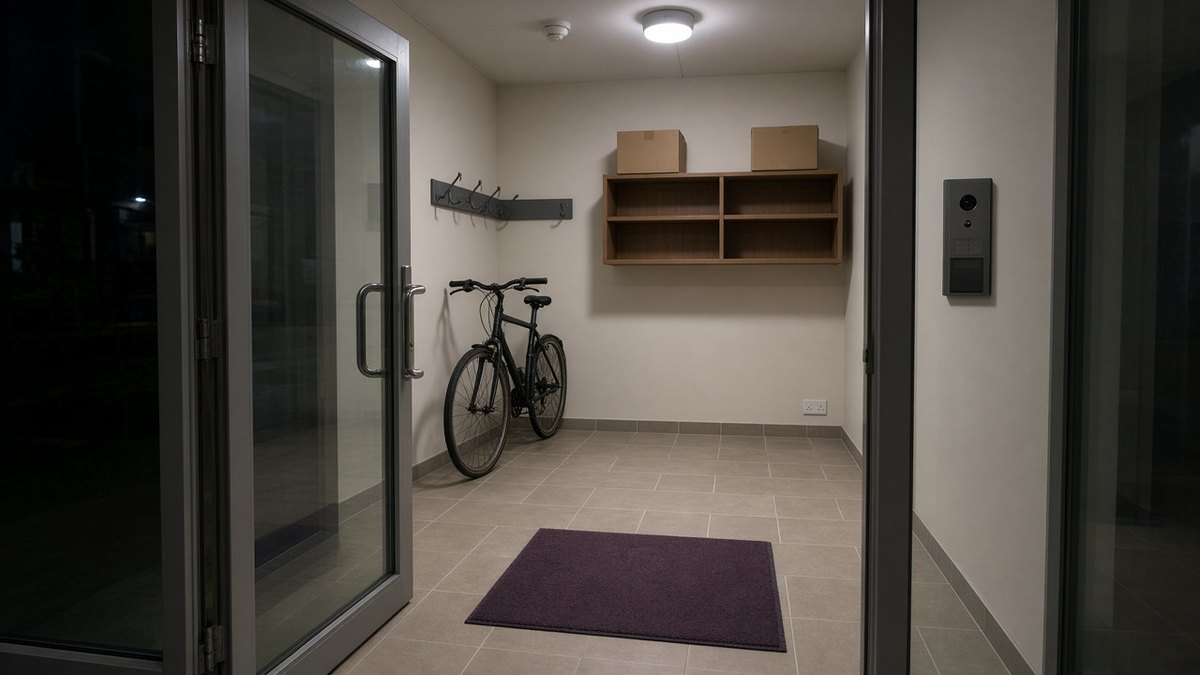
A communal supply isn’t only about lights. Fire alarm panels, detectors and emergency lighting in shared areas depend on it, so an interrupted supply is a safety risk as well as a breach of HMO management duties.
In England, the GOV.UK electrical safety standards guidance says landlords must have the electrics in their rented properties checked at least every five years by a properly qualified person. Include the communal circuits in that inspection and keep the report with your licence paperwork.
Our wider guide to business energy for landlords covers void periods, change of tenancy and portfolio contracts alongside the communal supply.
Fit summary
Act now if: your communal supply is billed at 20% VAT or carries the Climate Change Levy for hallways and stairs in a residential building.
Compare contracts if: you’ve taken on a supply without agreeing a contract, or your current deal is close to finishing.
Take advice if: the building mixes homes with shops or offices, and you need a written VAT split.
Important conditions
The temporary zero rate of VAT applies to qualifying electricity in Great Britain from 1 October 2026 to 31 March 2027; gas for qualifying use stays at 5%.
Suppliers only apply lower VAT and levy rates once they have your paperwork; backdating is at each supplier’s discretion.
Business energy contracts have no cooling-off period once agreed.
HMO management rules quoted are for England; Wales and Scotland have their own regulations.
This guide is general information, not legal or tax advice.
Final decision card
Running an HMO or block with a landlord supply? Check the VAT rate and levy on your last bill today; residential common parts can qualify for 0% VAT on electricity until 31 March 2027.
Supply on deemed or out-of-contract rates? Get quotes and agree a fixed contract before winter bills arrive.
Several buildings? Line up contract end dates so you can compare them together.
Check business energy prices for your properties
Have each MPAN and contract end date ready
Works for single HMOs and portfolios with several buildings
Start early: many suppliers let you agree a new contract months before your current one finishes
FAQ
Who pays for electricity in the communal areas of an HMO?
The landlord pays the supplier for the communal supply, because the meter is in their name. They usually recover the cost through the rent or a service charge, if the tenancy agreements allow it. Tenants can’t be charged more than the landlord actually paid.
Is landlord communal electricity charged at 20% VAT?
It shouldn’t be if the supply is for residential common parts. HMRC treats corridors, hallways, stairways and lifts in a residential unit as part of that unit, so the electricity can be a qualifying domestic use. From 1 October 2026 to 31 March 2027 that means 0% VAT in Great Britain, provided your supplier has the right declaration.
Do landlords pay the Climate Change Levy on a communal supply?
Not for domestic use. GOV.UK says supplies for domestic use are excluded from the levy, including houses, flats and other places of residence. Non-domestic electricity carries £0.00801 per kWh from 1 April 2026.
Can a landlord make a profit on energy recharged to tenants?
No. Citizens Advice says landlords can’t charge more than they paid for gas and electricity, which is known as the maximum resale price. The charge can include the units used, a fair share of the standing charge and VAT.
Is a communal supply on a business or domestic contract?
It depends on the supplier, the customer and how the supply is used. Supplies held by companies, portfolio landlords and management companies are usually on business contracts. Business contracts have no cooling-off period, so read the terms before you agree.
What happens if nobody agrees a contract for the landlord supply?
The supplier puts the supply on a deemed contract. Ofgem says deemed rates are usually higher than negotiated contract rates, so agree a contract as soon as you take responsibility for the meter.
Do HMO landlords have to keep communal lights working?
In England, yes. The Management of Houses in Multiple Occupation (England) Regulations 2006 require common parts to have adequate light fittings available for use at all times by every occupier. Wales and Scotland have their own rules.
Questions about switching? Ask Squid AI
Squid AI explains the price cap, tariffs and switching in plain English, then points you to the comparison.
- Save energy and moneyLearn when a fixed deal beats the price cap.
- Save timeAnswers in seconds, no forms or sign-up.
- Plain answersNo jargon, no sales calls, free to use.