
Last updated: Tuesday 24 November 2026
By: Switch Editorial Team, Switch Squid Ltd
EDF and So Energy remain separate choices for household energy. As of 24 November 2026, EDF’s Simply Tracker offers a £50 annual dual-fuel standing-charge discount, while So Green Tracker advertises £50 on 15 months or £100 on 24 months; neither protects you from a rising price cap. Pick EDF for its wider range of home-energy options, or consider So Energy’s longer tracker if its extra discount outweighs the commitment and exit fees for your household.
This SwitchSquid comparison is for homes in Great Britain, not businesses. It uses the suppliers’ own tariff information and the same Citizens Advice service table for both companies. We have not personally tested either supplier’s customer support, and a postcode quote is needed before anyone can name the cheaper supplier for your home.
We may earn a commission if you buy through links on this page; it doesn’t change the price you pay.
Compare EDF, So Energy and other home energy tariffs
- Use yearly gas and electricity consumption to compare the total, not just the suggested Direct Debit.
- Fixed and variable options depend on your postcode, meter and payment method.
- Limitation: the comparison may not include every supplier or direct-only tariff.
EDF vs So Energy: the useful differences
Question | EDF | So Energy |
|---|---|---|
Tracker discount, as of 24 November 2026 | £50 a year across two fuels, through standing charges | £50 on 15 months; £100 on 24 months, across gas and electricity |
What moves? | Simply Tracker unit rates and standing charges follow the cap | So Green Tracker rates change with the cap every three months |
Fixed prices | Simply Fixed holds unit rates and standing charges for its term | So Fixed holds rates and standing charges; read the individual quote for duration |
Leaving early | Exit fees apply to Simply Fixed and Simply Tracker; amount belongs in the quote | Tracker: £50 per fuel on 15 months or £95 per fuel on 24 months |
Service score, April to June 2026 | 2.96 out of 5, rank 10 | 2.85 out of 5, rank 11 |
Electric car charging | GoElectric: 6.66p/kWh, 11pm to 6am | So EV: 7.5p/kWh, midnight to 5am |
Sources: EDF’s energy tariffs, So Energy’s tariffs, So Green Tracker terms and Citizens Advice’s supplier comparison. Supplier prices and terms are as of 24 November 2026. The service scores cover April to June, not November. A tracker discount is not a fixed yearly bill or a guarantee that switching saves that amount against your existing tariff.
Is EDF taking on So Energy customers?
Do not treat a report about sale talks as a notice that your account is moving. EDF’s 19 November 2026 acquisition announcement concerns Luxion Group, the owner of Utilita Energy, not So Energy. It says that transaction is expected to complete in early 2027, subject to approvals.
Neither that announcement nor So Energy’s media centre confirms a completed EDF takeover of So Energy. We therefore do not describe So Energy customers as EDF customers. If you already buy energy from So Energy, use the account details and payment instructions your supplier gives you, rather than changing them because of a news headline.
EDF and So Energy have their own tariffs, support channels and customer accounts. Comparing them is still a supplier choice, not an internal tariff change. A future company announcement could change that position, but the terms of any transfer would need their own clear notice. A rumour does not tell you whether your rates, payment date or contract would change.
Which supplier could cost less?
There is no national EDF-versus-So price that applies to every household. Energy rates depend on the distribution region, payment method, meter and tariff version. Your consumption then decides the total. A home using little gas might care more about the daily standing charge; a draughty house with high winter gas use is more sensitive to the unit rate.
EDF explains its Simply Tracker reduction as 6.85p a day for electricity and the same for gas, including VAT. Across a full year that is about £25 per fuel. The supplier says the discount is the same across regions and payment methods, but a traditional prepayment meter must move to smart Pay As You Go for that tariff.
So Energy’s 24-month tracker advertises a £100 dual-fuel annual discount, compared with £50 for its 15-month version. That makes the headline discount £50 larger than EDF’s on the longer So term. It does not make So £50 cheaper for every customer, because the individual rates and contract conditions still matter.
Use kilowatt-hours from an annual statement for both quotes. If you compare one supplier’s estimate for a two-person flat with another’s estimate for a family home, the apparent saving says more about the assumptions than the tariffs. Keep the fuel use, address and payment method identical, then compare annual estimates including VAT.
Tracker, fixed or standard variable?
A tracker can sound like a compromise between a fix and a variable tariff, but it does not divide the price risk in half. Both suppliers’ trackers follow the price cap. If the cap rises, the rates can rise even though the tariff has a contract term. The discount is the attraction; the ability to avoid a cap increase is not.
A fix does a different job. It holds the agreed unit rates and standing charges for the period in your offer. Your bill can still increase if you use more energy, and the monthly Direct Debit may be adjusted to reflect consumption. Ask whether the fixed rates are worth the commitment, rather than assuming the word fixed means the whole bill cannot change.
A standard variable tariff usually makes more sense when flexibility is the priority. So Flex has no exit fee, according to So Energy. EDF’s general tariff explanation distinguishes its variable option from the fixed-end-date tracker. Read the tariff information for the exact EDF offer before comparing leaving costs.
Ofgem changes the cap quarterly. Its price cap explanation sets out why the cap limits rates, not total household spending. Do not decide on a two-year contract using a single forecast as if it were a confirmed bill for the next two winters.
For context, Ofgem’s unit rates and standing charges page puts the cap for 1 October to 31 December 2026 at £1,723 a year for a typical dual-fuel home paying by Direct Debit, with electricity at 26.32p per kWh and gas at 7.97p per kWh. Both trackers start from that kind of cap-based price, then apply their own discount.
Tariff type, as of 24 November 2026 | EDF | So Energy | Who it may suit |
|---|---|---|---|
Tracker | Simply Tracker: rates follow the cap, £25 per fuel off standing charges a year, fixed end date | So Green Tracker: 15 or 24 months, £25 or £50 per fuel below the cap, smart meter needed | Someone who accepts cap movements in exchange for a discount |
Fixed | Simply Fixed: rates and standing charges stay put until the end date; exit fees apply | So Fixed: 12, 18 or 24 months; £75 per fuel to leave a 12-month deal, £95 per fuel for 18 or 24 | A household that values a steady unit rate over flexibility |
Standard variable | Standard (Variable): no fixed end date, moves with the cap | So Flex: no exit fee, moves with the cap; not a renewable tariff | Anyone expecting to move or switch soon |

Exit fees can outweigh a small discount
So Energy’s tracker comparison states £50 per fuel for a 15-month contract and £95 per fuel for 24 months. For a dual-fuel customer that is £100 or £190 if both fees apply. Those are meaningful sums beside an extra £50 annual headline discount.
For example, suppose the longer So tracker saved exactly £50 more over a year than another tariff, but leaving it early cost £190. Paying that fee would consume the saving several times over. This is arithmetic, not a prediction that you will need to leave. It shows why a possible house move or a likely change of heating system belongs in the decision.
EDF says exit fees apply to Simply Fixed and Simply Tracker, but its overview does not give one universal fee. Use the tariff information label for the version you are offered. Do not borrow an exit fee from an older comparison or assume every EDF fix has the same conditions.
Also distinguish leaving a supplier from moving to a different tariff with that supplier. Ask what each action costs and keep a copy of the answer. Your existing supplier’s fee matters too: a new discount can be swallowed before the switch even begins.
Compare the cost of a fixed home energy tariff
- Put each annual estimate alongside the contract length and any leaving charge.
- A fixed unit rate can help budgeting, but extra consumption still increases the bill.
- Limitation: availability and exact rates are personal to the household quotation.
Customer service: EDF has a small lead in this table
Citizens Advice gives EDF 2.96 out of 5 and So Energy 2.85 in its April to June 2026 comparison. EDF is tenth and So Energy eleventh. A 0.11-point difference is not a reason to promise a smoother experience, but it is a more balanced comparison than choosing whichever review website gives one supplier a glowing headline.
The table combines complaints, contact waiting time, billing and metering, and customer commitments. Both suppliers receive 2 out of 5 on the fewer-complaints measure. EDF’s contact and billing scores are each 3.2, against 3.0 for So Energy on both measures. These are published category ratings, not SwitchSquid’s own service tests.
If you have a complex meter problem, ask about that before moving. Explain whether you have an Economy 7 meter, separate heating circuits or a smart meter that has stopped communicating. A tariff that looks attractive in a table may be unsuitable if it cannot support your meter correctly.
People who need accessible communication or help during a power cut should also ask about the Priority Services Register. Supplier service and the local network operator’s emergency responsibilities are different. Changing the company that bills you does not replace the physical network serving your home.
Electric cars, heat pumps and solar panels
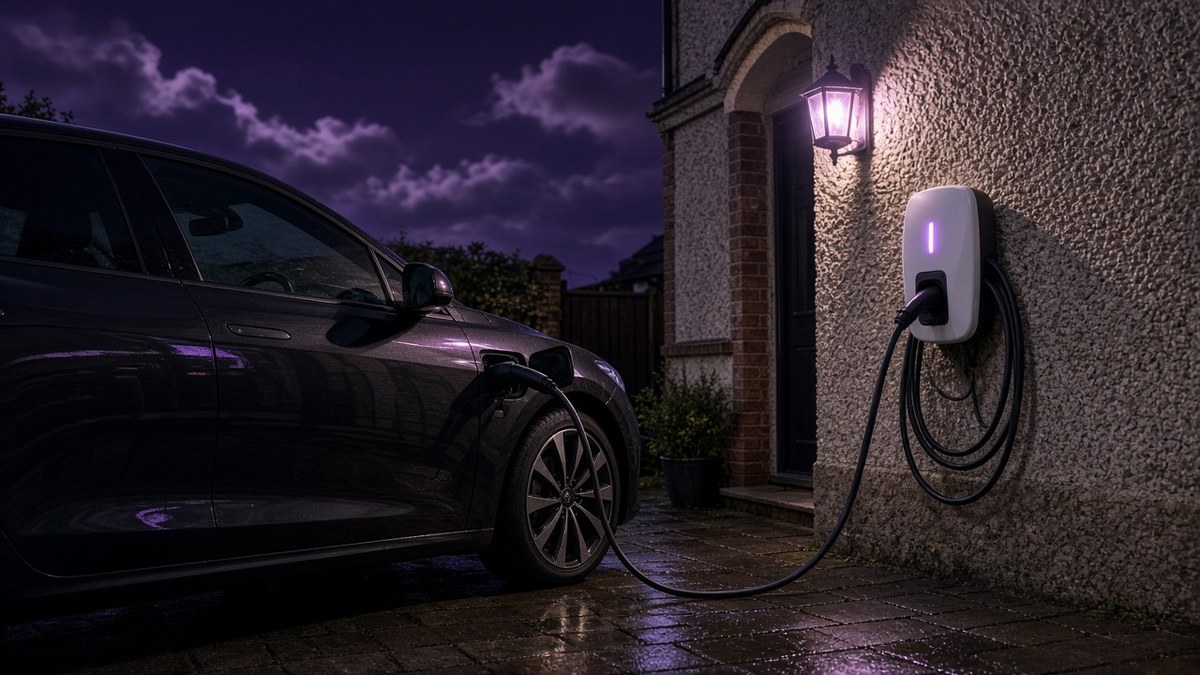
As of 24 November 2026, EDF advertises GoElectric at 6.66p per kWh from 11pm to 6am. So Energy’s So EV tariff offers 7.5p per kWh from midnight to 5am. Those are seven and five hours respectively, but neither off-peak rate tells you the cost of the rest of the day.
For an illustrative 200kWh of charging entirely inside the stated window, 6.66p works out at £13.32 and 7.5p at £15. That £1.68 difference is before standing charges, daytime electricity and gas. A household using a lot of daytime power could reverse that apparent advantage once the whole quote is included.
EDF’s overview also describes heat-pump and solar tariffs. A household with those technologies should compare the relevant import and export terms rather than automatically choosing an ordinary dual-fuel fix. A generous export rate is not necessarily good value if it requires expensive daytime imports.
So Energy says its fixed tariffs and Green Tracker include renewable electricity; So Flex does not make the same promise. Renewable matching is not the same as a dedicated renewable cable into your house. Compare the tariff claim and the supplier’s fuel-mix disclosure separately.
How to compare and switch without losing the detail
Find the last annual statement and record gas and electricity use in kWh, plus your current tariff and leaving fees.
Obtain EDF and So Energy quotes using the same address, meter details and payment method. Save the tariff information labels.
Compare annual cost, standing charges, contract length and exit fees. Add any technology-specific conditions for an EV or heat pump.
Choose a start date and let the new supplier explain the transfer. EDF says switching can take as little as five working days, with a 14-day cooling-off period after agreement.
Take meter readings and photographs around the transfer date, keep the final bill and watch for a remaining credit balance.
For another supplier alongside So Energy, read E.ON Next vs So Energy, So Energy vs Octopus or OVO vs So Energy. If EDF is your starting point, EDF vs Octopus covers a different alternative.
FAQ
Are EDF and So Energy the same supplier?
EDF and So Energy have separate customer accounts and tariff ranges. EDF’s November acquisition announcement is about Utilita’s owner, not a completed purchase of So Energy. Do not alter payments on the strength of an acquisition rumour.
Is So Energy cheaper than EDF?
That depends on your postcode, meter and usage. So Energy advertises a larger dual-fuel tracker discount on its 24-month option, but the contract and exit fees also differ. Obtain matching annual quotes rather than comparing estimated monthly payments.
Does a tracker protect me from a January price rise?
No. Both Simply Tracker and So Green Tracker move with the price cap, so their rates can increase when the cap increases. A fixed tariff provides rate certainty for its agreed period instead.
How much does So Energy charge to leave its tracker?
The supplier states £50 per fuel for the 15-month tracker and £95 per fuel for 24 months. That means up to £100 or £190 respectively for a dual-fuel account when both charges apply. Read your own contract before arranging a move.
Which has the stronger Citizens Advice score?
EDF scores 2.96 out of 5, compared with 2.85 for So Energy, for April to June 2026. Their positions are tenth and eleventh in that comparison. The scores describe that reporting period, not a personal guarantee of future service.
Can either supplier be used with an electric car?
Both offer a home EV tariff. EDF’s advertised overnight window runs from 11pm until 6am, while So EV runs from midnight until 5am. Compare daytime rates, meter requirements and the amount you can charge overnight as well as the off-peak price.
Does electricity stop during a supplier switch?
A normal supplier transfer changes who bills the home, not the wires or pipes bringing energy to it. Keep readings and account records so the opening and final bills use consistent information. Your new supplier should explain the timetable and any meter requirements.
Find a home energy quote that fits your household
- EDF’s range may suit a home with extra energy technology; So’s tracker is worth weighing against its commitment.
- Use the actual annual estimate and contract conditions before deciding.
- Limitation: a comparison result is not an assurance that either supplier will cost less for every home.
Questions about switching? Ask Squid AI
Squid AI explains the price cap, tariffs and switching in plain English, then points you to the comparison.
- Save energy and moneyLearn when a fixed deal beats the price cap.
- Save timeAnswers in seconds, no forms or sign-up.
- Plain answersNo jargon, no pressure, free to use.