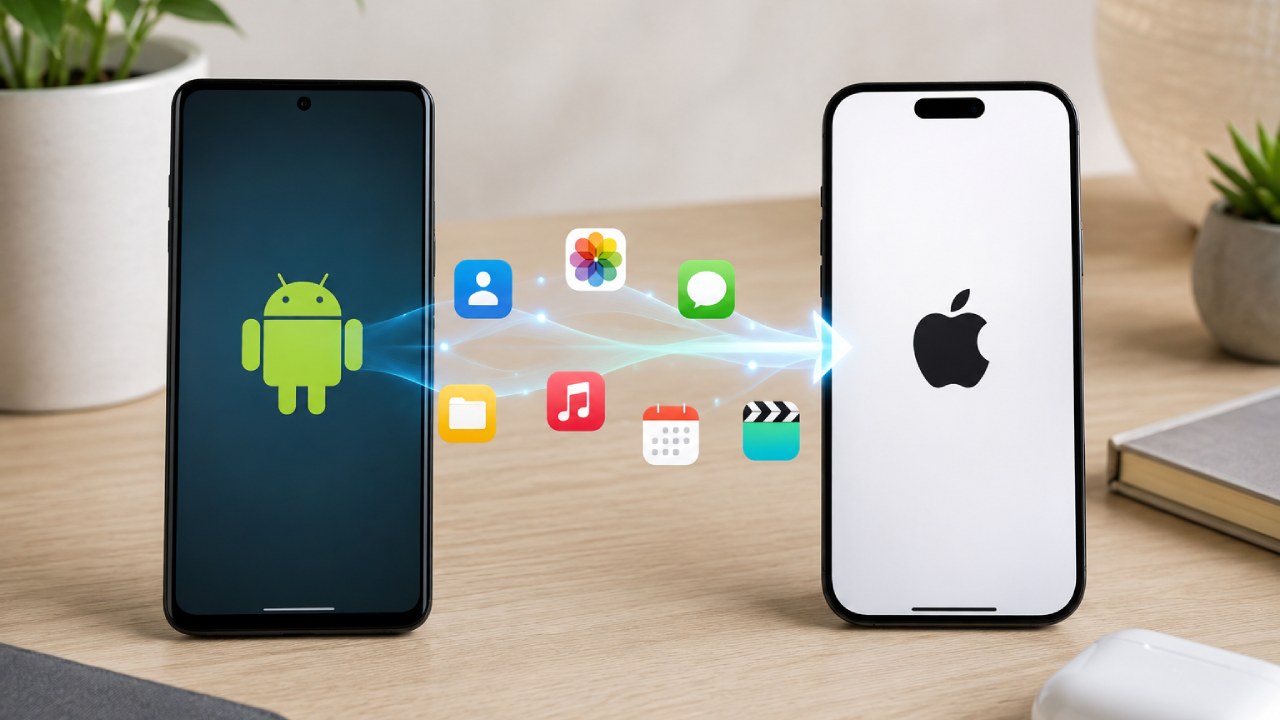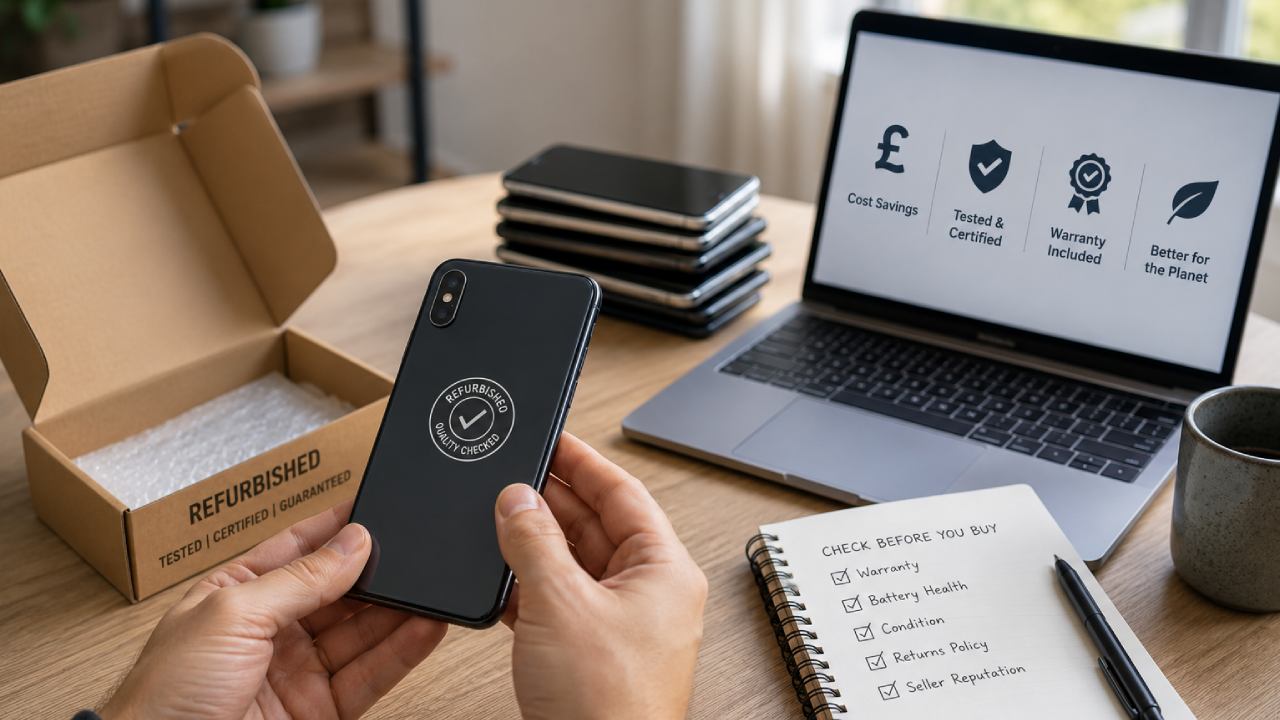
Yes, refurbished phones are good for most buyers in 2026. A refurbished phone gets tested, repaired where needed, wiped of old data, and restored to full working order before resale, and it typically costs 30% to 60% less than the same model new. Reputable sellers back a refurbished handset with a 12-month warranty and full UK consumer rights. This guide covers what refurbished actually means, the grading system sellers use, the real disadvantages to weigh up, and a checklist to buy one safely.
What Is a Refurbished Phone?
A refurbished phone is a used handset that a seller has professionally tested, repaired, cleaned, and reset to factory settings before reselling it. Sellers source refurbished stock three ways: cooling-off returns from customers who changed their mind within 14 to 30 days, faulty units repaired under warranty, and trade-in devices collected through recycling schemes. Every unit goes through the same process: diagnostic testing on the screen, battery, cameras, and buttons, a secure data wipe under UK data protection law, and a cosmetic grade. The terms refurbished, reconditioned, and refurbished phone all describe the same process. A refurbished mobile phone is not the same as a second-hand phone sold privately, because private sales skip the testing and warranty stage entirely.
Are Refurbished Phones Good in 2026?
Refurbished phones are a good investment in 2026. Testing standards, battery guarantees, and buyer protection have all improved over the past two years. Most manufacturer refurbished programmes now guarantee a battery health of 80% or higher, replace the outer shell, and include a fresh one-year warranty. Third-party refurbishers follow similar standards and increasingly publish battery health and grade on the product page itself, so buyers can compare before paying. The main risk sits with unregulated private sellers, not with a refurbished handset bought through a registered trader.
Refurbished Phone Grades Explained
Sellers grade refurbished phones on a three or four-tier scale, though there is no single UK industry standard, so always check the seller's own definition first.
Grade A (Pristine or Like New): no visible marks, battery health of 85% or above, full accessory set in most cases.
Grade B (Good or Very Good): light scratches visible under close inspection, battery health of 80% to 85%, screen and body fully intact.
Grade C (Fair): visible scratches or small marks on the screen or body, battery health of 75% to 80%, fully functional.
Grade D (where offered): heavier cosmetic wear, sold mainly to buyers who repair phones themselves.
Grade A costs the most and Grade C saves the most, so match the grade to the budget rather than assuming a higher grade always means better value.

Refurbished vs Reconditioned vs Used Phones
Refurbished and reconditioned mean the same thing: a tested, repaired, and warrantied device. UK retailers use both words interchangeably, and neither term is legally defined, so the warranty and grading matter more than the label itself. A used phone, by contrast, usually comes from a private seller on a marketplace, without testing, data-wipe verification, or a warranty. Treat a listing as used rather than refurbished, regardless of the title, if it does not state a clear grade and warranty.
Advantages of Buying a Refurbished Phone
Buying refurbished pays off in five ways.
Saves 30% to 60% off the new retail price for the same model.
Includes a 12-month warranty from most registered traders.
Cuts e-waste, since the world generated 62 million tonnes of e-waste in 2022 and recycled only 22.3% of it, according to the UN's Global E-waste Monitor.
Delivers flagship specs at mid-range prices, because last year's flagship becomes this year's refurbished bargain.
Widens model choice to include discontinued phones no longer sold new.
Disadvantages of Refurbished Phones
A refurbished phone carries five real drawbacks.
Skips the original packaging and full accessory bundle in most cases.
Shows cosmetic wear on Grade B and Grade C units.
Carries a lower battery health than a brand-new handset, typically 75% to 90% instead of 100%.
Limits stock of the newest flagship models for the first 12 months after launch.
Varies in grading standard from one seller to the next.
How to Buy a Refurbished Phone Safely
To buy a refurbished phone safely, follow these seven checks before paying.
Buy from a registered trader rather than a private seller, to keep full UK consumer rights.
Read the seller's own grading definition, since grades are not standardised across the industry.
Confirm the warranty length and provider in writing before checkout.
Check the IMEI (International Mobile Equipment Identity) number through the network's free checker to confirm the phone is not blacklisted or reported lost.
Ask for the battery health percentage and aim for 80% or above.
Confirm the phone is unlocked or matches the buyer's current network.
Pay by credit card for any purchase over £100, since Section 75 of the Consumer Credit Act makes the card provider jointly liable if something goes wrong.
How Much Can You Save Buying Refurbished?
A refurbished handset typically costs 30% to 60% less than the same model bought new, with the exact saving driven by the phone's age and grade. A flagship phone released in the last 12 months usually saves the smallest amount, often 15% to 25%, because demand for the newest model stays high even in refurbished condition. A flagship from two or three years ago saves the most, frequently 50% to 65%, since new stock of that model is scarce and the retail price of its successor has pulled attention away. Mid-range models save a smaller percentage in cash terms but still cut the upfront cost by £50 to £150 in most cases. Buyers chasing the biggest saving should look one or two generations behind the newest release rather than at last month's launch.
Refurbished iPhone vs Refurbished Android Phone
A refurbished iPhone and a refurbished Android phone go through the same core process, but battery and software support differ. Apple fits a new battery into every manufacturer refurbished iPhone and includes free software updates for several years after launch, so an older refurbished iPhone often keeps receiving security patches for longer than an equivalent Android device. Samsung and Google now match this with three to five years of security updates on recent flagship models, though older Android handsets from smaller brands fall out of support sooner. Before buying either, check how many years of software updates the model has left, since a cheap refurbished handset with no update support left is a weaker buy than a slightly pricier model still inside its support window.
Check 5G and eSIM Support Before Buying
Confirm 5G and eSIM support before buying a refurbished phone, since older models sold as budget refurbished stock often lack both. Most networks in the UK have expanded 5G coverage significantly since 2023, so a 4G-only refurbished handset will miss out on faster speeds in areas with a live 5G signal. eSIM support matters too, since it lets a buyer switch network or add a second number without waiting for a physical Sim to arrive. Check the exact model number of the refurbished listing against the manufacturer's specification page rather than relying on the product photo, since sellers sometimes group several storage variants of the same phone name under one listing.
Manufacturer Refurbished vs Third-Party Refurbished
A manufacturer refurbished phone comes directly from the brand that made it, using genuine parts, original software, and a full factory reset. Apple and Samsung both run manufacturer refurbished programmes in the UK, each with a one-year warranty and new batteries fitted as standard. A third-party refurbished phone comes from an independent retailer or trader instead, at a lower price but with more variation in parts, grading, and warranty length. Choose manufacturer refurbished for the newest models and maximum peace of mind, and choose third-party refurbished for older or discontinued models at the lowest price.
Refurbished Phones and the Environment
Buying refurbished keeps a working phone out of landfill and cuts demand for new raw materials. The world generated 62 million tonnes of e-waste in 2022, and just 22.3% of that was properly collected and recycled, according to the UN's Global E-waste Monitor 2024. Mobile phones and other small IT equipment made up several million tonnes of that total. Manufacturing a single new smartphone uses rare metals such as cobalt, lithium, and gold, all mined at a heavy environmental cost. Choosing a reconditioned phone over a new one extends the life of an existing device and reduces the pressure to mine more of these materials.
Where to Buy a Refurbished Phone in the UK
Buyers can choose from four main sources for a refurbished handset in the UK.
Manufacturer stores, such as Apple and Samsung, for the highest grading standard and a full one-year warranty.
Mobile networks, which sell refurbished handsets on contract alongside new models.
Major marketplaces, including Amazon and eBay, provided the listing comes from a registered trader.
Specialist refurbishers, who focus solely on tested, graded, and warrantied second-hand stock.
Once the handset is sorted, pair it with a cheap SIM-only plan from SwitchSquid's SIM-only deals page rather than a new handset contract, since most refurbished phones already come unlocked. Buyers who want extra protection against drops or theft can also compare cover on SwitchSquid's mobile insurance guide. For a full look at UK statutory buyer rights, see the government's consumer protection guidance.
FAQs
Are refurbished phones good?
Yes, refurbished phones are good when bought from a registered trader with a warranty and a clear grade. Testing, data wiping, and battery checks happen before resale, so the buyer gets a working handset at 30% to 60% below the new price.
What is a refurbished phone?
A refurbished phone is a used handset that has been tested, repaired if faulty, wiped of personal data, and given a cosmetic grade before resale. Most refurbished units also come with a one-year warranty.
What does refurbished mean for a phone?
Refurbished means the phone has been restored to full working order after being returned, traded in, or repaired. The seller then checks, cleans, and resets the device before it goes back on sale.
Are refurbished phones safe to buy?
Yes, refurbished phones are safe to buy from a registered trader. UK consumer law requires the phone to be of satisfactory quality, fit for purpose, and as described. Private sales carry far less protection, so check the seller's trader status first.
What is the difference between refurbished and reconditioned phones?
There is no practical difference between refurbished and reconditioned phones. Both terms describe a device that has been tested, repaired, and restored to working order before resale, and UK retailers use the two words interchangeably.
What is a manufacturer refurbished phone?
A manufacturer refurbished phone is a used device restored by the brand that built it, using genuine parts, a new battery, and the latest compatible software. The manufacturer's own warranty then backs the device, typically for one year.
What are the disadvantages of refurbished phones?
The main disadvantages are missing original packaging, some cosmetic wear on lower grades, a battery health below 100%, and grading standards that vary between sellers. None of these affect how the phone performs day to day.
.jpg)