
Last updated: Monday 12 October 2026.
The best time to start renewing a care home's energy contract is about six months before it ends. Don't leave it until the last few weeks. Check your end date, notice terms, VAT declaration and meter list first, then compare quotes on total yearly cost rather than unit rate alone. If you miss the end date, a business supplier can roll you over or move you onto out-of-contract or deemed rates, and these are usually higher than a new fixed deal (Ofgem).
This checklist from SwitchSquid is for managers, owners and finance leads at residential and nursing homes in Great Britain. For the bigger picture on VAT, the Climate Change Levy and typical care home rates, see our main business energy for care homes page.
We may be paid if you use our business energy form.
Get a care home energy quote
- Our own business energy form, free with no obligation
- One home or a whole group
- Have your latest bills and meter numbers ready
Key facts (checked 12 October 2026)
- Business energy has no Ofgem price cap, so your price is whatever your contract says (Ofgem).
- There is no cooling-off period once you agree a business energy contract, including by phone (Ofgem).
- Microbusinesses (fewer than 10 employees and turnover or balance sheet of no more than £2 million, or using up to 100,000 kWh of electricity or 293,000 kWh of gas a year) must get renewal price information before the contract ends (Ofgem).
- If a contract rolls over automatically, the new fixed term is usually 12 months and may be at a higher rate (Ofgem).
- Care for the elderly or disabled counts as qualifying residential accommodation for reduced-rate VAT on fuel and power (HMRC VAT Notice 701/19).
Is this checklist for you?
Good for: single care homes and small groups with a fixed contract ending in the next 3 to 12 months, and new owners who have taken over a home and its bills.
Consider other help if: you run a large group on a flexible or pass-through contract with an energy manager, or your home is part of an NHS or council contract that buys energy centrally.
Why renewal matters more for a care home
A care home can't close at night or at weekends. Residents need warm rooms, hot water for bathing, a busy kitchen, a laundry that rarely stops, nurse call systems, lifts and, in some homes, medical equipment and hoists. That steady 24-hour demand means a small change in the unit rate, multiplied across a whole year of round-the-clock use, adds up to a large sum.
The renewal is also where mistakes creep in. Homes change hands, managers move on and meters get added for extensions or new laundry rooms. A VAT declaration sent to an old supplier doesn't carry over automatically. A careful renewal is your chance to fix all of this at once, before you commit for one to three years.
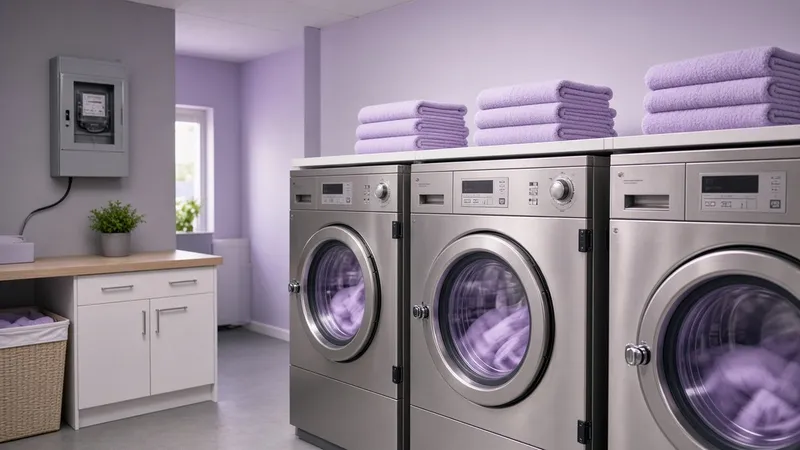
Laundry, kitchens and hot water run every day, so check that every meter serving them is on your renewal list.
The renewal checklist, month by month
When | What to do | Why it matters |
|---|---|---|
6 months before the end date | Find your end date and notice terms on your contract or latest bill | Some contracts need written notice, and missing it can trigger a rollover |
6 months before | List every meter: MPAN (electricity) and MPRN (gas), including annexes and laundries | A missed meter can stay on out-of-contract rates |
5 months before | Pull 12 months of kWh usage for each meter | Suppliers price on usage, and accurate figures give firmer quotes |
5 months before | Check your VAT declaration and Climate Change Levy set-up | Residential care use can qualify for reduced VAT and no CCL on that share |
4 months before | Request quotes for 1, 2 and 3-year fixed terms | It lets you compare budget certainty against price |
3 months before | Compare total yearly cost, standing charges, exit terms and broker fees | The cheapest unit rate isn't always the cheapest contract |
2–3 months before | Agree the contract in writing and send any notice to your current supplier | There's no cooling-off period once you agree |
End date | Take meter readings and check the first bill | It confirms the new rates, VAT and CCL are applied correctly |
Step 1: Find your end date and notice terms
Your end date is usually printed on your bill, in your contract's principal terms or in your supplier's online account. Look for the notice clause too. Many business contracts expect written notice within a set window, and if you don't give it, the supplier can roll you onto a new fixed term at its own rates. If your home is a microbusiness under Ofgem's definition, your supplier must send you renewal price information before the contract ends. Ofgem says a rollover is usually for a further 12 months and may be at a higher rate. Many small homes meet the energy-use test even with more than 10 staff, so it's worth checking. Our contract end date checker shows where to look.
Step 2: Build a complete meter list
List every electricity MPAN and gas MPRN at each home. Care homes often have more meters than the manager realises: a separate supply for an extension, a laundry block, a staff house or an old boiler house. Walk the site with your maintenance lead, photograph each meter and match the serial numbers to your bills. If one meter is missed, it can stay on the old contract or drop onto out-of-contract rates while the rest of the home moves on. See our guide to out-of-contract business energy rates.
Step 3: Get 12 months of real usage
Suppliers price your contract on how much you use, so give them actual kWh figures rather than estimates. Add up the last 12 bills for each meter, or download usage from your supplier's portal. Larger homes may have half-hourly electricity meters, and the half-hourly data shows how flat your demand is across the day. Because care homes run around the clock, their demand is flatter than an office's. Some suppliers price that more favourably, so it's worth having the data to hand. Our half-hourly meter guide explains what that data looks like.
Step 4: Check VAT and the Climate Change Levy before you sign
HMRC lists care homes for the elderly or disabled, children's homes and hospices among the types of qualifying residential accommodation, so the energy used for residents can be charged at a reduced rate of VAT (VAT Notice 701/19). Where 60% or more of a supply is for qualifying use, the whole supply can be treated as qualifying. Supplies for residential use are also outside the Climate Change Levy (GOV.UK CCL rates). None of this happens automatically. You need to give each new supplier a VAT declaration for each site. Do it as part of the renewal, so your first bill on the new contract is right. If you're unsure of your percentage, ask your accountant. Our care homes page sets out the current rates in a table.
Step 5: Compare quotes the right way
Put every quote side by side on the same basis: unit rate, standing charge, contract length, exit fees, broker fee and estimated total yearly cost including VAT and CCL. A low unit rate paired with a high daily standing charge can cost more for a small home, while a large home will feel the unit rate most. Ask each supplier or broker to confirm how they are paid. Ofgem expects you to know whether broker fees or commissions are included in the price before you agree (Ofgem). For more on fees, read business energy broker fees.
Contract choice | Suits | Watch for |
|---|---|---|
1-year fixed | Homes that expect to sell, refurbish or change use soon | Less certainty, and you'll renew again next year |
2-year fixed | Most single homes wanting a stable budget | Exit fees if circumstances change |
3-year fixed | Established homes with a settled occupancy | You're locked in if wholesale prices fall |
Multi-site, one end date | Groups of three or more homes | Check every meter at every home is listed |
Squid AI tip: open Ask Squid AI (the purple chat bubble in the bottom corner of the page) and ask "What should a care home check before renewing business energy?". It explains the terms in plain English. It won't give you a price, because business prices depend on your meters and dates.
Compare renewal quotes for your home
- Unit rate, standing charge and total yearly cost on every quote
- Fee and exit terms shown before you agree
- VAT and CCL set-up checked
Step 6: Agree in writing and handle the switch
Ask for the offer and its terms in writing before you agree, because a phone agreement is legally binding and there's no cooling-off period (Ofgem). Once you've agreed, send any notice your current contract needs, and keep proof that it was sent. The new supplier handles the switch itself. Your power and gas carry on as normal, so residents won't notice anything. On the start date, take meter readings and photograph them.
Step 7: Check the first bill
When the first bill arrives, check the unit rate, standing charge, VAT rate and whether CCL is applied. Check every meter is on it. If anything is wrong, raise it with the supplier straight away. Micro and small businesses whose complaint isn't resolved can go to the Energy Ombudsman (Ofgem).
Important conditions
Before you rely on this checklist
- Business energy prices aren't capped, so quotes change with the market and are usually only valid for a short time.
- The VAT and CCL treatment depends on how each supply is used. Your accountant should confirm your percentage.
- Notice rules depend on your contract. Microbusiness protections only apply if you meet Ofgem's definition.
- This guide is general information, not legal or tax advice.
Brokers or going direct?
You can ask suppliers for quotes yourself, or use a broker to collect them for you. Going direct means you deal with each supplier one at a time and chase each quote yourself. A broker can collect several quotes at once and line up end dates across a group, but is usually paid a commission built into your rates. Either way, ask for the full price, contract length and any fee in writing. Ofgem says a broker paid by a supplier must be a member of an approved redress scheme, so check which one before you use them (Ofgem).
Frequently asked questions
When should a care home start renewing its energy contract?
Start about six months before your end date, and no later than three months. That gives you time to gather usage, sort your VAT declaration and compare quotes properly. Leaving it to the last few weeks raises the risk of a rollover or out-of-contract rates.
What happens if our care home misses its renewal date?
Your supplier may roll you onto a new fixed term at its own prices, or move you to out-of-contract or deemed rates, which are usually higher. Ofgem says a rollover is usually for 12 months, so contact your supplier and get quotes straight away.
Do we need a new VAT declaration when we switch supplier?
Yes. The declaration is held by your supplier, so a new supplier needs its own copy for each site. Without it, you may be charged the standard rate of VAT and the Climate Change Levy on residential use.
Is a care home a microbusiness for energy?
It can be. Ofgem counts you as a microbusiness if you have fewer than 10 employees and turnover or a balance sheet of no more than £2 million, or if you use up to 100,000 kWh of electricity or 293,000 kWh of gas a year. Many small homes qualify on energy use alone.
Can we cancel a business energy contract after agreeing it?
Usually not. Ofgem says there's no cooling-off period for business energy contracts, even if you agree by phone. Always read the written terms before you say yes.
Will switching supplier interrupt power to residents?
No. A switch is a change of billing account, not of the wires or pipes. Your supply carries on as normal, and the new supplier simply starts billing from the switch date.
Should a care group put all its homes on one contract?
A multi-site contract gives every home one end date and one renewal, which saves time and reduces the risk of a missed date. It suits groups of three or more homes. Check that every meter at every home is listed before you sign.
Your decision
Ready to renew?
- If your end date is within six months, request quotes now.
- Have your meter numbers, 12 months of usage and VAT declaration ready.
- Compare total yearly cost, not just the unit rate.
For VAT, CCL and typical care home rates, read business energy for care homes.
Check what your care home could pay
- Gas and electricity quotes for one home or a group
- Free, with no obligation to switch
Sources
Questions about business energy? Ask Squid AI
Squid AI explains business energy contracts, renewal dates and switching in plain English, then points you to our business energy quote form.
- Save energy and moneyLearn when a longer fixed business contract makes sense.
- Save timeAnswers in seconds, no forms or sign-up.
- Plain answersNo jargon, no pressure, free to use.