
Last updated: 11 November 2026 (Europe/London).
Energy is the bill where the questions are hardest. What is the price cap? Should I fix? What happens if prices fall? Squid AI, the free AI helper on Switch, answers those questions in plain English. When you’re ready, it sends you to compare home energy tariffs for your own postcode.
Ask Squid AI about your energy
If the button doesn’t open the chat, tap the purple Squid AI chat bubble in the bottom corner of the page, or Ask Squid AI in the top menu.
We may earn a commission if you buy through some links on this page. It never changes the price you pay.
What Squid AI can help with
Squid AI can explain the Ofgem price cap, fixed and variable tariffs, exit fees and when fixing tends to make sense. It doesn’t quote your personal price. Your bill depends on your usage and region, so the only way to see real prices is a postcode comparison.
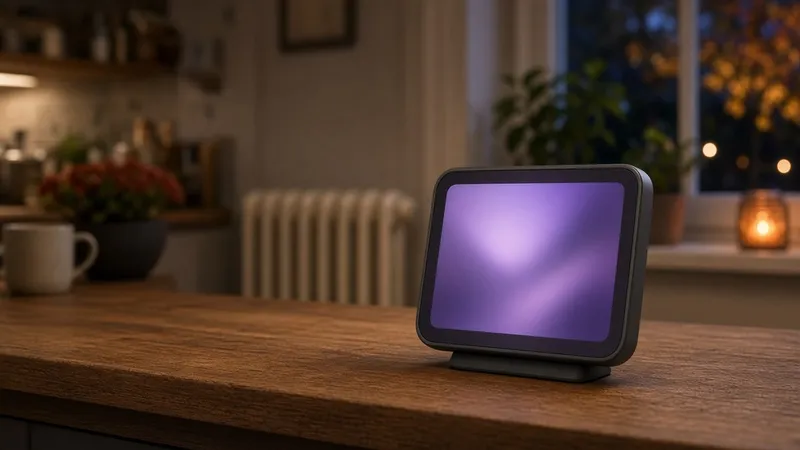
A smart meter shows what you use, which helps when you compare tariffs for your postcode.
For context, as of 11 November 2026, the Ofgem cap for 1 October to 31 December 2026 is £1,723 a year for a typical dual-fuel home paying by Direct Debit. Ofgem is due to announce the next cap by 25 November 2026.
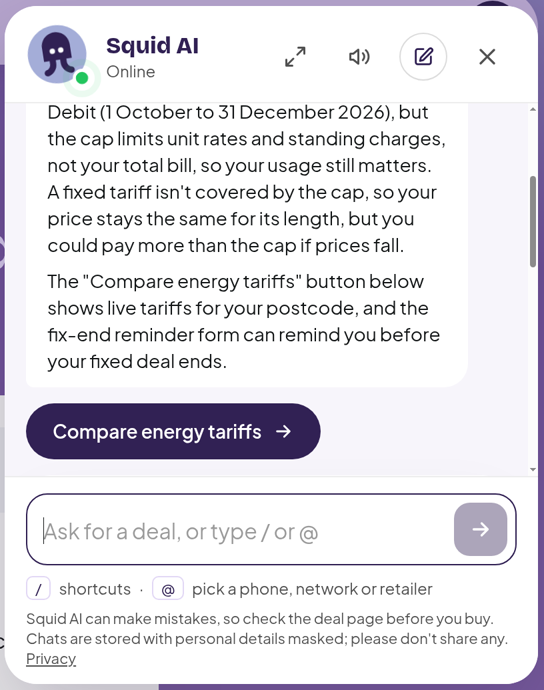
Step by step
Step 1: Ask your energy question
Open Ask Squid AI and ask something like "Should I fix my energy tariff?" or "What is the price cap?".
Step 2: Use the rule of thumb
Squid AI’s answer follows a simple rule from our energy guides. A fix is usually worth a look if it beats the cap by around 5% or more, and you’re happy to stay for the full term.
Step 3: Check the small print
Ask "what are the exit fees?". Some fixes charge £75 to £100 per fuel to leave early, and many charge nothing.
Step 4: Compare for your postcode
Tap Compare energy tariffs under Squid AI’s answer, or use the button below, to see live tariffs for your home.
Compare home energy tariffs for your postcode
- Today’s cap, as of 11 November 2026: £1,723 a year for a typical dual-fuel home (Ofgem, 1 October – 31 December 2026)
- Compare fixed and variable tariffs in about 2 minutes
- You’ll need your postcode and roughly what you use
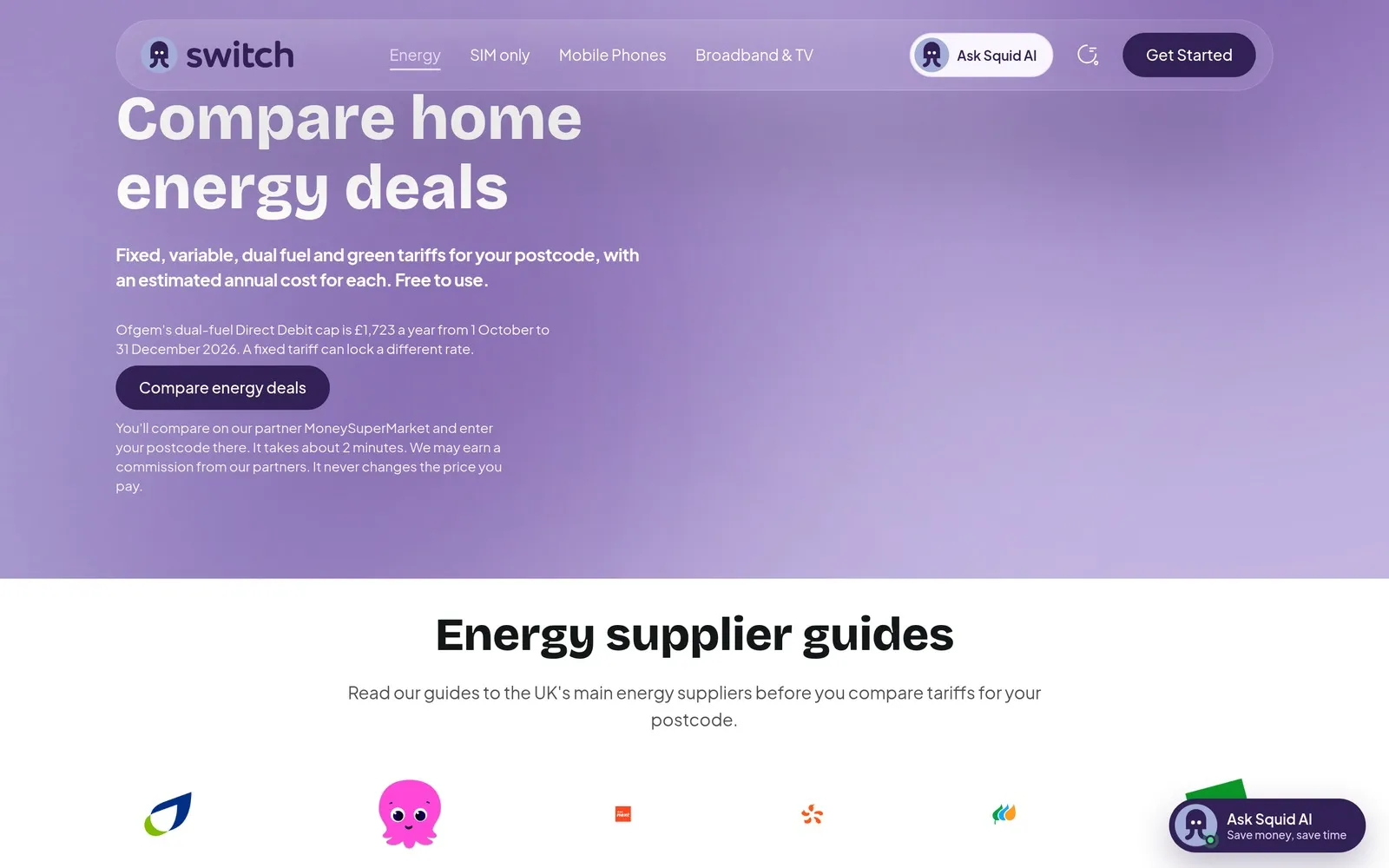
Our energy page also has a compare button, alongside Squid AI. The screenshot prices are as of 12 October 2026. As of 11 November 2026, the Ofgem cap is still £1,723 a year for a typical dual-fuel home paying by Direct Debit, from 1 October to 31 December 2026.
Fix or stay on the cap?
Situation | What usually makes sense | Ask Squid AI |
|---|---|---|
A fix beats the cap by 5% or more | Worth comparing a fix | "Is a fix below the cap worth it?" |
No fix beats the cap | Staying on the cap may be fine | "Should I stay on a variable tariff?" |
You might move home soon | Check exit fees first | "What exit fees should I watch for?" |
You want to follow wholesale prices | Read up on trackers | "How do tracker tariffs work?" |
Get a reminder when your fix ends
After some energy answers, Squid AI offers to email you a reminder before your fix ends. It’s optional. You confirm by email first and can unsubscribe at any time.
If the button doesn’t open the chat, tap the purple Squid AI chat bubble in the bottom corner of the page, or Ask Squid AI in the top menu.
This guide covers home energy. If you run a business, see our business energy guide instead.
An example chat
You type: "Should I fix my energy tariff?"
Squid AI explains the current cap, the 5% rule of thumb and when staying on the cap may make sense.
You ask: "What if I move house next year?" It explains exit fees and why they matter.
You ask: "What’s a tracker tariff?" It explains how trackers follow wholesale prices.
You tap "Compare energy tariffs" and enter your postcode to see real prices.
Words worth knowing
Price cap: Ofgem’s limit on unit rates and standing charges for standard variable tariffs. It isn’t a cap on your total bill.
Fixed tariff: your unit rates and standing charges stay the same for the term. Your bill can still change if you use more.
Standing charge: a daily fee you pay whatever you use.
Exit fee: what you pay to leave a fixed deal early. Some deals have none.
Tracker: a tariff whose price moves with wholesale costs, usually within a limit.
Common mistakes
Comparing against the wrong number. £1,723 is for a typical home. Your own usage decides what you pay.
Ignoring the standing charge. Low users can lose out on deals with a high daily charge.
Fixing without checking exit fees. If your plans may change, a deal with no exit fee gives you more freedom.
Why ask Squid AI before you compare tariffs?
Energy comparisons ask for your postcode and usage straight away, but most people first want to know whether switching is worth it at all. Squid AI answers those questions in plain English: what the price cap means, when a fixed tariff beats it, and what exit fees to look out for. Once you understand your options, the comparison is quicker and you know what you’re looking for. Squid AI can’t see your exact price, because that depends on your usage and region, so the comparison is where you see real tariffs.
It’s free, there’s no sign-up, and your chat stays put if you close the panel and reopen it in the same browser session. Tap the pencil icon to start again.
Frequently asked questions
Can Squid AI tell me my exact price?
No. Prices depend on your usage and region. Squid AI explains your options and the compare button shows real tariffs for your postcode.
What is the price cap right now?
As of 11 November 2026, it’s £1,723 a year for a typical dual-fuel home on Direct Debit, from 1 October to 31 December 2026. It’s a cap on unit rates and standing charges, not on your total bill.
Is it a good time to fix?
It depends on whether any fix beats the cap and how long you plan to stay. Ask Squid AI, then compare tariffs for your postcode.
Is Squid AI free?
Yes, it’s free with no sign-up. We may earn a commission if you switch through our compare link, but that doesn’t change your price.
Can I use it for business energy?
Squid AI can answer business energy questions too, but business quotes go through our own business energy form, not this home comparison. Use our business energy guide or go straight to our business energy form.
Questions about switching? Ask Squid AI
Squid AI explains the price cap, tariffs and switching in plain English, then points you to the comparison.
- Save energy and moneyLearn when a fixed deal beats the price cap.
- Save timeAnswers in seconds, no forms or sign-up.
- Plain answersNo jargon, no pressure, free to use.