
What Is a Good Broadband Speed in the UK?
What Broadband Speed Do I Need by Household Size?
A single person needs 30 to 50 Mbps, a household of two to three people needs 50 to 100 Mbps, and a household of four or more needs 100 Mbps or higher. Each extra device competing for bandwidth at the same time lowers the speed every other device gets, so the count of active devices matters more than the headcount alone.
1 person: 30 to 50 Mbps covers browsing, social media, one HD stream and video calls.
2 to 3 people: 50 to 100 Mbps supports HD streaming on two screens, video calls and light gaming at once.
4 or more people: 100 to 300 Mbps handles 4K streaming, competitive gaming and several video calls running simultaneously.
Smart home or shared house: 300 Mbps or higher keeps smart speakers, cameras, consoles and streaming boxes running without slowdown.
What Broadband Speed Do I Need for Streaming?
Standard definition (SD) streaming needs 3 Mbps per device, high definition (HD) needs 5 to 8 Mbps, and 4K streaming needs 25 Mbps. These figures apply per device, so two people streaming 4K content on separate screens need 50 Mbps for streaming alone, before other household activity is added. Platforms such as Netflix, Disney+ and BBC iPlayer publish similar minimums, and a connection of 50 Mbps or higher gives one household room for two simultaneous HD streams plus general browsing.
What Broadband Speed Do I Need for Gaming?
Online gaming needs only 3 to 6 Mbps of download speed, but latency below 30 ms matters more than raw speed. A modern game download of 100 GB takes roughly 2.2 hours on a 100 Mbps connection and around 7.4 hours on a 30 Mbps connection, so download speed still matters for game updates and installs. A household with one gamer plus other connected devices needs 100 Mbps or higher to install updates quickly while others stream or browse. Full fibre connections give the lowest latency because the signal travels the entire route as light rather than switching to copper partway.
What Broadband Speed Do I Need to Work From Home?
Remote workers need at least 50 Mbps download and 10 Mbps upload for smooth video calls, rising to 100 Mbps download and 20 Mbps upload if several people work from the same home. A single video call on Zoom, Teams or Google Meet uses 3 to 4 Mbps in each direction. Two people on separate calls at the same time need at least 8 Mbps upload before other household traffic is added. If a job involves uploading large files, such as video editing or design work, choose full fibre with symmetrical upload and download speeds instead of a standard fibre-to-the-cabinet (FTTC) package.
Cloud-based tools add further demand on top of video calls. Syncing files through Google Drive, Dropbox or a company VPN uses 2 to 10 Mbps continuously in the background, and a VPN connection can add latency on top of that figure. Two adults working from the same home, each on separate video calls with background file syncing, need at least 100 Mbps download and 20 Mbps upload to avoid calls freezing when a large file uploads at the same time.
What Broadband Speed Do I Need in a Rural Area?
Rural households often need to plan around 30 to 50 Mbps rather than the 100 Mbps available in most cities, since full-fibre coverage remains lower outside urban areas. Ofcom's Connected Nations data shows full-fibre availability above 90% in urban postcodes but considerably lower in remote areas, where copper-based Fibre to the Cabinet (FTTC) or satellite broadband remain the only options. Three alternatives close the gap where full fibre has not reached yet:
Fixed wireless access: delivers 30 to 100 Mbps using a rooftop antenna pointed at a local mast, with no phone line required.
4G or 5G home broadband: delivers 50 to 300 Mbps depending on mobile signal strength, and works well as a temporary or secondary connection.
Satellite broadband: delivers 20 to 100 Mbps with higher latency, useful only where no other option reaches the property.
Check your exact postcode on Switch's broadband deals page to see which of these options, alongside standard fibre, is available at your address.
Broadband Speed for Streaming Devices and Multiple Screens
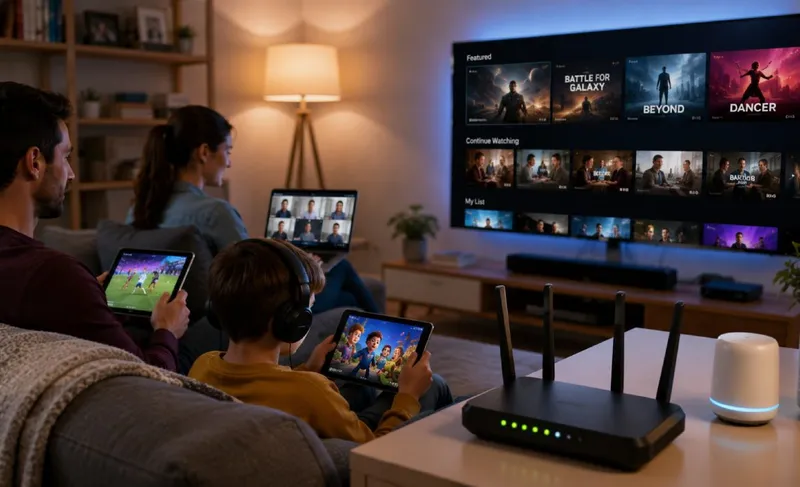
A smart TV, laptop and tablet streaming at the same time need their Mbps requirements added together rather than treated as a single figure. Three devices streaming HD content at once need at least 24 Mbps, and three devices streaming 4K content at once need at least 75 Mbps. Background activity such as automatic photo backup, smart speakers and security cameras adds a further 5 to 10 Mbps of constant, low-level demand, so households with several smart home devices should budget for headroom above the streaming total alone rather than the bare minimum.
Download Speed vs Upload Speed: Why Both Matter
Yes, upload speed matters as much as download speed for video calls, cloud backup and gaming. Download speed governs how fast content arrives, such as streaming video or web pages. Upload speed governs how fast data leaves your home, such as your video feed on a call or files synced to cloud storage. Standard FTTC broadband caps upload at 10 to 20 Mbps regardless of download speed, while full-fibre (FTTP) connections usually offer symmetrical speeds, so upload matches download. Anyone who works from home, streams on Twitch or backs up large photo and video libraries benefits directly from a higher upload allowance.
How to Check What Broadband Speed You Are Getting
Run a speed test at your busiest time of day, ideally between 6 pm and 10 pm, and take at least two readings on separate days. Broadband speeds drop in the evening because more homes on the same street cabinet use the network at once, a measure known as the contention ratio. Full-fibre connections are far less affected by this than copper-based FTTC or ADSL lines, since each home gets a dedicated fibre line rather than a shared cabinet connection. Compare your test result against the speed advertised in your contract. If it falls consistently below 90% of that figure at peak times, your provider must let you exit the contract penalty-free under Ofcom's Automatic Compensation Scheme.
How Much Mbps Do I Need? Quick Reference
Activity | Recommended Speed |
Browsing and email | 10 to 25 Mbps |
SD streaming (1 device) | 3 Mbps |
HD streaming (1 device) | 5 to 8 Mbps |
4K streaming (1 device) | 25 Mbps |
Video calls (1 call) | 3 to 4 Mbps upload and download |
Online gaming | 3 to 6 Mbps, latency under 30 ms |
Family of 4, mixed use | 100 to 300 Mbps |
How to Get a Faster Broadband Speed
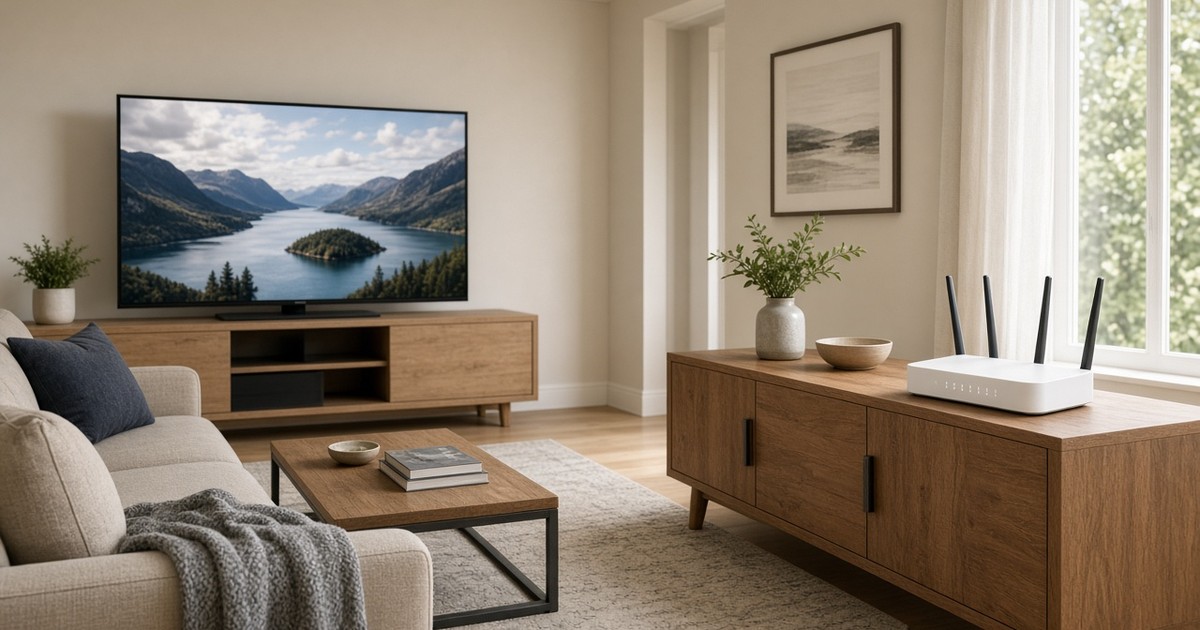
To get a faster broadband speed, check what full-fibre packages are available at your address, compare providers rather than renewing automatically, and move your router to a central, open position away from thick walls and other electronics. Switch by postcode, so you can see the fastest package available at your address before your contract renews. For a deeper look at full-fibre coverage and pricing, read Switch's guide to full fibre broadband explained, or see how to switch broadband provider without losing service. Households on a low income can also check eligibility for a broadband social tariff, which offers full-fibre speeds at a reduced monthly cost.
Frequently Asked Questions
What broadband speed do I need for a family of four?
A family of four needs 100 to 300 Mbps. That range covers 4K streaming on two screens, one video call, and a games console updating in the background, all running at the same time.
Is 100 Mbps fast enough for a household?
Yes, 100 Mbps is fast enough for most households, including families of four or more. It supports multiple 4K streams, video calls and gaming sessions simultaneously, and sits above the median everyday speed most FTTC users experience in the UK.
What is a good broadband speed for gaming?
A good broadband speed for gaming is 100 Mbps or higher, with latency below 30 ms. Download speed matters less than latency once you are past 20 Mbps, since latency determines responsiveness during play, while speed only affects download and update times.
Does upload speed matter for working from home?
Yes, upload speed matters directly for working from home. Aim for at least 10 Mbps upload per person on video calls, rising to 20 Mbps or higher if several people work from the same house or you upload large files regularly.
What broadband speed do I need if I only browse and check email?
Light browsing and email need only 10 to 25 Mbps. This tier suits a single person or couple with no regular streaming, gaming or video calling.
Can I get gigabit broadband speed in the UK?
Yes, gigabit broadband is available to most UK premises in 2026. Ofcom reports that the majority of UK homes now have access to gigabit-capable connections, though actual take-up remains lower than availability because most households do not need speeds above 300 Mbps.
Why is my broadband speed slower than advertised?
Broadband speed drops below the advertised figure due to peak-time congestion, router placement, or distance from the street cabinet on FTTC lines. Run a speed test at your busiest time, ideally 6 pm to 10 pm, if the result falls consistently below 90% of your contracted speed, you can request an exit under Ofcom's Automatic Compensation rules.
Final Word on Choosing Your Broadband Speed
Match your speed to how your household actually uses the internet rather than the highest number a provider advertises. A single person rarely needs more than 50 Mbps, a family of four is comfortable at 100 to 300 Mbps, and only households with several 4K streams, competitive gaming and heavy uploads running at once benefit from gigabit speeds. Recheck your needs every time your contract renews, since household devices and streaming habits change faster than most fixed-term deals. to see the fastest package available at your address today.Last updated: Tuesday 8 September 2026 (Europe/London).
Once you know your Mbps target, compare live September deals by speed: 150Mbps, 300Mbps, 500Mbps, 900Mbps — or start at the broadband hub.
Last updated: Thursday 10 September 2026 (Europe/London). When you know the speed band, compare live deals on the broadband hub. Neighbour reads: 150Mbps, 500Mbps, 900Mbps. Households needing 1000Mbps+: gigabit broadband deals UK September 2026.