
Last updated: Friday 23 October 2026 (Europe/London).
Next update: when Ofgem or HMRC change the rules below, or after heat network registration closes on 26 January 2027.
By: Switch Editorial Team, Switch Squid Ltd
If your HMO has one boiler heating every room, the gas contract is almost always in your name as the landlord, and you are responsible for the whole bill. As of 23 October 2026, Ofgem says a single house in multiple occupation heated through a shared system is out of scope of the new heat network rules, so you don’t need to register it. Because the gas is for your tenants’ homes, HMRC treats it as domestic use, which normally means 5% VAT rather than 20%: on £2,000 of gas a year before VAT, that is £100 of VAT instead of £400. This SwitchSquid guide explains who holds the communal boiler contract, how it works with bills-included rent, what suppliers need for a quote and how to recharge fairly. We may be paid if you use our business energy form; it doesn’t change the price you pay.
Sources: Ofgem — heat networks: who should register, Ofgem — if you live in a home with a business energy contract and HMRC — VAT on fuel and power (Notice 701/19), all checked on 23 October 2026.
Compare gas quotes for your HMO communal boiler
- Tell us your MPRN, yearly kWh and contract end date for each property
- Quotes for single HMOs and portfolios, with domestic-use VAT noted per meter
- Main limitation: business gas contracts have no cooling-off period and no price cap, so read the terms first
Who holds the gas contract for an HMO communal boiler?
When one boiler serves the whole house, there is usually one gas meter, and the person who controls that supply holds the contract. In an HMO that is almost always the landlord or the company that manages the property. Tenants can’t switch the supplier, because they don’t have their own meter or contract.
Ofgem’s guidance for people who live in a home supplied through someone else’s energy contract makes the position clear: if you pay a landlord for your energy, you are supplied through their contract, and you may not be able to choose or switch the supplier yourself. That puts the job of getting a fair price squarely on the landlord.
Whether your supplier puts the account on a business or a domestic contract varies. Many suppliers treat a landlord’s HMO supply as a business account, especially once you hold several properties. Ask the supplier which type you are on, because it changes your contract terms, renewal rules and complaint rights.
Is an HMO with a shared boiler a heat network?
This is the question many landlords are asking as Ofgem’s heat network regulation comes in. Ofgem now regulates heat networks in Great Britain, and operators and suppliers of relevant networks must register by 26 January 2027.
The good news for most HMO landlords is that Ofgem lists these as out of scope:
a single house in multiple occupation where heating is supplied through a shared heating system;
conversions of existing buildings divided into multiple dwellings that have one energy source with a capacity of no more than 45kWth;
single buildings with shared facilities that are not divided into separate premises.
By contrast, Ofgem says communal heat networks supplying a single building that is divided into separate premises are in scope. If your building has been converted into self-contained flats sharing a large central boiler, read Ofgem’s registration guidance carefully or take advice; the shared-house HMO exemption may not cover you.
What VAT should you pay on HMO communal boiler gas?
HMRC’s Notice 701/19 says fuel and power for domestic use qualifies for the reduced rate of VAT, which is 5% for gas. Houses, flats and other dwellings count as domestic, and HMRC says supplies to a landlord of accommodation used for qualifying purposes are taxed at the reduced rate.
Two more rules can help:
De minimis: piped gas of no more than 145 kWh a day on average, or 4,397 kWh a month, at one premises is always treated as domestic use, even on a business account.
Mixed use: if 60% or more of the supply is for qualifying use, the whole supply gets the reduced rate.
Make sure your supplier has a VAT declaration on file for the meter. If you have been billed 20% on a supply that heats tenants’ homes, ask your supplier to review it. The temporary 0% VAT rate that runs from 1 October 2026 to 31 March 2027 applies to qualifying electricity, not gas. Our communal electricity guide covers that side.
Communal boiler gas and bills-included rent
Most HMOs with a shared boiler include heating and hot water in the rent, because there is no fair way to split one meter without extra equipment. HMRC says that when a landlord makes a fixed charge for gas or includes it in the rent, the payment is normally treated as part of the rent.
Ofgem also points out that tenants who pay for energy through rent or a fixed fee don’t have the same rights as those charged on meter readings. That makes it more important to set a clear fair usage policy in the tenancy. Our guides to bills-included HMOs and HMO fair usage policies explain how to set the allowance.
Recharging communal gas fairly
If you recharge tenants for gas based on meter readings or estimates, Ofgem says tenants have the right to:
only be charged at the unit rate agreed in the tenancy;
see the bills and contract between the landlord and the supplier;
know how the bill is calculated if their room has no meter;
challenge charges that look wrong or haven’t been explained.
Ofgem adds that a landlord can’t profit from energy resold to tenants; you can only charge what you paid, though you may add a separate administration fee for services such as meter reading and billing. A shared boiler can’t be sub-metered room by room without heat meters, so most landlords split the cost equally or by room size. Our HMO sub-metering and recharging guide compares the methods.
Choose a fixed gas rate before winter peaks
- Fix the unit rate and standing charge so you can set rents and fair usage allowances
- Line up end dates across your portfolio
- Check 5% VAT is applied to gas used for tenants’ homes
What suppliers need to quote for an HMO gas supply
Detail | Where to find it | Why it matters |
|---|---|---|
MPRN (meter point reference number) | Your gas bill, usually 6 to 10 digits | Identifies the exact supply point |
Yearly usage in kWh | Your last 12 months of bills or online account | Sets the price band and your yearly cost |
Current contract end date | Your contract or renewal letter | Shows when you can switch without exit fees |
Property use | Your licence and tenancy agreements | Confirms domestic use for reduced VAT |
Number of lettings | Your HMO licence | Helps the supplier understand the load |
Other properties you own | Your portfolio list | Lets you line up end dates across sites |
Ofgem says any new business supplier will need your yearly consumption and meter details before you sign. If you take over a property without a contract, the supplier may put you on a deemed rate, which Ofgem says is usually higher than a negotiated price. Our void periods guide covers gas between tenancies.
Fixed or variable for a communal boiler?
A communal boiler is your largest single energy cost in a bills-included HMO, and it peaks in winter when tenants are home more. Most landlords choose a fixed-rate contract, because a fixed unit rate and standing charge make it easier to set rents and fair usage allowances for the year ahead.
If your account is a business contract, remember that Ofgem says there is no cooling-off period once you agree, and there is no price cap. Fixed contracts include a switching window a few months before the end date. Start comparing four to six months before your renewal so you don’t roll onto out-of-contract rates. Our business gas standing charge guide shows how to compare quotes fairly.
Cutting communal boiler costs
Set timers and a thermostat limit that keeps rooms comfortable without running all night; thermostatic radiator valves let tenants adjust individual rooms.
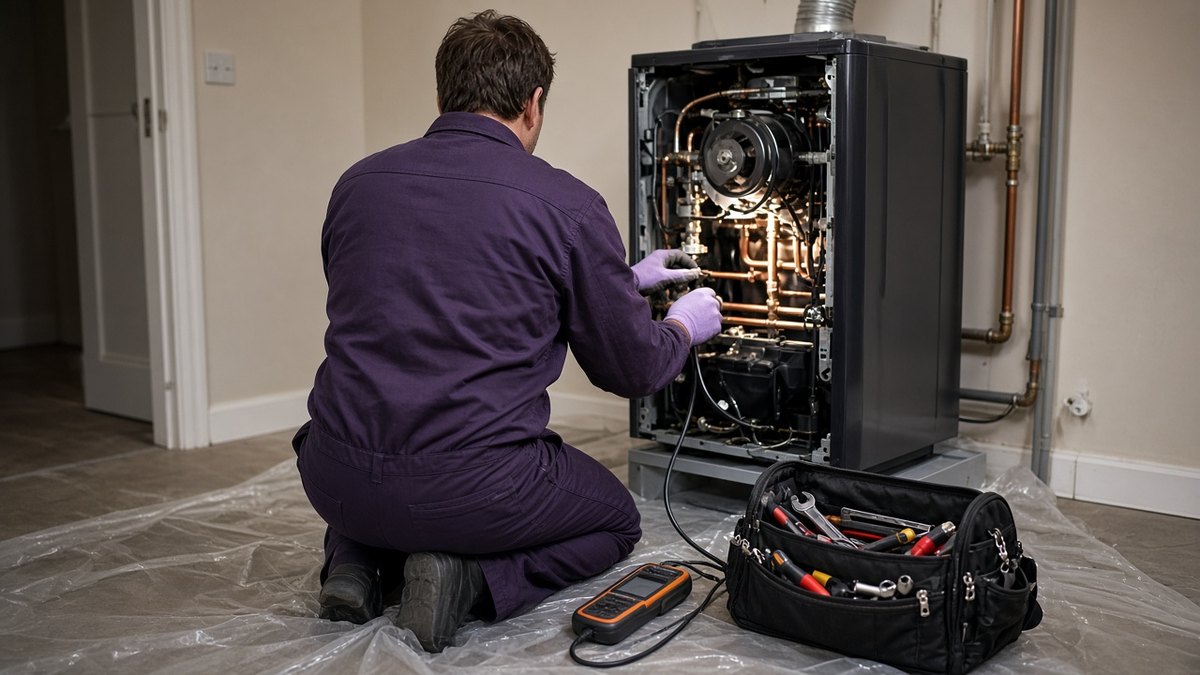
Service the boiler every year. Your annual gas safety check by a Gas Safe registered engineer is a legal requirement for landlords, and it is a good time to ask about efficiency.
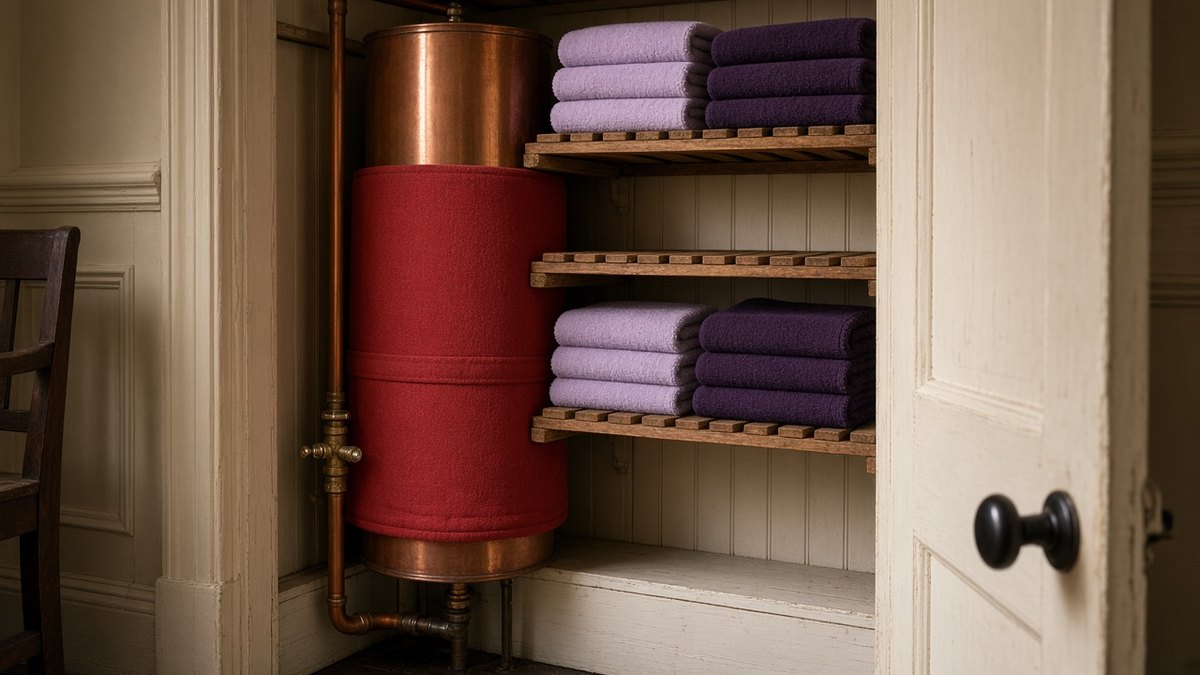
Insulate the hot water cylinder and pipework if your system has one.
Check the meter reading on every bill so you aren’t paying on high estimates.
Line up contract end dates across your portfolio so you can compare in one go.
Who it suits
This guide fits: you let rooms in a single shared house heated by one boiler on one gas meter.
Take advice: your building is converted into self-contained flats sharing a large central boiler, which may count as a heat network.
Check your VAT: your gas bills show 20% VAT on a supply that heats tenants’ homes.
Compare now: your gas contract ends within six months or you are on deemed rates.
Prefer to ask a few questions first? Squid AI, SwitchSquid’s AI assistant, can help you list what to have ready for an HMO energy quote.
Important conditions
Heat network exemptions depend on how the building is divided; read Ofgem’s guidance if unsure.
Reduced VAT depends on the supply being for qualifying domestic use and a declaration being on file.
Business gas contracts have no cooling-off period and no price cap.
Recharges to tenants can’t include a profit on the energy itself.
Annual gas safety checks are a separate legal duty for landlords.
FAQ
Who pays for gas in an HMO with one boiler?
The landlord, in almost every case. With one boiler and one meter, the gas contract is in the landlord’s or property manager’s name, and the cost is usually built into the rent. Tenants can’t switch the supplier because they don’t hold the contract.
Does my HMO communal boiler count as a heat network?
Not usually. Ofgem lists a single house in multiple occupation heated through a shared system as out of scope of heat network regulation. Buildings divided into separate self-contained premises can be in scope, so check Ofgem’s registration guidance if your property is split into flats.
Is HMO communal gas charged at 5% VAT?
It should be if the gas is for your tenants’ domestic use. HMRC treats dwellings and landlord supplies for qualifying residential use as domestic, so the reduced 5% rate applies. Make sure your supplier has a VAT declaration for the meter.
Can I charge tenants more than I pay for gas?
No. Ofgem says a landlord can’t profit from energy resold to tenants and can only pass on what they paid. You can charge a separate administration fee for services such as meter reading and billing if it is set out clearly.
Is an HMO landlord gas supply a business or domestic contract?
It depends on the supplier and your portfolio. Many suppliers put HMO landlord supplies on business contracts, which have no price cap and no cooling-off period. Ask your supplier which contract you are on before you renew.
When should I renew my HMO gas contract?
Start four to six months before the end date. Fixed business contracts have a switching window a few months before they end, and comparing early helps you avoid out-of-contract rates over the winter.
Our verdict
For most HMO landlords, the shared boiler is a simple supply with an expensive price tag: one meter, one contract in your name, and the biggest energy cost in the house. Check that you are paying 5% VAT, set a clear fair usage policy, and compare quotes well before your renewal window so your winter heating isn’t billed at out-of-contract rates.
Check HMO gas and electricity quotes in one go
- Add communal electricity supplies alongside the boiler gas
- Start four to six months before your contract ends
- Avoid deemed rates on new or void properties
Questions about business energy? Ask Squid AI
Squid AI explains business energy contracts, renewal dates and switching in plain English, then points you to our business energy quote form.
- Save energy and moneyLearn when a longer fixed business contract makes sense.
- Save timeAnswers in seconds, no forms or sign-up.
- Plain answersNo jargon, no sales calls, free to use.