Last updated: Tuesday 20 October 2026 (Europe/London).
Next update: when GOV.UK changes its Renters’ Rights Act or tenant fees guidance, or when the temporary zero rate of VAT on qualifying electricity changes.
By: Switch Editorial Team, Switch Squid Ltd
As of 20 October 2026, you can let HMO rooms with bills included in England, but GOV.UK says the utilities must be listed in the tenancy agreement and must accurately reflect your costs, and since 1 May 2026 you can only raise rent once a year with at least two months’ notice. That makes the energy line in your rent a twelve-month promise: in our worked example below, a six-room house with a £3,697.55 yearly energy cost needs about £51 per room per month just to cover gas and electricity. If your energy contract renews at a higher price halfway through that year, the difference comes out of your margin. This SwitchSquid guide covers which bills are usually included, the pros and cons, how to price energy into all-inclusive rent from your own figures, whose name the supply should be in and how to time a fixed contract around your rent review. We may be paid by suppliers if you take out a contract through our quote form; the quote service is free to you.
Sources: GOV.UK — fees you can charge as part of a tenancy, GOV.UK — Renters’ Rights Act overview for landlords, Ofgem — living in a home with a business energy contract, Ofgem — get a business energy contract, HMRC — VAT on fuel and power (Notice 701/19) and Citizens Advice — what your landlord can charge for energy (all checked on 20 October 2026). This is general information for landlords in England, not legal or tax advice.
Get an HMO energy quote for a bills-included let
Our own business energy form: free, with no obligation, for one house or a whole portfolio
Compare fixed prices so the energy line in your rent is built on rates you know for the year
Main limitation: accurate prices need recent bills, meter numbers and annual kWh for each meter
HMO bills included: the short answer
Is it allowed? Yes. GOV.UK says you can include gas, electricity, water, broadband and a landline in the rent, as long as they are listed as terms in the tenancy agreement.
Can you profit from it? No. Utilities included in the rent must be an accurate reflection of costs, and Ofgem’s maximum resale price stops you making a profit on energy you resell.
What changed in 2026? Tenancies in England are now rolling, with no end date, and rent can only go up once a year using Form 4A.
What protects your margin? A fixed energy contract whose prices hold for at least the twelve months your rent is set for.
Bills-included lets remain popular with room renters because they get one predictable payment. The work for you is getting the number right at the start and keeping the energy price fixed behind it.
Which bills are usually included in an HMO rent?
GOV.UK’s tenant fees guidance lists what you can and can’t fold into the rent in England:
Gas and electricity: the biggest and most variable cost, and the one this guide focuses on.
Water: can be included; the Water Resale Order 2006 caps what you can charge if you resell it.
Broadband and a landline: GOV.UK calls these communication services, and they can be included.
Council tax: can be included in the rent where the tenancy agreement says so. If it isn’t included, you can require tenants to pay the council, but you can’t ask them for a separate council tax payment to you.
TV licence: can be included in the rent where agreed in the tenancy; otherwise you can include a term requiring tenants to buy their own.
Whatever you include must be written into the tenancy as a term. A vague phrase such as “bills included” without a list invites disputes about what was covered.
Pros and cons of a bills-included HMO
The advantages:
Room renters can compare one all-in price, which can make rooms easier to let.
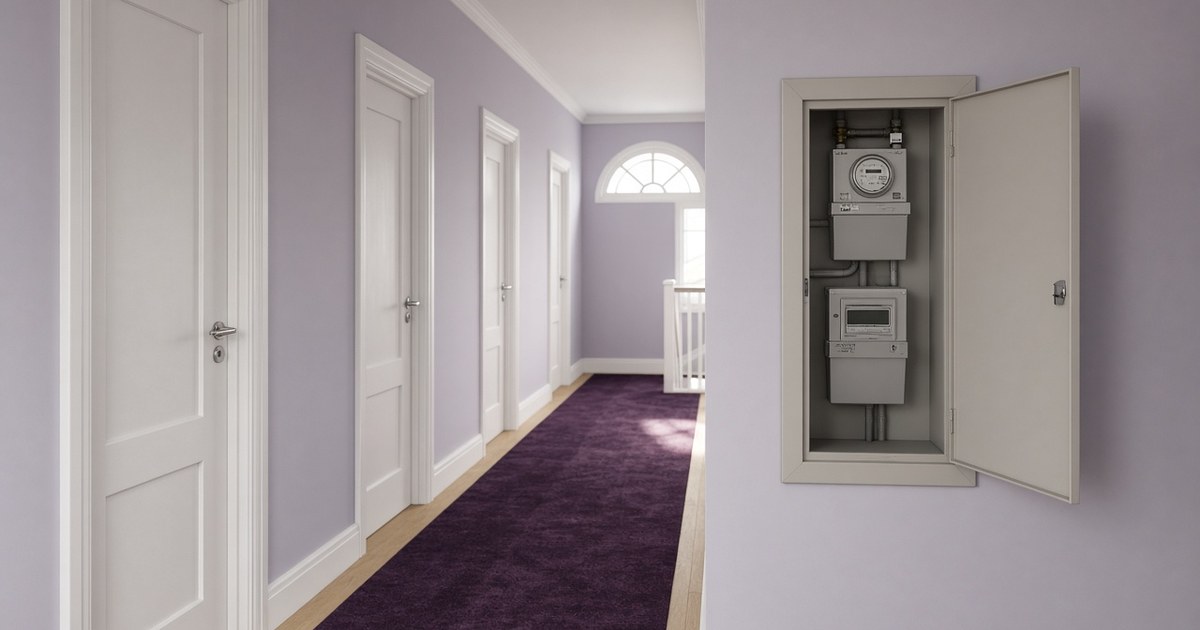
You keep control of the supplier, the tariff and the meters, so there are no accounts left in a departing tenant’s name.
Communal areas, such as hallways, kitchens and shared laundry, are covered by the same contract.
You can fix one business contract for the whole house, or for several houses, instead of leaving tenants on whatever tariff they choose.
The disadvantages:
You carry the risk of high use and price rises, but can only change the rent once a year.
Tenants have less reason to save energy when they don’t see the bill.
You hold the energy contract, so missed renewals and out-of-contract rates land on you.
Citizens Advice warns tenants with bills included that they might not get the VAT cut on household electricity from 1 October 2026 to 31 March 2027, so some will ask whether you are passing it on.
How to price energy into all-inclusive rent
Build the energy line from the house’s own bills, not from national averages. You need the last 12 months of usage for each fuel, the unit rates and standing charges on the contract that will apply during the rent year, and the number of rooms. The figures in the table are an example only, so replace them with your own.
Step | What to use | Example figures |
|---|---|---|
1. Last year’s usage | Total kWh for each fuel from 12 months of bills or meter readings | 9,500 kWh electricity and 14,000 kWh gas |
2. Your contract rates | Unit rates and daily standing charges for the rent year, as shown on your contract | Electricity 26p per kWh and 55p a day; gas 6.5p per kWh and 32p a day |
3. Yearly electricity | kWh × unit rate, plus 365 × standing charge | £2,470.00 + £200.75 = £2,670.75 |
4. Yearly gas | kWh × unit rate, plus 365 × standing charge | £910.00 + £116.80 = £1,026.80 |
5. Total energy cost | Electricity plus gas, plus VAT at the rate on your bill | £3,697.55 before VAT |
6. Per room, per month | Total ÷ number of rooms ÷ 12 | £3,697.55 ÷ 6 ÷ 12 = £51.35 |
7. Buffer for a cold year | A margin so normal variation doesn’t eat your profit | +10% = about £56.49 per room per month |
Two checks make the number safer. First, if your fixed contract ends during the rent year, price the months after it at the renewal quote, not your current rate. Second, if a room has been empty for part of the last year, its usage will be missing from the total, so use a full year’s bills from when the house was fully let if you have them.
Keep the working, the bills and the contract. GOV.UK says included utilities must reflect your actual costs, so being able to show how you reached the figure protects you if a tenant asks.

Why the 2026 rent rules make fixing more important
The Renters’ Rights Act changes took effect in England on 1 May 2026. GOV.UK says assured shorthold tenancies became assured periodic tenancies, which roll on, for example monthly, and can’t have an end date. To increase the rent, you must serve Form 4A with at least two months’ notice, you can’t do it more than once a year, and tenants can challenge an increase above the open market rent.
For a bills-included HMO, that turns the energy part of the rent into a fixed price for a year. Citizens Advice also tells tenants they may be able to challenge a rent increase made because of higher energy prices. The practical answer is to fix your energy prices for at least as long as your rent is set for, and to line the two dates up. Because periodic tenancies have no end date, plan around your annual rent review date rather than tenancy end dates.
Choose a fixed term that matches your rent review
Compare one-, two- and three-year fixed contracts side by side
Ask for an end date a few months after your annual rent review
Business contracts have no cooling-off period, so read the terms before you agree
Whose name should the energy supply be in?
For a bills-included HMO let by the room, the supply is normally in your name, because you are the one paying the supplier. That is often a business contract. Ofgem says residents who pay a landlord for energy are supplied through the landlord’s business contract, and that business energy customers are not protected by the energy price cap. Ofgem also says that where residents pay for energy through their rent or service charges, they don’t have the same rights as residents who are charged by meter readings.
Three practical points follow:
Ask the supplier which contract type fits. Some HMOs sit on domestic contracts and some on business contracts, depending on the supplier and how the property is set up. Ofgem says to contact your supplier if you think you should be on a domestic contract.
Tell the supplier the supply is for domestic use. HMRC’s Notice 701/19 says fuel and power for genuine domestic use, including houses, flats and other dwellings, is eligible for the reduced rate of VAT, and that if 60% or more of a supply is for qualifying use, the whole supply can be treated that way.
Check the electricity VAT rate on your bills. HMRC says domestic supplies of electricity and other supplies for qualifying use in Great Britain have a temporary zero rate of VAT from 1 October 2026 to 31 March 2027. Your rent calculation should use the VAT you actually pay.
On a whole-house let to a group of sharers, tenants can take the energy account in their own names instead. You then carry no energy risk, but you also lose control of the supplier and the meters between tenancies.
Fair use in short
A fair usage clause sets an energy allowance per tenant and explains how use above it is charged, which shares the risk of one very heavy user. Any charge for extra use must be at the price you pay, with no mark-up, and the clause must be in the tenancy. Our HMO energy fair usage policy guide shows how to set the cap and word the clause, and our HMO sub-metering and recharging guide covers room meters and sharing standing charges.
When to fix, and how to line up your contract dates
Ofgem says there is no cooling-off period once you agree a business energy contract, so read the terms before you sign. It also warns that if a fixed contract ends without a new deal, some suppliers move you onto out-of-contract rates, and some contracts roll over automatically for a new fixed term, often 12 months, which may be at a higher rate. Both are usually more expensive than a contract you choose.
Start early: look at prices several months before your contract end date, so you have time to compare before any notice deadline.
Match the dates: aim for an energy end date a few months after your annual rent review, so you know the new energy price before you serve Form 4A.
Know your protections: Ofgem says you count as a microbusiness if you use up to 100,000 kWh of electricity or 293,000 kWh of gas a year, among other tests. Microbusiness suppliers must give you renewal prices before your contract ends and, on evergreen contracts, limit termination notice to 30 days.
Group your houses: if you own several HMOs, ask for quotes with aligned end dates so you renew once a year, not house by house.
Our guides to finding your business energy contract end date and out-of-contract business energy rates explain the timings in more detail. For hallways and other shared areas, see our landlord communal electricity guide.

What we need for a quote
Your electricity MPAN and gas MPRN, which are printed on your bills
Your current supplier and contract end date
Annual usage in kWh for each meter, from your last 12 months of bills
The property address and number of lettable rooms
Whether the meters supply the whole house, the communal areas only, or both
Your annual rent review month, so the new contract can be timed around it
If you want to see how a quote is put together first, Squid AI, SwitchSquid’s AI deal assistant, can talk you through the details a supplier will ask for. Our HMO landlords energy page brings together our other guides for room-let houses, and our business energy for landlords guide covers void periods and contract types across a portfolio.
Fit summary
Bills included suits you: if you let by the room, want simple all-in pricing and are happy to manage one energy contract per house.
Bills included with a fair-use clause: suits houses where one tenant’s heavy use could wipe out the margin.
Tenants paying the supplier suits you: if you let the whole house to one group and don’t want any energy risk.
Important conditions
Utilities included in the rent must be listed in the tenancy agreement and must reflect your actual costs.
You can’t profit from reselling gas or electricity, and charges for extra use must be at your own price.
In England, rent can only be increased once a year with Form 4A and at least two months’ notice.
Business energy contracts have no cooling-off period, and the energy price cap doesn’t apply to them.
Scotland and Wales have their own tenancy rules, so check local guidance if your HMO is outside England.
Final decision card
Setting a bills-included rent for the next year? Price energy from your own last 12 months of kWh and the contract rates that will apply.
Contract ending in the next six months? Get quotes now, so the new price is known before your next rent review.
Several HMOs on different end dates? Ask for aligned end dates so you renew once a year.
Check business energy prices for your HMO
Have each MPAN, MPRN, contract end date and annual kWh ready
Works for a single HMO or several houses with aligned end dates
Start a few months before your current contract ends
FAQ
Can an HMO landlord include bills in the rent?
Yes. In England, GOV.UK says you can include gas, electricity, water, broadband and a landline in the rent, as long as they are listed as terms in the tenancy agreement. The amount included must accurately reflect your costs, so you can’t make a profit on the utilities.
How do I work out how much to charge for bills in an HMO?
Take the last 12 months of kWh for each fuel from your bills and multiply by the unit rates on the contract that will apply. Add a year of standing charges and VAT, then divide by the number of rooms and by 12. Many landlords add a small buffer for a cold winter, and keep the workings in case a tenant asks.
Can I put the rent up if energy prices rise?
Only through the normal rent increase process. Since 1 May 2026 in England, you must use Form 4A with at least two months’ notice, no more than once a year, and tenants can challenge an increase above market rent. That is why fixing your energy price for the rent year matters.
Does the energy price cap apply to an HMO?
Not if the house is on a business energy contract. Ofgem says business energy customers are not protected by the energy price cap. If you think the house should be on a domestic contract, Ofgem suggests asking your supplier.
Do I pay 20% VAT on business energy for an HMO?
Not necessarily. HMRC says fuel and power for genuine domestic use, including houses and flats, can qualify for the reduced rate of VAT, and electricity for qualifying use has a temporary zero rate from 1 October 2026 to 31 March 2027. Tell your supplier the supply is for domestic use and check the VAT rate on each bill.
What is the difference between bills included and a fair use policy?
Bills included means the energy cost is built into the rent. A fair use policy adds an allowance per tenant and a way to charge for use above it, at your own price. Many HMO landlords use both together.
What do I need to get an HMO energy quote?
Have your MPAN and MPRN, your current supplier, your contract end date and the annual kWh for each meter. It also helps to give the number of rooms and your rent review month. With those details, quotes can be compared for the exact term you need.
Questions about switching? Ask Squid AI
Squid AI explains the price cap, tariffs and switching in plain English, then points you to the comparison.
- Save energy and moneyLearn when a fixed deal beats the price cap.
- Save timeAnswers in seconds, no forms or sign-up.
- Plain answersNo jargon, no sales calls, free to use.