Last updated: Tuesday 20 October 2026 (Europe/London).
Next update: before the temporary zero VAT rate on qualifying electricity ends on 31 March 2027, or sooner if HMRC or Ofgem change the rules.
By: Switch Editorial Team, Switch Squid Ltd
As of 20 October 2026, the best energy supplier for a nursing home is the one that prices your 24-hour usage properly, applies the right tax relief from day one and doesn’t lock you into penalties: qualifying electricity for care homes in Great Britain is zero-rated for VAT from 1 October 2026 to 31 March 2027, and the domestic part of the supply should be free of Climate Change Levy, which otherwise costs £0.00801 per kWh. Care England says many suppliers still price care homes on the same rates as shops and hairdressers, so getting quotes built around a care profile matters more than the supplier’s name. This SwitchSquid guide explains what nursing homes should check before choosing a supplier, how to compare quotes and how to avoid the contract traps Care England keeps seeing. We may be paid if you request a quote through this page; it doesn’t change the price you pay.
Sources: HMRC — VAT on fuel and power (Notice 701/19), HMRC — exemptions from Climate Change Levy, HMRC — Climate Change Levy rates, Ofgem — get a business energy contract and Care England — care providers and energy purchasing (all checked on 20 October 2026).
Get nursing home energy quotes built around a 24/7 profile
Enter your postcode, current supplier and yearly usage to compare tariffs for each meter
Tell us about resident and staff areas so quotes reflect the right VAT and levy treatment
Main limitation: final prices depend on your meter data, usage and credit check, and suppliers may still set tolerance bands
Nursing home energy suppliers: the short answer
Price for a 24/7 profile: nursing homes use power day and night, so quotes should reflect that rather than a standard office or shop profile.
Get the tax right: zero VAT on qualifying electricity until 31 March 2027, 5% VAT on qualifying gas, and no Climate Change Levy on domestic-use supplies.
Watch the small print: tolerance bands, deposits, standing charges and broker fees can cost more than a slightly higher unit rate.
Plan renewals early: business energy contracts have no cooling-off period, and out-of-contract rates are usually higher.
If you run more than one home, aligning contract end dates can open the door to one blended rate for every site, which helps smaller homes most.
Why nursing homes need a different kind of energy quote
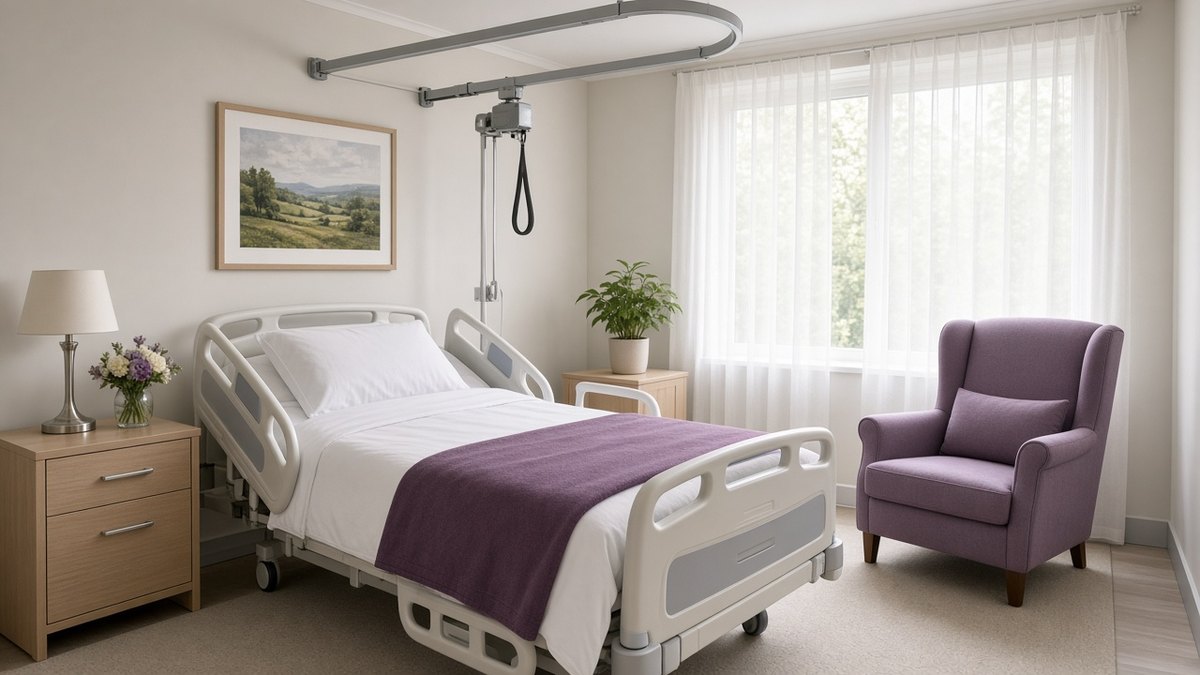
A nursing home is registered with the Care Quality Commission as a care home service with nursing. That usually means residents with higher care needs, round-the-clock nursing staff and more equipment, from profiling beds and hoists to medical fridges, oxygen concentrators and specialist laundry.
All of that means energy use that never really stops. Care England, the representative body for independent adult social care, says suppliers often treat care providers as generic customers with a profile that doesn’t match a 24/7 care service. It adds that many brokers work from suppliers’ standard price books, so care homes are quoted the same rates as retail and hairdressers, which can cost more than it should.
The fix is to give suppliers accurate information: a year of meter readings or half-hourly data, your bed numbers, opening dates for any extensions, and how much of the site is resident accommodation. Our care home energy page covers the wider sector, and our guide to half-hourly meters explains the data larger homes usually have.
VAT and Climate Change Levy: the two biggest checks
HMRC’s VAT Notice 701/19, updated on 8 September 2026, lists “homes providing care for the elderly or disabled” as residential accommodation for fuel and power. Supplies to these homes count as qualifying use, which normally means the 5% reduced rate. From 1 October 2026 to 31 March 2027, qualifying electricity in England, Scotland and Wales is zero-rated, while Northern Ireland stays at 5%.
The notice also says hospitals aren’t residential accommodation for this purpose, so the relief depends on the home being a residential care setting. If 60% or more of a supply is for qualifying use, the whole supply is treated as qualifying. Below 60%, the supply is split, with the qualifying part at the lower rate and the rest at the standard 20% rate.
Climate Change Levy works in a similar way. HMRC lists “homes for the elderly and disabled” and hospices as domestic use, and domestic-use supplies are excluded from the levy. The main rate for electricity and gas is £0.00801 per kWh from 1 April 2026, rising to £0.00827 from 1 April 2027.
Care England says it still sees care homes wrongly charged 20% VAT instead of the reduced rate. Check your latest bills for the VAT rate and any Climate Change Levy line, and ask your supplier to correct them if they are wrong. Our guide to zero-rate VAT on care home electricity goes through the paperwork step by step.
What to compare in a nursing home energy quote
Quote item | Why it matters for a nursing home | What to ask before you sign |
|---|---|---|
Unit rate and standing charge | High, steady usage means the unit rate usually drives the bill, but standing charges still add up across several meters | The total yearly cost at your actual usage, not just the headline rate |
Tolerance band | Care England says typical bands are ±10%, which a cold winter or hot summer can easily break | Can it be removed or widened to ±20–25%? |
VAT and Climate Change Levy | Qualifying electricity is zero-rated until 31 March 2027, and domestic use is excluded from the levy | How will VAT and the levy show on your bills? |
Deposit | Care England says suppliers in its own tender have never needed a deposit | Is a deposit required, and what would remove it? |
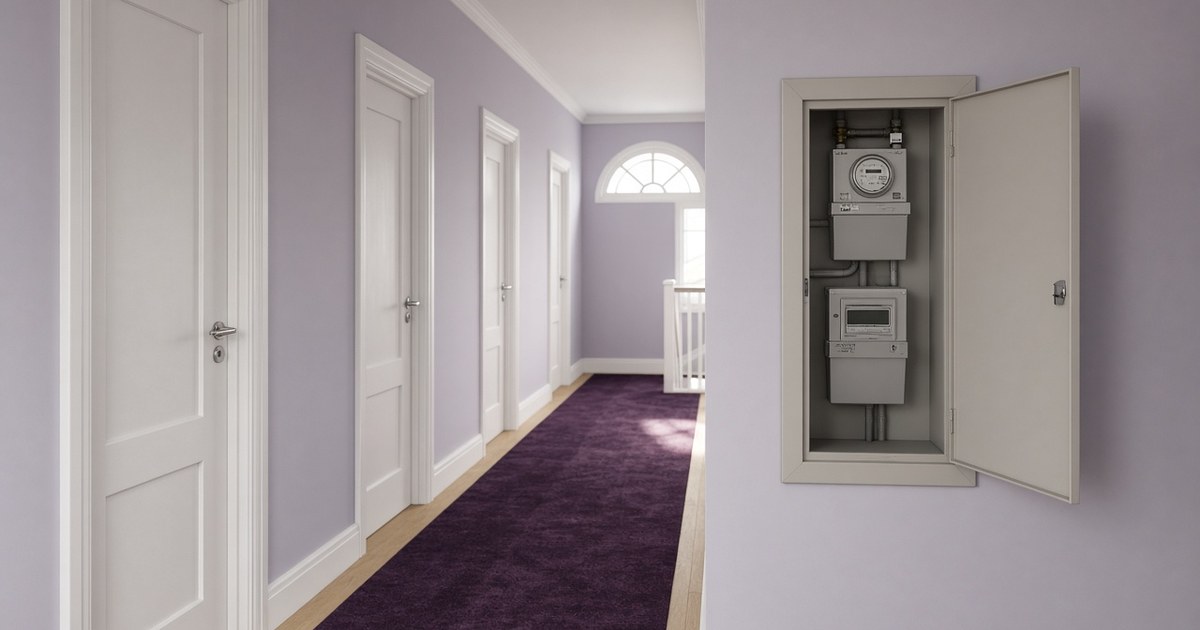
Meter profile | Outdated meter types can cost more or block smart readings | Do any meters need upgrading or reclassifying? |
End date and renewal terms | Aligned dates make renewals simpler and can support blended rates across homes | Can the end date match your other sites? |
Broker fee | Fees are often built into the unit rate | How much is the fee in pence per kWh or pounds per year? |
Based on guidance from Care England, HMRC and Ofgem, checked on 20 October 2026.
Line up every quote against the same table before you choose. A cheaper unit rate with a tight tolerance band, a large deposit or a hidden fee can easily cost a nursing home more over a two or three-year contract.
Choose a fixed contract for one home or a group
Compare one-, two- and three-year fixed contracts side by side
Ask for aligned end dates and one blended rate across several homes
Business contracts have no cooling-off period, so read the terms first
Contract traps Care England keeps seeing
Care England’s guidance for care providers lists the problems it sees again and again. The most common are contracts that don’t line up across sites, outdated meter types, unnecessary deposits, excessive standing charges, hidden fees and the wrong VAT rate.
Misaligned end dates: quotes that start from the transfer date rather than the date you asked for, so your homes drift onto different renewal cycles.
Mixed meter types: Care England says MPAN profile classes 00, 03 and 04 are commercial, 01 and 02 are domestic and often used for staff accommodation, and 05 to 08 are outdated.
Tight tolerance clauses: penalties when usage moves outside a narrow band of the estimate.
Bills without readings: estimated bills that hide real usage and make budgets harder to set.
Care England also warned care providers in March 2026 to seek advice before signing new contracts, after short-term gas prices doubled during tensions in the Middle East. Wholesale prices can move fast, so it pays to start comparing well before your contract ends.
You can also ask Squid AI, SwitchSquid’s AI deal assistant, general questions about energy contract terms, though for nursing home supplies a quote based on your own meter data is always the starting point.
When to start your nursing home energy renewal
Ofgem says business energy contracts have no cooling-off period once you agree, and that out-of-contract or deemed rates are usually higher than a negotiated contract. That makes timing important for a site that can’t reduce its usage.
Six months before the end date: collect 12 months of bills or half-hourly data for every meter.
Four months before: request quotes and check them against the table above.
Before signing: confirm VAT and Climate Change Levy treatment, tolerance bands, deposits and fees in writing.
After signing: give your current supplier any notice it needs, so you don’t roll onto a new contract or out-of-contract rates.
Our care home renewal checklist and contract end checker can help you plan the dates, and our guide to out-of-contract rates explains what happens if you miss them.

Using a broker for a nursing home
Many nursing homes use a broker or consultant to collect quotes. Ofgem says you should ask how a broker is paid and whether fees or commissions are included in your price. It also suggests checking that a broker belongs to a redress scheme, such as the Energy Ombudsman’s broker register or the Utilities Intermediaries Association.
A good broker should know the care sector, explain the tax treatment and be willing to negotiate tolerance bands and deposits. If one can’t, Care England says questions should be asked about whether they are acting in the care provider’s best interests. Our guide to broker fees and commission shows what to look for, and if your new supplier needs one, our letter of authority guide explains it.
Fit summary
Single nursing home: compare full yearly cost, tolerance and deposit terms, and confirm the zero VAT rate on electricity.
Group of homes: align end dates and ask for one blended rate across every site.
Homes with staff accommodation: check each meter’s profile class, as domestic and commercial meters may be priced differently.
Charity-run homes: see our charity energy guide for extra relief that may apply.
Important conditions
The zero VAT rate on qualifying electricity applies in Great Britain from 1 October 2026 to 31 March 2027; Northern Ireland stays at 5%.
The VAT and Climate Change Levy treatment depends on how much of each supply is for residential care, so mixed sites may be split.
Business energy contracts have no cooling-off period once agreed.
Tolerance bands, deposits and fees vary by supplier and should be confirmed in writing.
Quotes depend on your meter data, credit checks and wholesale prices on the day.
Final decision card
Renewing within six months? Start collecting meter data and quotes now.
Paying 20% VAT on electricity? Ask your supplier to apply the zero rate for qualifying use from 1 October 2026.
Running several homes? Align end dates and ask for a blended rate.
Check business energy prices for your nursing home
Have each MPAN, MPRN and contract end date ready
Works for single homes and multi-site care groups
Start four to six months before your contract ends
FAQ
Do nursing homes pay business energy rates?
Yes, nursing homes normally buy energy on business contracts. HMRC treats homes providing care for the elderly or disabled as residential accommodation, so their supply usually counts as qualifying use for VAT. That means lower VAT and no Climate Change Levy on the domestic-use part of the supply.
Is electricity VAT-free for nursing homes?
Qualifying electricity in Great Britain is zero-rated from 1 October 2026 to 31 March 2027, according to HMRC’s Notice 701/19. Care homes for the elderly or disabled are listed as residential accommodation. If less than 60% of a supply is for qualifying use, only that part gets the lower rate.
Do nursing homes pay Climate Change Levy?
HMRC lists homes for the elderly and disabled as domestic use, and domestic-use supplies are excluded from Climate Change Levy. The main rate is £0.00801 per kWh from 1 April 2026. Check your bills for a levy line and ask your supplier to remove it if it shouldn’t be there.
What is a tolerance band in a nursing home energy contract?
A tolerance band lets a supplier charge penalties if your usage moves too far from the estimate in the contract. Care England says typical bands are ±10%, which a cold winter can easily break. It suggests negotiating to remove them or widen them to 20–25%.
Can a group of nursing homes get one energy rate?
Often, yes. Care England says aligning contract end dates across homes allows blended rates, where every site pays the same unit price. Its example is a provider with homes of 8, 30 and 50 beds securing one rate for all three.
Is there a cooling-off period on nursing home energy contracts?
No. Ofgem says there is no cooling-off period once you agree to a business energy contract. Read the terms, fees and renewal conditions carefully before you sign.
When should a nursing home start comparing energy suppliers?
Start at least four to six months before your contract ends, and earlier if you run several homes. That gives you time to collect meter data, compare quotes and give any notice your current supplier needs. Leaving it late risks out-of-contract rates, which Ofgem says are usually higher.
Questions about switching? Ask Squid AI
Squid AI explains the price cap, tariffs and switching in plain English, then points you to the comparison.
- Save energy and moneyLearn when a fixed deal beats the price cap.
- Save timeAnswers in seconds, no forms or sign-up.
- Plain answersNo jargon, no sales calls, free to use.