Broadband social tariff deals cut your monthly bill to between £12.50 and £26 if you receive Universal Credit, Pension Credit, Employment and Support Allowance (ESA), Jobseeker's Allowance (JSA), Income Support, or Personal Independence Payment (PIP). Every major UK provider now runs a social broadband tariff, including BT, Virgin Media, Sky, Vodafone, Community Fibre, and Hyperoptic. The average standard broadband package costs around £32 a month in 2026. A social tariff broadband deal brings that down to £150 to £240 a year, a saving of £150 to £230 on the same connection, on the same network, at the same speed.
This guide lists every current provider offering low income broadband, explains exactly who qualifies, and walks through the switching process step by step. It also covers the gaps most comparison guides skip: why millions of eligible households never apply, what happens to your price after the first year, and how pensioners and disabled customers claim the same discount.
What Is a Broadband Social Tariff?
A broadband social tariff is a discounted internet package reserved for households on qualifying benefits. It runs on the same network as a standard plan, at the same speed tiers most providers sell to everyone else. Providers strip out marketing costs and promotional bundling, then pass the saving directly to eligible customers.
Social tariffs carry three protections that standard broadband contracts don't:
No mid-contract price rise tied to inflation or CPI.
No exit fee if you leave before the contract ends.
A rolling monthly contract at most providers, so you're not locked in for 18 or 24 months.
Who Qualifies for Broadband Social Tariff Deals
Yes, you qualify for a broadband social tariff deal if you or anyone in your household receives one of these benefits:
Universal Credit
Pension Credit
Employment and Support Allowance (ESA)
Jobseeker's Allowance (JSA)
Income Support
Personal Independence Payment (PIP), at some providers
Attendance Allowance, at some providers
Each provider sets its own qualifying list, so check the exact criteria on the provider's own page before you apply. Providers confirm your benefit status through your National Insurance number, not through paperwork you post or upload.
Household income doesn't factor into eligibility directly. If someone in your home claims a qualifying benefit, the whole household can apply for the discount, even if other adults in the property earn a full wage. This catches out many multi-generation households who assume the benefit has to belong to the account holder specifically.
Best Broadband Social Tariff Deals in 2026
Compare the current broadband social tariff deals from the biggest UK providers below. Prices and speeds change through the year, so confirm the live price on the provider's own page before you sign up.
Provider (tariff) | Monthly price | Download speed | Contract |
BT Home Essentials | £15 (36Mbps) or £20 (67Mbps) | 36Mbps / 67Mbps | Rolling monthly |
Virgin Media Essential Broadband | £12.50 | 15Mbps | Rolling monthly |
Sky Broadband Basics | £20 | 36Mbps | 12 months, existing Sky customers only |
Vodafone Essentials | £20 | up to 73Mbps | Rolling monthly |
Community Fibre Essential | £12.50 | 20Mbps (London only) | Rolling monthly |
Hyperoptic Fair Fibre | £15 | 50Mbps (supported buildings only) | Rolling monthly |
TalkTalk runs a separate scheme alongside its regular low-cost tariff: 6 months of free broadband for jobseekers actively looking for work. After the free period ends, the account rolls onto a standard low-cost plan unless you cancel it.
Compare these prices against your current bill on our broadband deals hub before you switch, since some standard contracts already sit close to social tariff pricing once a loyalty discount runs out.
How to Apply for a Broadband Social Tariff Deal
To apply, contact your current provider first and ask for its social tariff by name. Most switches complete within a week using this process:
Check your qualifying benefit against the provider's own eligibility list.
Confirm your identity and benefit status, usually with your National Insurance number.
Agree the new monthly price and the date your existing contract ends, if you're mid-contract.
Switch to a different provider using Ofcom's One Touch Switch process if your current provider doesn't offer a social tariff; your new provider cancels the old contract for you.
Read our Universal Credit broadband switching guide for a provider-by-provider breakdown of application steps.
What You Need Before You Apply
Have these three items ready before you call or apply online:
Your National Insurance number, so the provider can verify your benefit in real time.
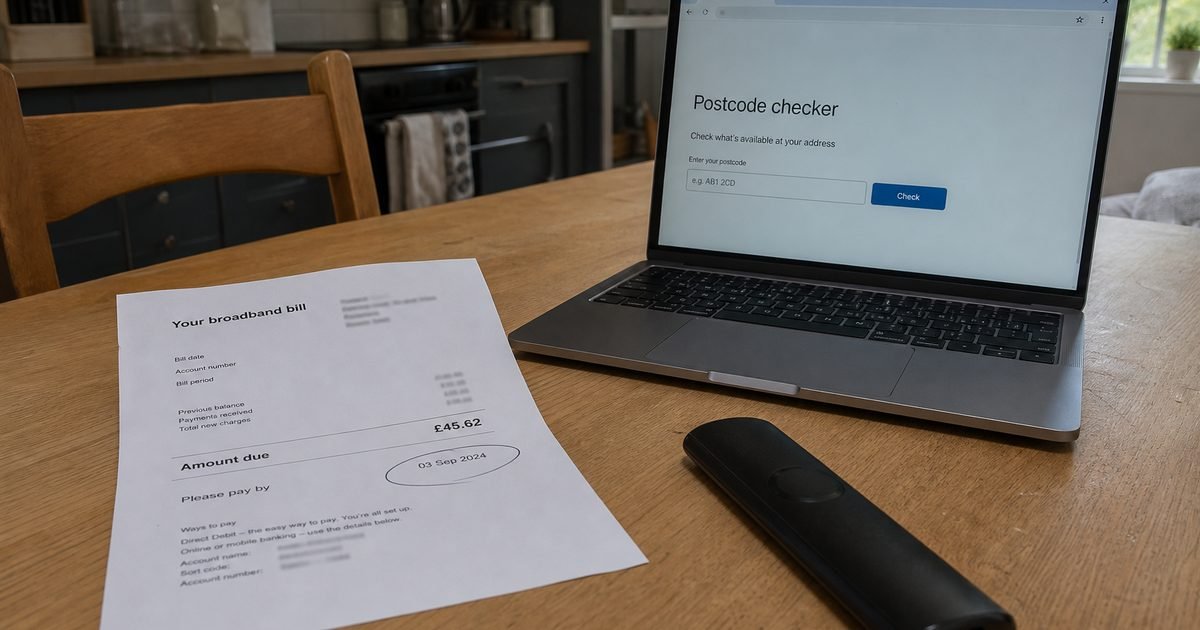
Your account number or a recent bill, if you're switching within the same provider.
Your postcode, since speed and availability vary by building on tariffs like Community Fibre Essential and Hyperoptic Fair Fibre.
Most providers confirm eligibility within minutes using the Department for Work and Pensions (DWP) benefit-checking service, so you rarely need to send proof of your benefit separately.

Social Tariff Broadband Compared to Standard Broadband
A social tariff saves £150 to £230 a year against the average standard UK broadband package. If your current deal is out of contract, the saving grows further, since out-of-contract customers often pay £45 to £50 a month for a speed tier that a £15 to £20 social tariff already covers.
Speed matters less than most households expect for everyday use. A 36Mbps connection, the speed BT Home Essentials runs at its lower tier, supports 4K streaming, video calls, and 5 to 6 connected devices at once without buffering. A household of 2 or 3 people streaming, browsing, and working from home typically needs 30 to 50Mbps, well within reach of every social tariff on this list except Virgin Media Essential Broadband's 15Mbps tier, which suits 1 or 2 devices at a time.
Why Millions of Eligible Households Miss Broadband Social Tariff Deals
Ofcom estimates 4.2 million UK households qualify for a social tariff, yet take-up sits below 5%. Three gaps explain most of the shortfall:
Awareness. Providers rarely advertise social tariffs alongside their standard deals, so customers don't see the option at sign-up.
Stigma. Some customers avoid asking about a benefits-linked discount out of embarrassment, even though the application only needs a National Insurance number check.
Assumed lock-in. Many customers assume switching mid-contract triggers an exit fee, when social tariffs and One Touch Switch both remove that barrier in most cases.
Providers have little commercial incentive to promote a tariff priced 40 to 60% below their standard packages, so the gap tends to close only through independent guides, Citizens Advice, and word of mouth rather than provider marketing. Checking eligibility costs nothing and takes under 10 minutes, so there's little downside to asking even if you're not certain your benefit qualifies.
Common Mistakes to Avoid When Switching to a Social Tariff
Four mistakes cost eligible households money or delay their switch:
Waiting for the current contract to run out. Most providers let you move to a social tariff mid-contract without an exit fee, so there's no reason to wait if you already qualify.
Applying through a comparison site instead of the provider. Social tariffs sit outside standard comparison feeds, so you apply directly on the provider's own site or by phone.
Assuming PIP or Attendance Allowance always qualifies. These two benefits only count at some providers, so confirm the list before you cancel your existing package.
Overlooking the phone-only social tariffs. BT and KCOM run separate discounted landline-only tariffs for eligible households that don't need broadband, worth checking if you only need a phone line.
Do Social Tariffs Cover Mobile and Phone Bills Too
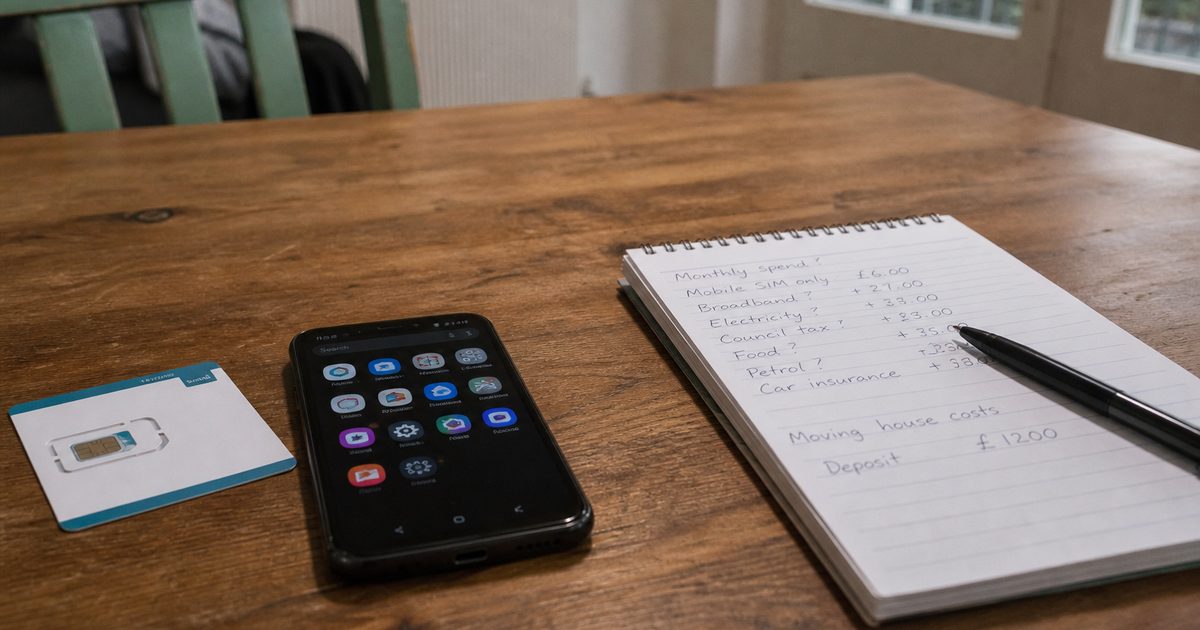
Some networks extend the same discount principle to mobile. EE and Vodafone signpost eligible customers toward reduced SIM-only tariffs, and several mobile virtual network operators run their own low-cost data plans for benefit claimants. These sit alongside home broadband social tariff deals rather than replacing them, so a household can hold a discounted broadband line and a discounted mobile SIM at the same time.
Broadband Deals for Pensioners on a Low Income
Pension Credit qualifies pensioners for the same broadband social tariff deals as working-age claimants. BT Home Essentials, Virgin Media Essential Broadband, and Vodafone Essentials all accept Pension Credit as a qualifying benefit, at the same £12.50 to £20 monthly price as Universal Credit claimants pay.
Check your entitlement to Pension Credit itself first, since roughly 760,000 eligible pensioners in the UK don't claim it, according to gov.uk. Claiming Pension Credit can unlock a broadband social tariff on top of the benefit's other entitlements, including help with Council Tax and heating costs.
A pensioner switching from an average £32 out-of-contract broadband bill to a £12.50 social tariff saves roughly £234 a year, money that covers 3 to 4 months of a typical energy bill at current prices. Sky Broadband Basics and BT Home Essentials both accept Pension Credit without a separate application for the broadband discount once the benefit itself is confirmed.
Frequently Asked Questions
Do you qualify for a broadband social tariff deal on Universal Credit?
Yes. Universal Credit qualifies you for a social tariff at every major UK provider, including BT, Virgin Media, Sky, Vodafone, Community Fibre and Hyperoptic. You apply directly with the provider and confirm your benefit through your National Insurance number.
Can you get a broadband social tariff deal without a credit check?
Yes, at most providers. Virgin Media Essential Broadband and BT Home Essentials both skip the standard credit check, since eligibility runs on your benefit status rather than your credit score.
Do broadband social tariff deals include line rental?
Most include line rental in the price. BT Home Essentials, Virgin Media Essential Broadband and Vodafone Essentials all bundle the phone line into the monthly fee, so there's no separate charge to budget for.
Can you switch to a social tariff mid-contract?
Yes, without an exit fee. Since 12 September 2024, Ofcom's One Touch Switch rule lets your new provider handle the entire move, including cancelling your old contract. If you switch to a social tariff at the same provider, most waive the exit fee entirely; if you move to a different provider, One Touch Switch removes the hassle of a two-sided cancellation.
How much do broadband social tariff deals save each year?
Around £200 to £250 a year. The average standard UK broadband package costs roughly £32 a month (£384 a year) in 2026. A social tariff at £12.50 to £20 a month brings the annual cost down to £150 to £240, a saving of £150 to £230 depending on the provider and speed you pick.
Do social tariffs rise in price during the contract?
No, in almost every case. Social tariffs are exempt from the mid-contract, inflation-linked price rises that hit standard broadband deals every April. If a provider does plan a rise, rules in force since 17 January 2025 require it to state the exact amount in pounds and pence before you sign.
Is there free broadband for people on Universal Credit?
Not as a permanent deal, but TalkTalk offers 6 months of free broadband for jobseekers actively looking for work, separate from its ongoing social tariff. After the free period ends, the account moves to a standard low-cost plan unless you cancel.
For more ways to cut your household bills in 2026, see our full guide to Universal Credit discounts, or read Citizens Advice for wider support if you're behind on any household bill.