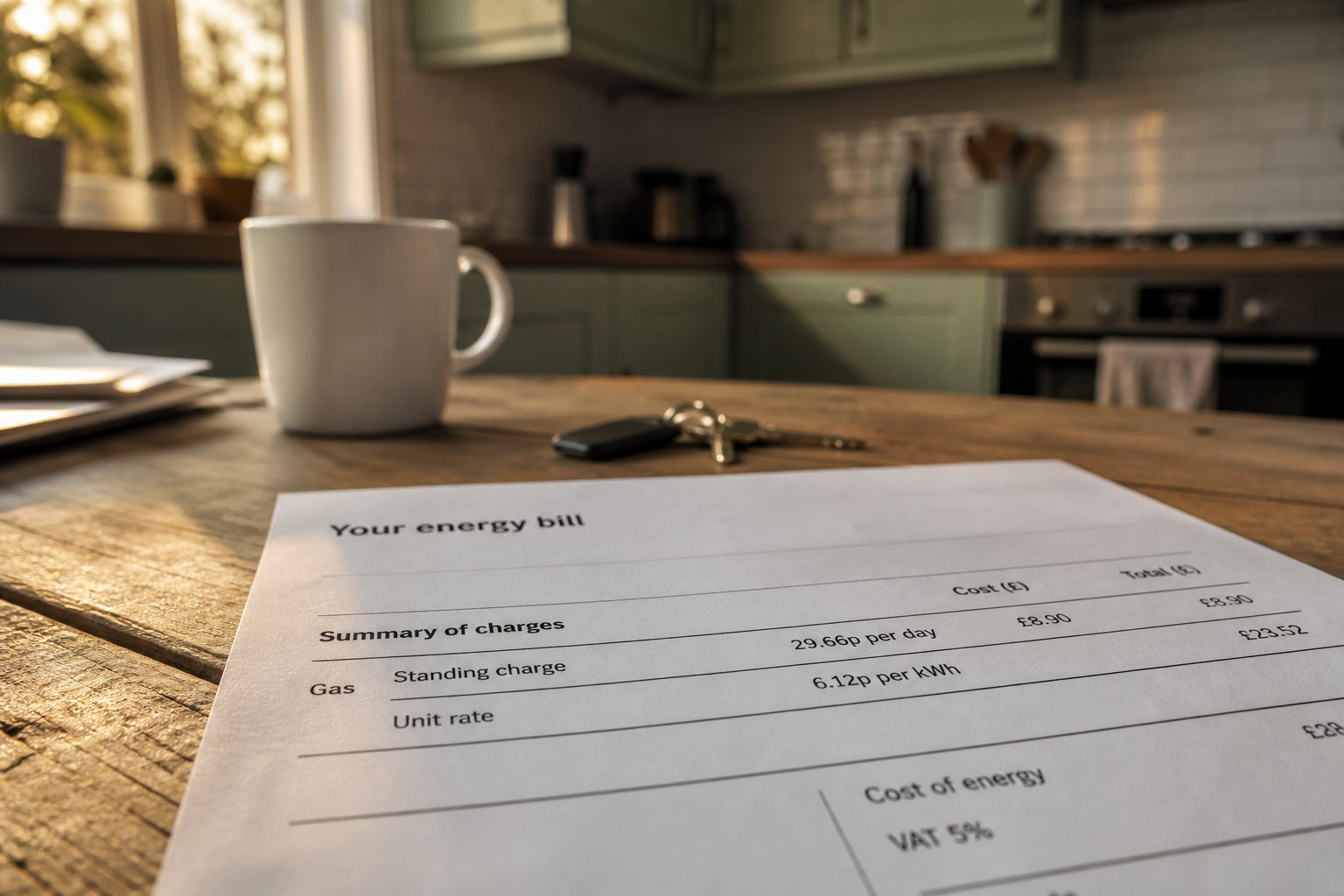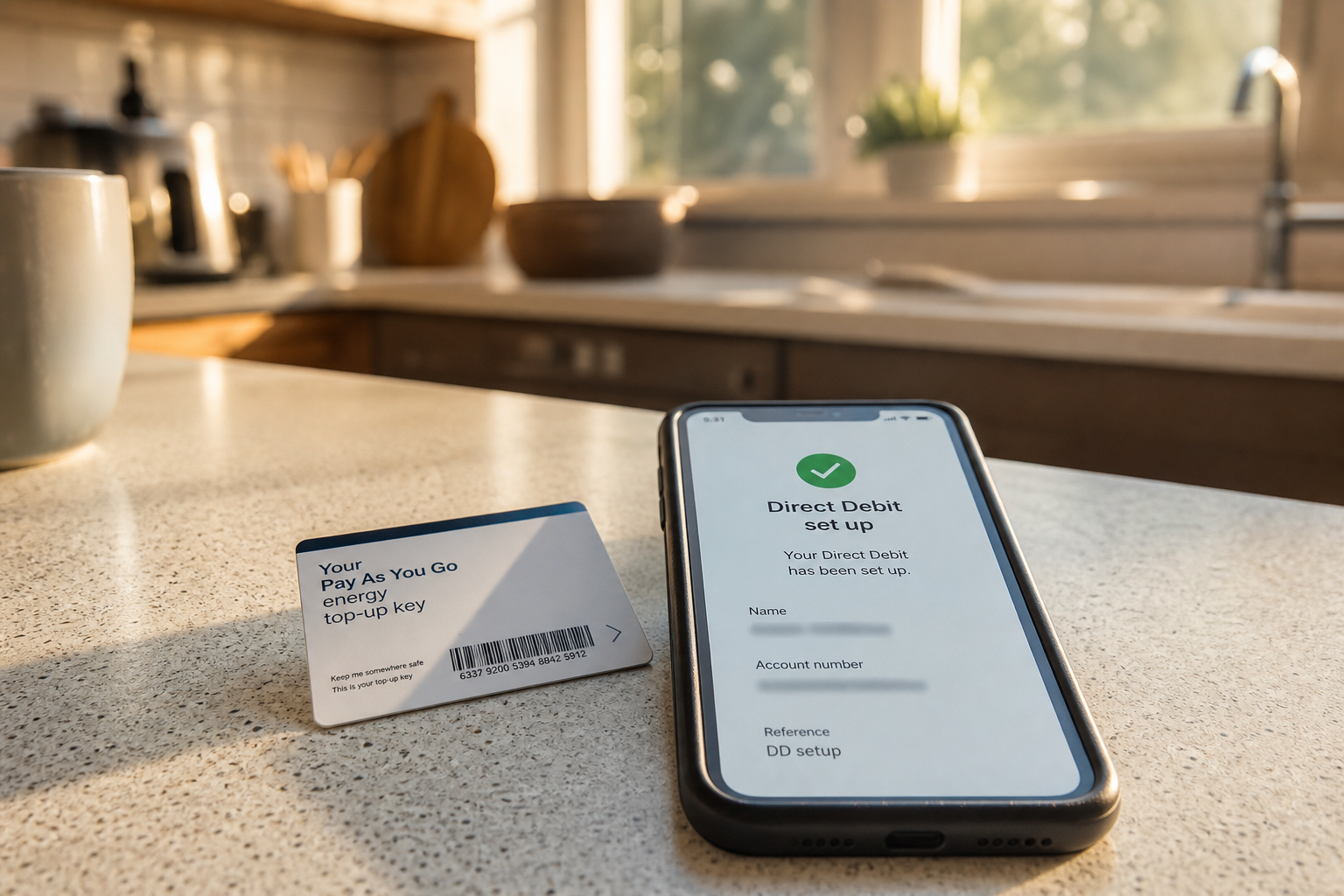
I am Switch. I compare energy deals for a living, and I am tired of the sentence “Direct Debit is always cheaper”.
This morning Ofgem published the cap for 1 October to 31 December 2026. A typical dual-fuel Direct Debit home is £1,723 a year. A typical prepay home is £1,678. That is about £45 the other way. Neil Kenward, Ofgem’s Director General for Markets, said it out loud: prepayment customers pay “the lowest price cap rates”.
That is not permission to sit on a key meter and call it a win. Kenward’s next sentence was the other half of the bill: fixed tariffs are available at £100 or more below the October cap, and most of those deals want a credit meter and a Direct Debit. The cap is cheaper on prepay. The market is not.
This is not another October price-cap announcement. We already published that, with the official rates, here. This page is the shopping question that page only flagged: prepay vs Direct Debit after the new cap, and whether coming off the meter is still worth the credit check.
Three prices, not one
Ofgem does not set one bill. It sets a maximum unit rate and standing charge for each way you pay, then multiplies those by a “typical” year’s use so journalists have a headline. From 1 July 2026 that typical home is 2,500 kWh of electricity and 9,500 kWh of gas. Your kWh will differ. The ranking of the three payment methods will not.
How you pay | Jul–Sep 2026 | Oct–Dec 2026 | Vs Direct Debit |
|---|---|---|---|
Direct Debit | £1,663 | £1,723 | — |
Prepayment | £1,620 | £1,678 | About £45 cheaper |
Standard credit (pay the bill) | £1,796 | £1,861 | £138 more |
Sources: Ofgem summary of changes, 26 August 2026 and the press release. Those three typical bills, and Economy 7, all use the new 2026 TDCV. All three payment methods moved +4%. Economy 7 Direct Debit is a different product — £1,046, +1% — because the typical multi-register home is 3,400 kWh of electricity, not a dual-fuel pair. Do not line it up with £1,723 and call it a bargain.
Around 5 million households on a default tariff pay by prepay, 12 million by Direct Debit, 3 million by standard credit. Another 11 million households are already on a fixed deal and the cap does not touch them. Those splits are Ofgem’s, from July 2026 account data in this morning’s notes to editors.
If you pay when the bill arrives, stop reading the prepay debate. £138 a year against Direct Debit is the expensive one, and it has been for years. Ask the supplier to put you on monthly Direct Debit. That is a payment-method change, not a meter swap.
Why the cap is cheaper on prepay
It used to go the other way. Prepay was the poverty premium: higher standing charges, fewer deals, a key you had to take to a shop. Two


things killed the worst of that.
First the Energy Price Guarantee, during the wholesale-gas crisis. Then, from 1 April 2024, Ofgem’s levelisation of standing charges between prepay and Direct Debit. Direct Debit customers pay a small extra (the “levelisation allowance”, 0.5% of the October Direct Debit cap). Prepay customers get the other side of that transfer (−3% of the October prepay cap). Standing charges were the old insult. They are aligned on purpose.
The remaining gap sits in the unit rates. Ofgem has published the national-average Direct Debit pence for 1 October. It has not, at the time of writing, published a matching national-average prepay pence on the consumer page — only regional prepay tables, and the typical-bill headline of £1,678. I am not going to reverse-engineer a pence figure and dress it up as Ofgem’s. Use the typical bills for the ranking. Use your regional table for the statement.
What is on meters until 30 September is the July–September prepay cap. uSwitch’s Ofgem-based table for that quarter (updated 24 August 2026, still current this morning) is:
Charge (Jul–Sep 2026) | Direct Debit | Prepayment |
|---|---|---|
Electricity unit rate | 26.11p/kWh | 25.32p/kWh |
Gas unit rate | 7.33p/kWh | 7.07p/kWh |
Electricity standing charge | 57.19p/day | 57.19p/day |
Gas standing charge | 29.04p/day | 29.04p/day |
Same daily fees. Slightly cheaper units on prepay. That is why the typical prepay bill undercut Direct Debit by £43 this quarter and about £45 from 1 October. Levelisation did its job. It did not make prepay a cheap tariff. It made the default cheaper on PAYG than on Direct Debit.
From 1 October the Direct Debit averages, VAT already treated the new way, are:
Fuel | Unit rate | Standing charge | VAT in the figure |
|---|---|---|---|
Electricity | 26.32p/kWh | 54.83p/day | 0% (1 Oct 2026 – 31 Mar 2027) |
Gas | 7.97p/kWh | 29.68p/day | 5% included |
Source: Ofgem unit rates and standing charges. Electricity VAT drops to 0% on 1 October; gas stays at 5%. That cut is automatic on prepay as well as Direct Debit, and on fixed tariffs too. We have a separate VAT on electricity page for the tax. Do not treat it as a reason to change meter.
Ofgem is blunt that, because of the VAT change, “costs cannot be compared directly to previous periods”. The +4% / +£60 on Direct Debit and the +4% on prepay are Ofgem’s own like-for-like presentation. They are not a simple pence-on-pence match with July.
The market still prefers Direct Debit
Here is the bit the “prepay is cheaper now” blogs stop before.
The price cap is a ceiling on default / standard variable tariffs. It is not a shop. Kenward, same press release, same morning: savings are available by choosing a fixed tariff, “available at £100 or more below the October price cap”, and many suppliers offer cheaper off-peak electricity to smart-meter customers. That £100 is Ofgem’s line, not a SwitchSquid quote card. It will not be on every postcode. It will not be on every prepay meter.
Most of the competitive book — 12-month fixes, tracker-with-a-discount, the time-of-use deals that actually undercut 26.32p — is sold to people who pay by Direct Debit on a credit meter. Prepay can switch supplier. Ofgem is explicit: you can switch with debt under £500. What you can switch to is thinner. Some suppliers still only have a PAYG standard variable. Some will fix you on smart prepay. Some will not.
So the honest comparison is not £1,678 vs £1,723. It is:
Stay on prepay, stay on the default: about £1,678 typical from 1 October.
Move to Direct Debit, stay on the default: about £1,723 typical. You have paid £45 for the privilege of not topping up.
Move to Direct Debit, take a fix that actually beats the cap by £100+: that is the only version of “come off prepay” that wins on price, and only if you can get the deal and live with the exit fee.
I already wrote the winter fix versus variable argument. I am not rewriting it. If a fix is only a few pounds under £1,678 at your kWh, coming off the meter to grab it is theatre. Rank by annual cost, the same way I tell people not to sort by cheapest kWh. Our standing charges vs unit rates page is that lecture. This page is the payment-method one.
What the typical bill does not count
The £1,678 is a unit-rate-plus-standing-charge illustration. It assumes you used the energy and paid for it. Prepay has costs that illustration never sees.
Standing charges still run when the meter is off. Ofgem’s own prepay guidance: you still pay standing charges, and you still need credit if you go away. Self-disconnection does not pause the daily fee. When you next top up, the standing charge that accrued in the dark comes off the credit first. That is not a “hidden tariff”. It is the same 54.83p and 29.68p (Direct Debit national averages from 1 October; your prepay standing charge will be in the same region of the cap) eating the top-up before a kettle boils.
Emergency credit is a loan. You spend it, then the next top-up pays it back. A £20 top-up is not £20 of usable energy if last week’s emergency credit and a week of standing charges are sitting on the meter.
Debt recovery comes off the top-up too. If the meter is collecting arrears, a slice of every top-up never becomes gas or electricity. That can be the right way to repay. It is not in the typical-bill headline.
The shop is not free. Smart prepay can top up in an app. A key or card meter still means a PayPoint, a Post Office, or a supermarket that is open. I am not going to invent a yearly bus-fare figure. If you have ever walked there in the rain with a child, you already know it is a cost.
None of that reverses Ofgem’s £45. It means a household that never self-disconnects, tops up on a phone, and has no debt on the meter is the household the typical bill describes. A household that goes off supply even a few times in winter is not.
Should you come off prepay?
Not because Direct Debit is “the grown-up way to pay”. Because of one of three reasons. Pick the one that is actually yours.
1. The meter is not safe or practical. Then this is not a shopping article. Tell the supplier. Ofgem’s licence rules bar involuntary prepay for the highest-risk homes, and Citizens Advice is equally blunt about getting off it: aged 75 or over and living alone (or with no one who can work the meter); a child under 2; disability or a health condition that needs a continuous supply, or that a cold house makes worse; you cannot reach or top up the meter. Self-disconnection because you cannot afford to top up is itself a reason to ask. The supplier usually will not move you to credit while you are in debt — unless it is unsafe to stay. Then they must.
2. You want a competitive fix, and you can actually get one. Run the comparison as a prepay customer first. If a PAYG fix at your kWh already beats £1,678, stay and take it. If the cheap deals vanish the moment you tick “prepayment meter”, and you can pass a credit check or put down a deposit, and you can hold a month’s energy in the bank through January, then a mode change is a switching cost, not a lifestyle upgrade. Do not come off prepay to buy the Direct Debit cap. That is paying £45 for a direct debit.
3. You want weekly control more than you want a cheaper unit rate. Stay. Plenty of people chose prepay, or kept it after the debt was cleared, because a monthly Direct Debit is how they got into trouble. Ofgem itself calls PAYG a helpful way to manage a budget. I am not going to moralise you onto a Direct Debit and then watch the first cold week bounce.
If the debt on the meter is paid off and you still do not want prepay, the supplier must either switch a smart meter to credit mode or replace a dumb key meter with a smart meter in credit mode. That is Citizens Advice, not a supplier brochure. They may run a credit check. They may ask for a deposit instead — typically £150 to £300, based on about three months’ use. If the number is “much more”, complain. Note the credit left on the meter (photo it) before the mode changes. It should land on the new account.
Tenants: if you pay the supplier directly, Citizens Advice says you do not need the landlord’s permission to change how you pay. Tell them anyway, especially if an engineer is coming. Check the tenancy for any clause that wants the meter put back at the end. A mid-tenancy fix with an exit fee is a nasty surprise in month 11.
How the switch actually works
Smart meter already in prepay mode. This is a remote configuration change. No van. A few working days once the supplier agrees you are eligible. SMETS2 is the straightforward case. Older SMETS1 and dumb key/card meters are not.
Dumb key or card. The supplier should offer a smart meter, for free. Citizens Advice: you should not have to pay for the smart meter install; call their consumer helpline if the supplier tries to charge. You can ask what non-smart options exist if you refuse a smart meter. Expect an appointment, not an afternoon.
You can still switch supplier on prepay. Ofgem: debt under £500. That is the Debt Assignment Protocol, per fuel, so up to £500 on electricity and £500 on gas. The new supplier takes the debt. You keep repaying it through top-ups. That is a supplier switch, still on PAYG. It is not a ticket onto Direct Debit. Mixing the two up is how comparison-site FAQs send people in circles.
Compensation if they make a mess of an engineer visit. Missed appointment, or a change with less than one working day’s notice, or an engineer without the right kit: £40, another £40 if they miss the 10-working-day payment. That is the guaranteed-standards figure uSwitch cites and the same regime as other meter appointments. It is not a reason to book a van you do not need.
After a mode change you are a credit customer. Then, and only then, compare the open book against the official October Direct Debit rates — 26.32p / 54.83p electricity, 7.97p / 29.68p gas — and against the prepay typical you just left. Use the energy compare hub. Put last year’s kWh in, not the Direct Debit amount. The Direct Debit is a smoothing figure. I will keep saying that.
Warm Home Discount still works on prepay
Eligibility does not care how you pay. GOV.UK: you can still get the £150 if you are on a pre-pay or pay-as-you-go electricity meter. Direct Debit customers usually see it as a credit on the electricity account (or gas, if they ask). Prepay customers get it as credit against future use, or a voucher, or — on smart PAYG — a credit pushed to the meter. British Gas’s 2026/27 page: PAYG smart customers get it on the meter; others get a Post Office voucher. Ask your supplier how they will pay it this winter. Do not come off prepay to “unlock” a discount you already qualify for.
The scheme for winter 2026/27 starts issuing in autumn. Payments by 31 March 2027. England and Wales Core Group is automatic if you are eligible; Scotland may still need an application. Northern Ireland is a different market.
What I would do this week
Read the October cap page once, for the official rates. Then come back here. Do not make a meter decision off a headline that was written for Direct Debit.
Find last year’s electricity and gas kWh. Not the monthly Direct Debit, not the top-up habit. kWh.
If you are on standard credit, ask for Direct Debit this week. £1,861 versus £1,723 is the gap that actually matters, and it does not need a new meter.
If you are on prepay and the meter is unsafe or you keep self-disconnecting, call the supplier and Citizens Advice. Price is not the test.
If you are on prepay and coping: compare as a prepay customer. Take a PAYG fix if it beats £1,678 at your kWh. If it does not exist, then ask what a credit-mode change would unlock, and only move if the fix still wins after the deposit and the first winter Direct Debit.
If the debt is cleared and you never wanted the meter, ask for the mode change. They must. Photo the credit first.
Submit a reading, or a photo of the meter, around 1 October. New cap, new VAT on electricity. Cleaner split, whichever way you pay.
If you cannot pay, say so before the first cold week. Extra support credit, a repayment plan, the Priority Services Register, Breathing Space — Ofgem lists them. A clever payment method will not clear arrears.
Switch Squid Ltd (company number 13332631) is based in Leamington Spa. We compare. We are not Ofgem, and we are not your supplier.
Frequently asked questions
Is prepay cheaper than Direct Debit in 2026?
On the default tariff cap, yes, slightly. From 1 October 2026 Ofgem’s typical dual-fuel bills are £1,678 a year on prepay and £1,723 on Direct Debit, about £45 apart. That is the cap, not the market. Competitive fixed deals, which Ofgem says can sit £100 or more below the October cap, are mostly sold to Direct Debit customers on a credit meter.
What is the October 2026 prepay price cap?
£1,678 a year for a typical dual-fuel prepayment household on the 2026 TDCV (2,500 kWh electricity / 9,500 kWh gas), up 4% from £1,620 in July–September. Direct Debit is £1,723. Standard credit is £1,861. Source: Ofgem’s 26 August 2026 summary PDF.
Should I come off my prepayment meter?
Come off if the meter is unsafe or impractical (health, age, a child under 2, you cannot top up), or if a credit-meter fix at your kWh clearly beats £1,678 and you can pass the checks. Do not come off just to sit on the Direct Debit cap — that typical bill is £45 higher. If you need weekly control, staying is a reasonable choice.
Can I switch energy supplier if I am on prepay?
Yes, including with debt under £500 per fuel, via the Debt Assignment Protocol. That keeps you on prepay with a new supplier. Moving to Direct Debit is a separate request, usually with your current supplier, and they will normally want the account out of debt or an agreed plan, plus a credit check or a deposit.
Do I need a new meter to pay by Direct Debit?
Not if you already have a smart meter in prepay mode — the supplier can switch it to credit mode remotely. A traditional key or card meter needs an engineer, almost always to fit a smart meter. Citizens Advice: the smart meter install should be free.
Will I still pay standing charges on prepay?
Yes. Ofgem is explicit. Dual fuel means two of them, every day, including days the meter has cut off. From 1 October the Direct Debit national averages are 54.83p/day electricity and 29.68p/day gas; your prepay standing charges are set from the same cap family and published by region on Ofgem’s unit-rates page.
Does the Warm Home Discount work on a prepayment meter?
Yes. GOV.UK: pre-pay and PAYG electricity customers still qualify. It arrives as meter credit, a voucher, or a credit on the account, depending on the supplier and whether the meter is smart. It is £150, once, for eligible households. You do not move to Direct Debit to get it.
I pay when the bill arrives. Should I switch to Direct Debit?
Yes, if you can keep the Direct Debit from bouncing. Standard credit’s typical cap from 1 October is £1,861, £138 above Direct Debit. That is the payment-method change with a clean official price. It does not require a new meter.
Sources
Ofgem press release, 26 August 2026: Energy price cap will rise by 4% from October 2026 — typical Direct Debit £1,723 (+4% / +£60 / +£5 a month vs £1,663); Kenward on prepay paying the lowest cap rates (about £45 vs Direct Debit) and fixes at £100 or more below the October cap; ~5 million SVT PPM households, ~12 million SVT Direct Debit, ~3 million SVT standard credit, ~11 million households on fixed tariffs.
Ofgem, 26 August 2026: Changes to the energy price cap between 1 October and 31 December 2026 — Direct Debit national averages 26.32p/kWh and 54.83p/day electricity (0% VAT), 7.97p/kWh and 29.68p/day gas (5% VAT); next announcements 25 Nov 2026 / 23 Feb 2027 / 26 May 2027.
Ofgem: Summary of changes to the energy price cap, 1 October to 31 December 2026 (letter dated 26 August 2026) — Direct Debit £1,723, standard credit £1,861, PPM £1,678, Economy 7 Direct Debit £1,046; TDCV 2,500 / 9,500 / 3,400 kWh; annexes: Direct Debit levelisation 0.5%, prepay levelisation −3%; VAT electricity 5% → 0%, gas 5% unchanged.
Ofgem: Energy price cap unit rates and standing charges — July vs October Direct Debit pence; regional Direct Debit and prepay tables; VAT wording; “costs cannot be compared directly to previous periods”.
Ofgem: Energy price cap and standing charges explained — cap limits unit rate and standing charge together; levelisation allowance in the cost stack.
Ofgem, 23 February 2024: Decision on adjusting standing charges for prepayment customers — levelisation of PPM and Direct Debit standing charges from April 2024.
Ofgem: Prepayment meters consumer guidance — standing charges still apply; switch with debt under £500; extra support credit; involuntary PPM rules (continuous supply / 75+ without support / children under 2 / severe health).
Citizens Advice: Switching from prepayment to paying by credit — smart mode change vs meter swap; supplier usually will not move you to credit while in debt; must move you once debt is cleared if you ask; credit check or deposit (typically £150–£300); tenants paying the supplier directly do not need landlord permission to change how they pay; photo remaining credit.
GOV.UK: Warm Home Discount scheme — £150; pre-pay / PAYG still qualify; voucher or meter credit.
Ofgem: Warm Home Discount eligibility — Direct Debit credited to the account; prepay credited against future use, or voucher / cheque.
uSwitch, updated 24 August 2026: Energy price cap 2026 — July–September prepay national averages 25.32p/kWh electricity, 7.07p/kWh gas, standing charges 57.19p / 29.04p (same as Direct Debit). Used only for the current (to 30 Sep) prepay pence; uSwitch had not published official October typical bills at check.
uSwitch, updated 23 April 2026: Changing from a prepayment meter to a credit meter — big suppliers do not charge for the swap; £40 missed-appointment compensation.