Last updated: Tuesday 6 October 2026 (Europe/London). Ofgem has published the official default tariff cap for 1 October – 31 December 2026. Every October figure below is now the official number, not a forecast.
By the Switch Editorial Team, Switch Squid Ltd
I compare energy deals for a living, and I get twitchy when the same bill is quoted as £1,663 in one tab and £1,862 in another. That is not two different winters. That is two different “typical homes” being used to describe one cap. If you only remember one thing from this piece, make it that.
Ofgem announced the energy price cap October 2026 on the morning of 26 August 2026. The cap runs from 1 October to 31 December 2026. The headline: a typical dual-fuel household paying by Direct Debit will pay £1,723 a year on the new TDCV — up 4%, or £60 a year (about £5 a month), from £1,663 in July–September 2026.
Compare home energy deals
- MoneySuperMarket residential gas & electricity journey
- Enter your postcode and usage for live quotes
- Household switch path only — not business energy
This is the last cap of 2026. It lands on the same day VAT on household electricity falls to 0%. Wholesale prices were ugly enough that the VAT cut did not cancel the rise. Below: the official figures, the TDCV mess, the VAT cut, and a simple decision tree — already fixed, on a standard variable tariff, on prepay, or coming off a deal before October.
If you want the longer “does the cap even do what people think it does” argument, I already wrote that here: Does the energy price cap work?. If you want the winter fix-versus-variable call, start here: Fixed vs variable, winter 2026. To compare live deals for your actual usage, use the energy compare hub.
Prefer to start on Switch first? Open our energy comparison hub.
Prefer to start on Switch first? Open our energy comparison hub.
What Ofgem announced
The October–December 2026 default tariff cap was published on 26 August 2026. It applies from 1 October to 31 December 2026.
Typical dual-fuel Direct Debit bill: £1,723 a year on the new TDCV (2,500 kWh electricity / 9,500 kWh gas) — +4% / +£60 a year / about +£5 a month versus £1,663 for July–September 2026.
On the old 2023 TDCV (2,700 kWh / 11,500 kWh), the same cap is presented as £1,935, up from £1,862. Presentational only — it is the same cap.
Gas bills rise about 8%; households that do not use gas see an increase of less than 1%.
From 1 October 2026, VAT on domestic electricity is 0% (to 31 March 2027). Gas VAT stays at 5%.
The cap is a maximum unit rate and standing charge, not a promise that your home costs £1,700-and-something. Use more, pay more.
Official October 2026 cap figures
Official typical bill (Ofgem, 26 August 2026)
Basis | Typical Direct Debit bill | vs July–Sep | Change |
|---|---|---|---|
New TDCV 2,500/9,500 | £1,723 | £1,663 | +4% / +£60 |
Old TDCV 2,700/11,500 (presentational) | £1,935 | £1,862 | +4% |
Compare home energy deals
- MoneySuperMarket residential gas & electricity journey
- Enter your postcode and usage for live quotes
- Household switch path only — not business energy
Official typical bills by payment type
Payment type | Typical annual bill (Oct–Dec 2026) | Change |
|---|---|---|
Direct Debit | £1,723 | +4% |
Standard credit | £1,861 | +4% |
Prepayment | £1,678 | +4% |
Economy 7 (Direct Debit) | £1,046 | +1% |
Prepayment sits about £45 below the Direct Debit typical bill.
Official unit rates and standing charges (Direct Debit, national average)
Fuel | Unit rate (Oct–Dec 2026) | Standing charge | VAT |
|---|---|---|---|
Electricity | 26.32p/kWh | 54.83p/day | 0% VAT |
Gas | 7.97p/kWh | 29.68p/day | 5% VAT included |
Ofgem is explicit that, because of the VAT change, “costs cannot be compared directly to previous periods”. Without the Government’s VAT intervention, Ofgem says the headline figure would have been around £45 higher. The VAT removal also applies to customers on fixed tariffs; suppliers apply it automatically.
How the forecasts did
Close, and slightly high. Cornwall Insight forecast £1,729 on the new TDCV (19 August) — £6 above the official £1,723. The uSwitch supplier average was £1,725. Both were forecasts; the official number is £1,723.
Why some sites say £1,663 and others £1,862
This is the bit that makes people think journalists cannot add up.
The price cap is a set of maximum unit rates and standing charges. The “typical annual bill” is those rates multiplied by an assumed year’s use, plus standing charges, plus VAT where it still applies. Change the assumed use, and the headline bill changes even if the pence on your statement do not.
From 1 July 2026 Ofgem cut the medium assumption:
TDCV | Electricity (medium) | Gas (medium) |
|---|---|---|
Old TDCV | 2,700 kWh | 11,500 kWh |
New TDCV (from 1 July 2026) | 2,500 kWh | 9,500 kWh |
So the same July–September cap is often written as £1,663 on the new typical home and £1,862 on the old one. The official October cap does the same: £1,723 new versus £1,935 old. One cap, two yardsticks.
If you still heat a draughty three-bed like it is 2019, the new “typical” number is not your number. Compare unit rates, or better, compare a quote built on your kWh. The is there for that, not for arguing about a fictional average family.

Energy bill on a kitchen table — October 2026 price cap context.
VAT at 0% on electricity from 1 October
Two things happen on 1 October: the new cap period starts, and VAT on household electricity goes to 0% until 31 March 2027.
Ofgem's own line: without the VAT intervention the cap figure would have been around £45 higher. Gas keeps its 5% VAT. And because the VAT treatment has changed mid-series, Ofgem warns the October costs cannot be compared directly with previous cap periods — so any “up £60” comparison is a like-for-like Ofgem presentation, not a simple rate-on-rate match.
If you are on Economy 7 or another multi-rate meter, the electricity VAT cut still matters; the “typical dual-fuel Direct Debit” headline still may not — the Economy 7 Direct Debit typical is £1,046, up 1%. Check the rates, not the poster.
Prefer to start on Switch first? Open our energy comparison hub.
Should you fix now?
I do not get paid more if you panic-fix. I also will not tell you to sit on an SVT out of superstition.
What a fix actually does. A fixed tariff locks the unit rates and standing charges you agreed, for the term you agreed, as long as you stay inside the contract. The October cap moving does not rewrite that contract. Exit fees are real. Read them.
What the cap actually does. It caps default (standard variable) tariffs, including most people who have not chosen a deal in over a year. It is not a government gift. It is not a bill freeze. Prepay has its own cap track — £1,678 typical from October — it is not “uncapped”, but it is not the Direct Debit headline either.
The benchmark to beat. From 1 October the default rates are 26.32p/kWh electricity with a 54.83p/day standing charge, and 7.97p/kWh gas with a 29.68p/day standing charge. A fix only wins if its rates, fees and term beat those against your usage. Ofgem's next announcement, for January–March 2027, is due 25 November 2026.
For the fuller winter framing, use fixed vs variable, winter 2026. For a sense of where the kWh actually go in the house, what your appliances cost to run is more useful than another table.

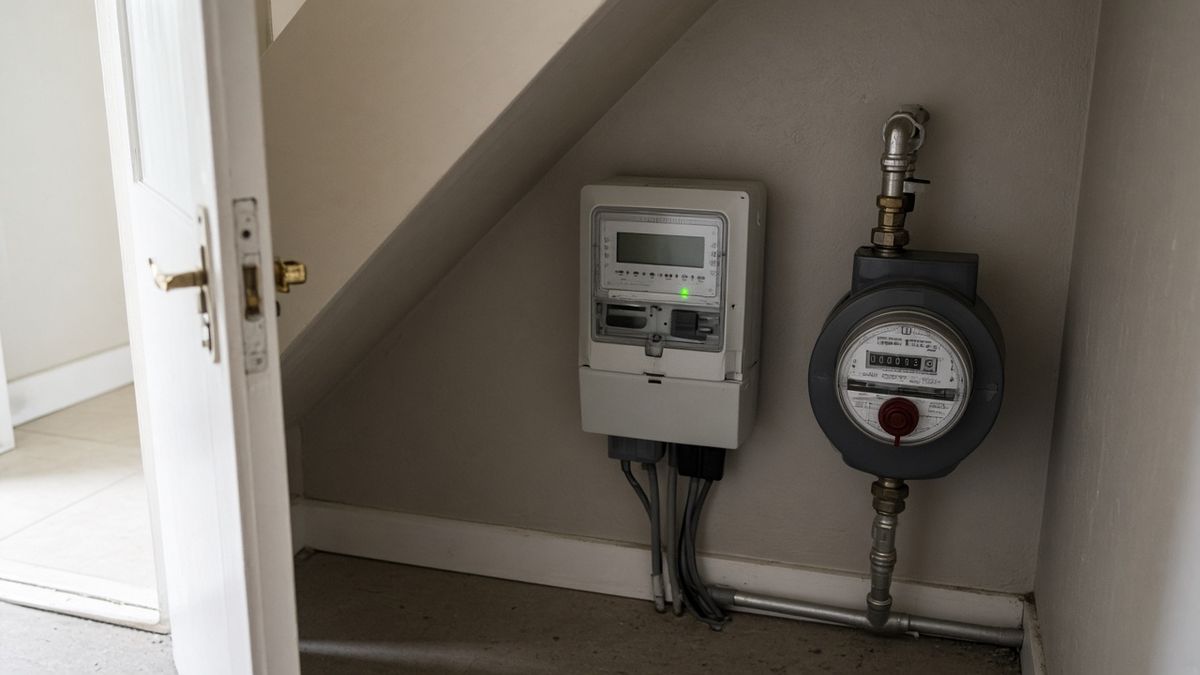
UK smart meter reading in kWh.
Decision tree
Already on a fixed deal that runs past 1 October 2026
Do nothing because of the cap. Your rates do not move with Ofgem’s press release (though the electricity VAT cut is passed on automatically). Note the end date. If it lands in the autumn or winter, start comparing before you roll onto the SVT by default. Default is how people accidentally buy the cap.
On a standard variable tariff (price-capped default)
You are the person the October number is about. From 1 October your typical Direct Debit bill benchmark is £1,723, up £60 on the £1,663 headline. That is not automatically a reason to fix. It is a reason to run a comparison on your usage against the official 26.32p / 7.97p rates. If a decent fix is clearly cheaper than those and you can live with any exit fee, take it. If it is only a few pounds below, waiting is not cowardice.
Prepay, and not on a fixed tariff
You are under the prepayment cap: £1,678 typical, up 4%, about £45 below the Direct Debit figure. Check whether your supplier (or another) will let you fix on prepay or move payment type without wrecking the arrangement you actually use. Do not switch payment method just to chase a headline.
Deal ending before October — or in October
This is the sharp one. If you roll off in September you get a month on the current cap and then the new one. If you roll off in October you land straight on the new £1,723-benchmark default. Get quotes now, and price them against the official October rates rather than against a summer forecast.
Cannot pay
That is not a switching article. Tell the supplier. They have to engage. The cap does not pause arrears.
What happens next
Ofgem’s next cap announcements: 25 November 2026 (January–March 2027), 23 February 2027 (April–June 2027) and 26 May 2027 (July–September 2027). We will update this page each time.
January 2027 forecasts (dated): as of 6 October 2026, forecasts for January–March 2027 range from £1,999.28 (Cornwall Insight, 30 September) to £2,065 (E.ON Next, 28 September) and £2,074 (uSwitch average of supplier forecasts, 1 October). That's £276 to £351 above today's £1,723. Ofgem confirms the real figure by 25 November 2026. We track every forecast in our energy price cap January 2027 forecast guide.
Switch Squid Ltd (company number 13332631) is based in Leamington Spa. We compare. We are not Ofgem, Cornwall Insight, or your supplier.
Compare home energy deals
- MoneySuperMarket residential gas & electricity journey
- Enter your postcode and usage for live quotes
- Household switch path only — not business energy
FAQ
What is the energy price cap for October 2026?
Ofgem set the cap for 1 October to 31 December 2026 at a typical annual bill of £1,723 for a dual-fuel household paying by Direct Debit on the new TDCV (2,500 kWh electricity / 9,500 kWh gas). That is +4%, or £60 a year, on July–September 2026’s £1,663.
Is £1,723 the official October price cap?
Yes. £1,723 is Ofgem’s official typical Direct Debit annual bill on the new TDCV, published 26 August 2026. Cornwall Insight had forecast £1,729 and the uSwitch supplier average was £1,725; both were forecasts and both came in slightly high.
Why do some sites say the October cap is £1,935?
They are using the old medium TDCV (2,700 kWh electricity, 11,500 kWh gas), on which Ofgem presents the same cap as £1,935 (from £1,862). On the new TDCV it is £1,723 (from £1,663). Same cap, different assumed home.
What are the October 2026 unit rates?
National average Direct Debit: electricity 26.32p/kWh with a 54.83p/day standing charge at 0% VAT; gas 7.97p/kWh with a 29.68p/day standing charge, including 5% VAT.
Does the price cap apply if I am already on a fixed tariff?
No. Fixed rates stay as contracted. The cap applies to default / standard variable tariffs, including many prepay defaults. The electricity VAT cut does apply to fixed tariffs, applied automatically by suppliers.
How much does the electricity VAT cut save?
Ofgem says the cap figure would have been around £45 higher without the Government removing VAT from electricity between 1 October 2026 and 31 March 2027. Your own saving scales with how much electricity you use. It does not apply to gas, which stays at 5%.
Will the cap rise again in January 2027?
Very likely, though it isn't official yet. As of 6 October 2026, forecasts range from £1,999 to £2,074 a year for a typical home, compared with £1,723 today. Ofgem announces the January–March 2027 cap by 25 November 2026. See our January 2027 price cap forecast for each forecast with its date, plus a fix-versus-cap comparison.
I use much more (or less) than 2,500 kWh / 9,500 kWh. Are these headlines useless?
They are useful as a market signal. They are useless as your bill. Price your own kWh.
Sources
Ofgem press release, “Energy price cap will rise 4% in October 2026”, 26 August 2026: https://www.ofgem.gov.uk/press-release/energy-price-cap-will-rise-4-october-2026
Ofgem, “Changes to energy price cap between 1 October and 31 December 2026”, 26 August 2026: https://www.ofgem.gov.uk/news/changes-energy-price-cap-between-1-october-and-31-december-2026
Ofgem, Summary of changes to the energy price cap 1 October to 31 December 2026: https://www.ofgem.gov.uk/sites/default/files/2026-08/Summary-of-changes-to-energy-price-cap-1-October-to-31-December-2026.pdf
Ofgem, Energy price cap unit rates and standing charges: https://www.ofgem.gov.uk/information-consumers/energy-advice-households/energy-price-cap-unit-rates-and-standing-charges
Ofgem, “Changes to energy price cap between 1 July and 30 September 2026” (July–September comparison figures): https://www.ofgem.gov.uk/news/changes-energy-price-cap-between-1-july-and-30-september-2026
Ofgem, Review of typical domestic consumption values (decision; new medium TDCVs from 1 July 2026): https://www.ofgem.gov.uk/sites/default/files/2026-05/Review%20of%20typical%20domestic%20consumption%20values%20decision.pdf
Cornwall Insight, “Energy Bills Forecast to Hit Three-Year High” (superseded forecast, 19 August 2026): https://www.cornwall-insight.com/press-releases/energy-bills-forecast-to-hit-three-year-high/
uSwitch, “Energy price cap October 2026: final predictions” (superseded forecast): https://www.uswitch.com/gas-electricity/news/energy-price-cap-october-2026-final-predictions/