Last updated: 27 October 2026
For the current Ofgem cap, unit rates and past quarters, see our energy price cap page.
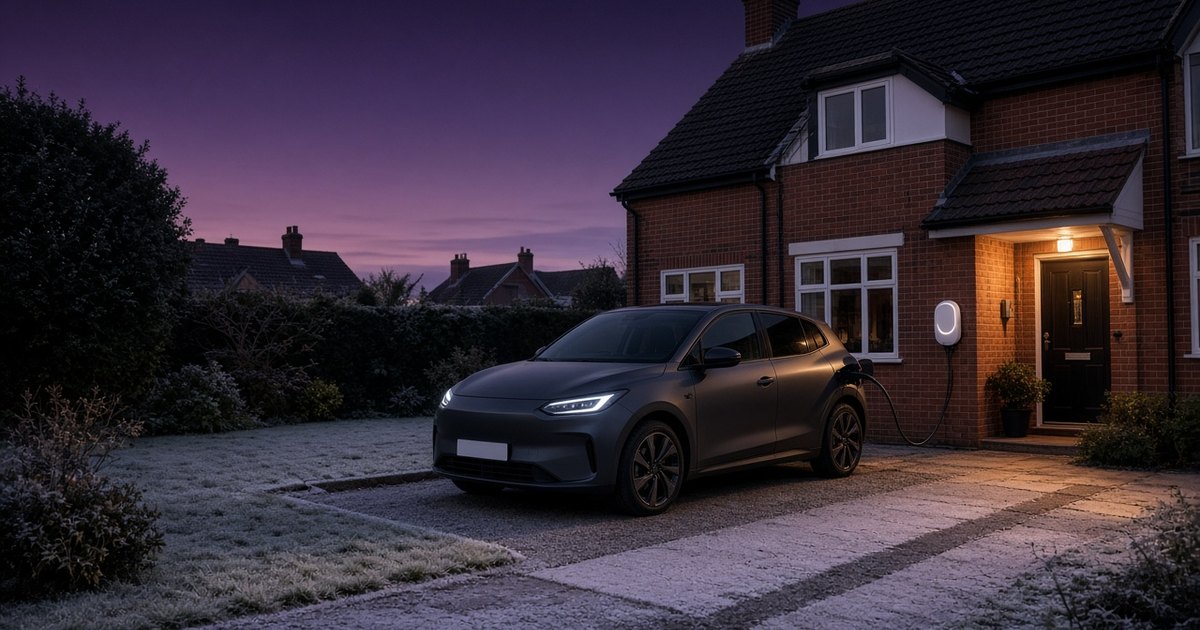
How much does it cost to charge an electric car at home on the price cap? As of 27 October 2026, Ofgem’s price cap puts the average electricity unit rate at 26.32p per kWh until 31 December, so adding 60kWh to a typical EV battery costs about £15.79, or roughly £7.74 per 100 miles. On an off-peak EV tariff the same charge costs far less: about £4.80 at Intelligent Octopus Go’s 8p per kWh, and about £4.00 at the 6.66p EDF GoElectric rate reported for October. Public chargers cost much more, averaging 54p per kWh on standard chargers and 79p on rapid chargers in September 2026, according to Zapmap. If you charge at home on a standard tariff, switching to an EV tariff is usually the biggest saving open to you, but the daytime rate goes up, so it only pays if you can shift your charging overnight. This SwitchSquid guide sets out the numbers side by side, shows a full-year example and explains what January’s cap could change. We may earn a commission if you compare through links on this page; it doesn’t change the price you pay.
Sources: Ofgem price cap unit rates and standing charges, Zapmap Price Index (updated 7 October 2026), Octopus Energy, Intelligent Octopus Go, EV Compared, EV tariffs October 2026 and Cornwall Insight January 2027 forecast, all checked on 27 October 2026.
Charging at home on the cap? Compare electricity tariffs at your postcode
- The cap rate is 26.32p per kWh plus 54.83p a day until 31 December 2026, so a 60kWh charge costs about £15.79
- No code needed: compare electricity-only tariffs, fixed and variable, using your own yearly kWh
- Main limitation: not every supplier or EV tariff appears on every comparison, so check suppliers’ own sites too
What does the energy price cap mean for EV charging?
The price cap limits the unit rate and standing charge that suppliers can charge households on a standard variable tariff. It does not cap your total bill, and it does not apply to public chargers. If you plug your car into a home charger and have never switched to a special tariff, you are almost certainly paying the cap rate for every kWh that goes into the battery.
From 1 October to 31 December 2026, Ofgem’s average cap rates for Direct Debit customers are:
Electricity: 26.32p per kWh and a standing charge of 54.83p a day.
Typical dual-fuel bill: £1,723 a year.
Ofgem notes there is no VAT on household electricity from 1 October 2026 to 31 March 2027, so these electricity rates carry no VAT. Rates differ by region, so your own unit rate may be a little higher or lower. Our price cap by region guide lists each area.
The cap rate is the same at 3am as at 6pm. That is the key point for EV drivers: you pay daytime prices for night-time charging, which is exactly when electricity is cheapest to supply.
EV charging costs compared: price cap vs EV tariff vs public chargers
Here is what the same amount of energy costs on each option. We use 60kWh, roughly a full charge for a mid-sized EV from nearly empty, and a cost per 100 miles based on 3.4 miles per kWh, in line with the average-efficiency car Zapmap uses for its pence-per-mile figures.
How you charge | Price per kWh | Cost to add 60kWh | Cost per 100 miles | When it applies | Main catch |
|---|---|---|---|---|---|
Home, standard variable tariff (price cap) | 26.32p | £15.79 | About £7.74 | Any time, 1 Oct to 31 Dec 2026 | No cheaper night rate |
Home, Intelligent Octopus Go | 8.0p off-peak | £4.80 | About £2.35 | 11:30pm to 5:30am plus smart-charging slots | Needs a compatible car or charger; peak rate about 37p to 41.5p; £50 exit fee on the fix |
Home, EDF GoElectric (as reported for October) | 6.66p off-peak | £4.00 | About £1.96 | 11pm to 6am | Check EDF’s own page for your region’s rates |
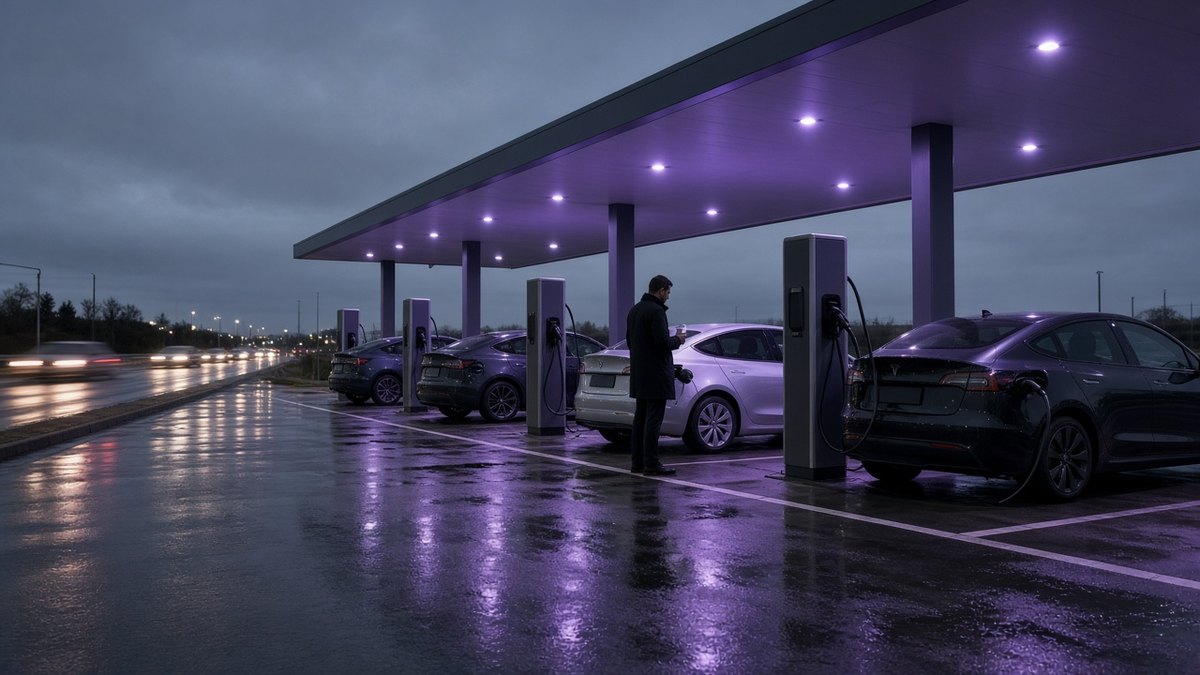
Public standard charger (3kW to 49kW) | 54p average PAYG | £32.40 | About £15.90 | Any time | Prices vary by network; memberships can be cheaper |
Public rapid or ultra-rapid (50kW+) | 79p average PAYG | £47.40 | About £23.20 | Any time | Fastest but dearest; best kept for long trips |
Public prices are Zapmap’s weighted September 2026 averages for pay-as-you-go charging. Tariff rates were checked on 27 October 2026. Costs ignore charging losses, which typically add a few per cent.
Is an EV tariff cheaper than the price cap? A full-year example
An EV tariff is not just a cheap night rate. You also get a higher daytime rate for the rest of your home, and a standing charge that may differ from the cap. So the honest test is the whole bill, not just the car.
Take a household using 2,700kWh a year for the home, Ofgem’s typical figure, plus an EV covering 7,000 miles a year. At 3.4 miles per kWh, the car needs about 2,060kWh.
On the price cap: 4,760kWh at 26.32p is £1,253, plus £200 in standing charges, so about £1,453 a year.
On Intelligent Octopus Go: the car’s 2,060kWh at 8p is £165. If a quarter of the home’s use moves into the cheap window, that is 675kWh at 8p (£54) and 2,025kWh at an average peak rate of about 38.9p (£788). Add a standing charge of about 57p a day (£208), and the total is about £1,215.
That is a saving of roughly £240 a year in this example. The more of your home’s use you can shift overnight, such as the dishwasher, washing machine and immersion heater, the bigger the gap. If you drive more than 7,000 miles, the saving grows too. If you rarely charge at home, or you use a lot of electricity in the early evening and cannot move it, the higher peak rate can wipe the saving out.
Peak rates and standing charges on EV tariffs vary by region. Use the figures on your own quote, not national averages, before you decide.
What happens to charging costs if the cap rises in January 2027?
Ofgem will announce the cap for 1 January to 31 March 2027 by 25 November 2026. Cornwall Insight’s forecast, published on 30 September, points to a typical bill of about £1,999 a year, with the electricity unit rate rising to around 30.28p per kWh.
If that happens, adding 60kWh at home on the cap would cost about £18.17, up from £15.79, and a year of driving in our example would cost about £80 more on electricity for the car alone. Off-peak rates on a fixed EV tariff would not move until the fix ends, which is why some EV drivers are choosing to fix before the announcement.
Forecasts are not guarantees. Our January 2027 price cap forecast tracks the latest predictions, and when is the next price cap announcement explains the timetable.

How to cut your EV charging costs this winter
Check what you pay now. Your bill or supplier app shows your unit rate. If it is around 26p and there is only one rate, you are on the cap or close to it.
Check your car and charger. Smart tariffs such as Intelligent Octopus Go need a compatible car or charger, while time-of-use tariffs with a fixed window, like EDF GoElectric, work with any car if you set a timer.
Set the charging window. Use your car’s app or charger to start inside the off-peak window. Charging at peak on an EV tariff can cost more than the cap.
Move other big loads overnight. Every kWh of washing, drying or water heating you shift into the cheap window adds to the saving.
Use public rapid chargers sparingly. At an average of 79p per kWh, they cost three times the cap rate and around ten times a good off-peak rate.
Compare before you switch. Exit fees, peak rates and standing charges all matter. If you are on Economy 7, our Economy 7 vs Octopus Go guide shows how the two compare.
For more on Octopus’s EV tariffs, see our Octopus Go EV tariff guide. If you are not sure whether to move at all, should I switch energy supplier sets out the questions to ask.
Lock in a rate before January’s cap is announced
- Cornwall Insight forecasts the electricity unit rate rising to about 30.28p from January 2027
- No code needed: compare fixed deals and check any exit fee before you sign
- A fix holds your unit rate while it lasts, even if the cap rises
Fit summary
Good fit for an EV tariff: you charge at home most of the time, can charge overnight and can move some other household use into the cheap window.
Good fit for a standard fix: you rarely charge at home, use most of your electricity in the evening, or want one flat rate through winter.
Stay on the cap for now: you are about to move house or change car, and would rather not pay an exit fee.
Re-check after 25 November: January’s cap will show how much the gap between cap and off-peak rates has widened.
Want a second opinion? Squid AI, SwitchSquid’s AI assistant, can help you compare an EV tariff with a standard fix using your own mileage and yearly kWh.
Important conditions
Price cap rates are Ofgem averages for Direct Debit customers from 1 October to 31 December 2026 and vary by region.
EV tariff rates were checked on 27 October 2026; they vary by region and can change for new customers at any time. Fixed versions may carry exit fees.
Public charging prices are Zapmap’s weighted averages for September 2026; individual networks charge more or less.
Costs per 100 miles assume 3.4 miles per kWh and exclude charging losses. Your car’s real efficiency will differ, especially in cold weather.
Forecasts for January 2027 are estimates, not confirmed prices.
FAQ
How much does it cost to charge an electric car at home in the UK?
On the price cap from 1 October to 31 December 2026, electricity averages 26.32p per kWh, so adding 60kWh costs about £15.79. On an EV tariff with an 8p off-peak rate, the same charge costs about £4.80.
Does the energy price cap apply to EV charging?
It applies to the electricity you use at home on a standard variable tariff, including charging your car. It does not apply to public chargers, where prices are set by each network.
What is the cheapest way to charge an electric car?
For most drivers, charging at home overnight on an EV tariff is cheapest. As of 27 October 2026, Intelligent Octopus Go charges 8p per kWh off-peak and EDF GoElectric is reported at 6.66p, against 26.32p on the cap and 54p to 79p on public chargers.
How much does it cost to charge an EV at a public charger?
Zapmap’s September 2026 figures put the average pay-as-you-go price at 54p per kWh on standard chargers and 79p on rapid and ultra-rapid chargers. That is about 16p and 23p per mile for an average-efficiency car.
Is an EV tariff worth it if I don’t drive much?
It can still be, as long as you can move some household use overnight, but the saving is smaller. Because EV tariffs charge a higher peak rate, a low-mileage driver who uses most electricity in the evening may be better off on a standard fix.
Will EV charging cost more in January 2027?
If the cap rises as Cornwall Insight forecasts, the average unit rate would be around 30.28p, so a 60kWh home charge on the cap would cost about £18.17. Ofgem confirms the January cap by 25 November 2026.
Do I need a smart meter for an EV tariff?
Yes. Time-of-use EV tariffs need a smart meter so your supplier can bill night and day use at different rates. Smart tariffs such as Intelligent Octopus Go also need a compatible car or charger.
Final decision card
On the price cap, a 60kWh home charge costs about £15.79 this winter; on an off-peak EV tariff it falls to roughly £4 to £5, and public chargers cost two to three times the cap. If you charge at home and can shift your charging overnight, compare EV and fixed tariffs at your postcode now, then check again once Ofgem confirms January’s cap by 25 November.
Compare deals for your whole home, car included
- Enter your home’s yearly kWh plus about 2,060kWh for every 7,000 miles you drive
- No code needed; 14-day cooling-off period once you agree a new household contract
- Ofgem confirms January’s cap by 25 November 2026, so compare again then
Questions about switching? Ask Squid AI
Squid AI explains the price cap, tariffs and switching in plain English, then points you to the comparison.
- Save energy and moneyLearn when a fixed deal beats the price cap.
- Save timeAnswers in seconds, no forms or sign-up.
- Plain answersNo jargon, no sales calls, free to use.